

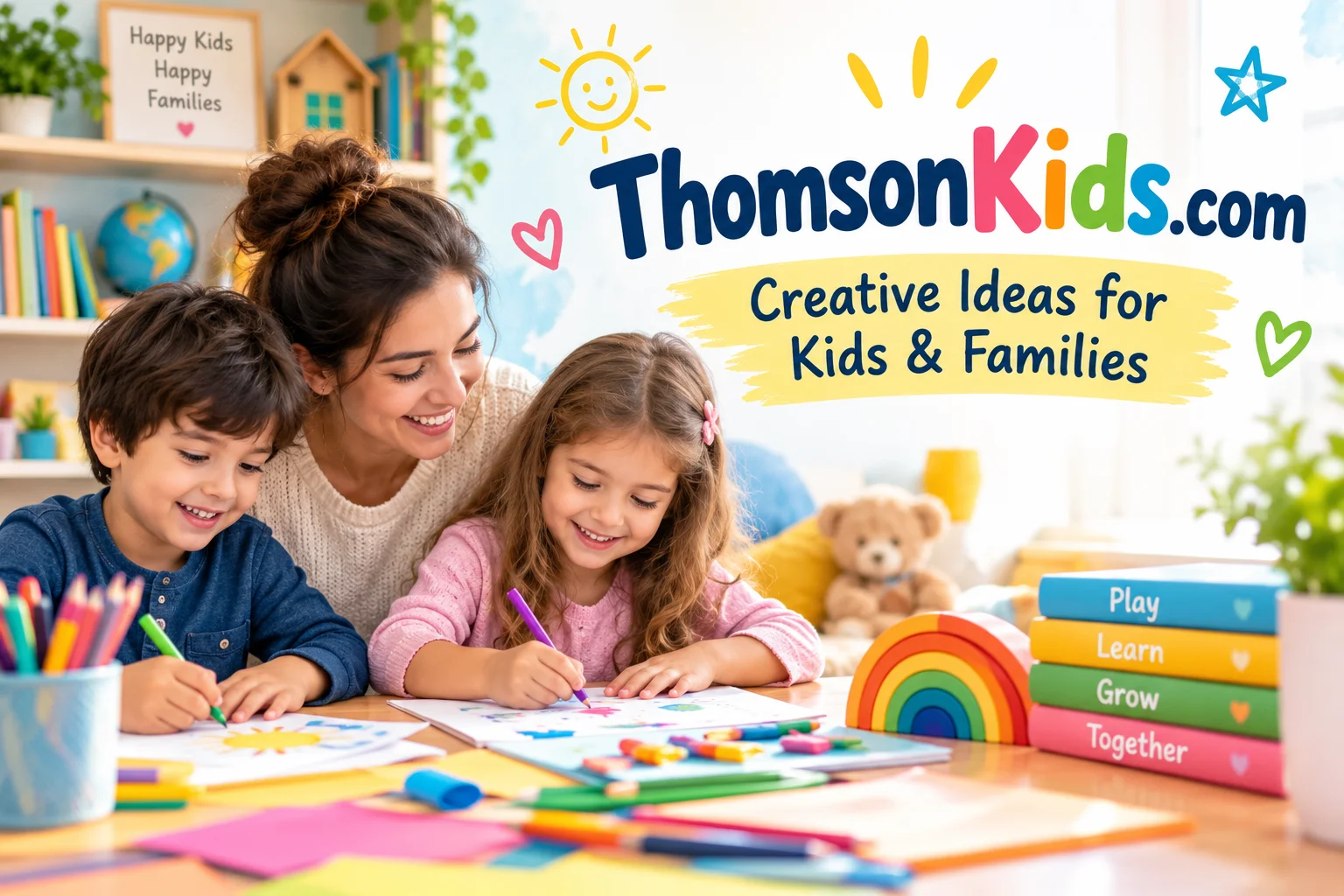
Finding meaningful activities for children can sometimes feel challenging, especially when families want to balance learning, creativity, entertainment, and quality time. ThomsonKids.com can be presented as a helpful destination for parents and families looking for fresh ideas that encourage children to explore, imagine, create, and learn.
From simple crafts and educational games to family activities and imaginative projects, creative experiences can make everyday moments more enjoyable. More importantly, they can help children develop useful skills while spending less time passively consuming content.
Why Creative Activities Matter for Kids
Creative activities are more than a way to keep children occupied. They can encourage curiosity, communication, problem-solving, and independent thinking.
Encouraging Imagination
When children draw, build, write stories, or create their own games, they have opportunities to use their imagination. There does not always need to be a perfect result. The process itself allows children to experiment with different ideas.
For example, a simple cardboard box can become a spaceship, castle, shop, or animal house. This type of open-ended play gives children freedom to decide what something can become.
Supporting Learning Through Play
Children often learn naturally when activities feel enjoyable. Educational games, puzzles, science experiments, and creative challenges can introduce concepts without making learning feel like traditional schoolwork.
A family might explore basic science through a safe kitchen experiment, practice mathematics through board games, or develop vocabulary through storytelling.
Creative Craft Ideas for Families
Craft projects are easy to adapt for different ages and interests. Families can use everyday materials to create enjoyable projects without needing expensive equipment.
Paper and Cardboard Projects
Paper, cardboard, colored pencils, markers, and glue can provide hours of creative possibilities. Children can make greeting cards, paper animals, simple decorations, masks, or miniature buildings.Parents can make the activity more engaging by giving children a theme. A “design your dream house” challenge, for instance, can combine creativity with planning and storytelling.
Recycled-Material Crafts
Household materials can also become useful craft supplies. Empty boxes, paper rolls, clean containers, and old magazines can be reused for creative projects.
Besides being fun, recycled crafts can introduce children to the idea of reducing waste. Parents can explain how everyday objects can have a second purpose instead of immediately being thrown away.
Fun Educational Activities
Learning activities do not have to be complicated. Simple challenges can encourage children to think, observe, and ask questions.
Simple Science Exploration
Children naturally ask questions about how the world works. Families can encourage that curiosity with age-appropriate science activities.
For example, children can observe how different objects behave in water, grow plants from seeds, or keep a simple weather journal. These activities can encourage observation and help children understand basic scientific ideas.Adult supervision should always be provided for experiments involving materials, heat, tools, or other potential hazards.
Reading and Storytelling
Reading together is another valuable family activity. Parents can choose an age-appropriate story and then invite children to imagine what might happen next.
Older children can create their own characters and write short stories. Younger children might draw pictures representing different parts of a story.This combination of reading, discussion, and creativity can support language development while making family time more interactive.
Indoor Activities for Rainy Days
Bad weather does not have to mean boring days. Indoor spaces can become creative playgrounds with a little planning.
Build a Blanket Fort
A blanket fort can turn an ordinary room into an imaginative adventure space. Children can use blankets and cushions to create a reading corner, pretend campsite, or storytelling area.Once the fort is built, families can add another activity, such as reading books, playing board games, or telling stories.
Indoor Treasure Hunt
Parents can create a simple treasure hunt using clues placed around the home. The clues can include age-appropriate riddles, drawings, or small challenges.This activity encourages children to read carefully, solve problems, and move around while working toward a goal.
Outdoor Family Activities
Outdoor activities provide opportunities for movement, exploration, and connection with nature.
Nature Scavenger Hunt
A nature scavenger hunt can encourage children to observe their surroundings. Families can create a list of safe things to look for, such as a certain type of leaf, a bird, a flower, or an interesting-shaped stone.The activity can be adapted to a backyard, park, or other appropriate outdoor setting.
Family Walks
A family walk can become more interesting when children are encouraged to notice details. Parents might ask them to identify different sounds, colors, plants, or shapes they see along the way.These simple conversations can transform an ordinary walk into an exploration activity.
Creative Games for Family Time
Games can bring family members together while encouraging communication and strategic thinking.
Story-Building Games
One person can begin a story with a simple sentence. Each family member then adds another sentence. The result can become funny, surprising, or completely imaginative.Children can also draw pictures of the characters or setting after the story is finished.
Homemade Board Games
Families can design their own board games using paper, cardboard, dice, and markers. Children can decide the theme, rules, characters, and challenges.Creating the game can be just as entertaining as playing it. It also gives children opportunities to practice planning and logical thinking.
Encouraging Kids to Explore Their Interests
Every child has different interests. Some may enjoy art, while others prefer sports, technology, animals, books, music, or building projects.
Let Children Make Choices
Giving children choices can make activities feel more personal. Instead of deciding everything for them, parents can offer several options and let children select what interests them.
This approach can encourage independence while still giving the family structure.
Celebrate Effort and Creativity
Creative activities should not always focus on producing something perfect. Encouraging effort, experimentation, and original thinking can help children feel more comfortable trying new things.
Instead of concentrating only on the final result, parents can ask questions such as, “What inspired your idea?” or “How did you decide to make it this way?”
Making Family Activities More Meaningful
The best activities do not necessarily require a lot of money or preparation. Often, the most valuable part is the opportunity to spend time together.
Create a Simple Activity Routine
Families can choose one regular time each week for a creative activity. It could be a weekend craft, family game night, cooking project, reading session, or outdoor adventure.
A predictable routine makes it easier to turn occasional activities into lasting family traditions.
Keep Activities Age-Appropriate
Activities should match children’s ages and abilities. Younger children may need more assistance, while older children can take greater responsibility for planning and completing projects.
Parents should also consider safety, particularly when activities involve scissors, small objects, kitchen equipment, outdoor environments, or other potentially hazardous materials.
How ThomsonKids.com Can Inspire Families
A family-focused platform such as ThomsonKids.com can bring together ideas that make everyday activities more creative and engaging. Parents can use different types of content as inspiration and then adapt activities according to their children’s interests, available materials, and family schedule.
The most useful family ideas are often practical and flexible. A good activity should be easy to understand while still leaving room for children to add their own ideas.
Frequently Asked Questions:
What is ThomsonKids.com about?
ThomsonKids.com can be positioned as a family-focused source featuring creative ideas, activities, and inspiration for children and parents.
What are good creative activities for kids?
Crafts, storytelling, drawing, building projects, puzzles, educational games, and nature activities are all creative options that can be adapted for different ages.
How can parents make learning more fun?
Parents can combine learning with games, creative projects, experiments, reading, and real-world exploration to make educational experiences more engaging.
What can kids do indoors without screens?
Children can build forts, draw, read, create crafts, play board games, write stories, complete puzzles, or participate in indoor treasure hunts.
Why is family activity time important?
Shared activities can encourage communication, creativity, cooperation, and stronger family connections while giving children opportunities to explore their interests.












Roth IRA Guide: Build Your Tax-Free Retirement - Football club menu
[…] contribute eligible after-tax income to your Roth IRA. Next, you select investments based on your financial objectives and risk tolerance. Those investments can potentially increase in value over […]