
Football Size, Materials, and Match vs Training Ball Guide
Choosing the right size 5 soccer ball is essential for developing skills, enjoying the game, and performing at your best. From understanding ball sizes for different ages, to selecting the ideal material (PU, TPU, PVC), and knowing the difference between training and match balls, this guide covers everything you need to pick, care for, and use the perfect football for your level and playing conditions.
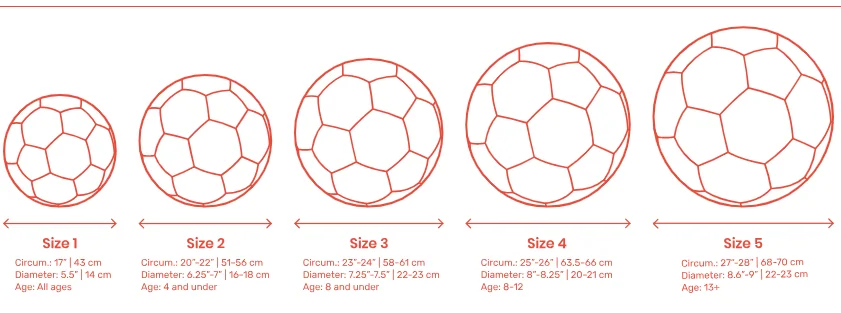
Football Size Comparison
| Ball Size | Circumference | Recommended Age | Primary Use Case |
|---|---|---|---|
| Size 1 | 18–20 inches (46–51 cm) | All ages | Skill training, footwork practice, souvenirs |
| Size 2 | 20–22 inches (51–56 cm) | 3–5 years | Early skill development, toddlers |
| Size 3 | 23–24 inches (58–61 cm) | 6–8 years | Youth matches and training |
| Size 4 | 25–26 inches (63–66 cm) | 9–11 years | Junior competitive matches |
| Size 5 | 27–28 inches (68–70 cm) | 12+ years | Official matches (youth 12+, adult, professional) |
Size 5 Football (Standard Match Ball)
Best For:- Players aged 12 and above
- High school, college, adult leagues
- Professional competitions (FIFA standard)
- Official match size worldwide
- Heavier and larger than youth balls
- Designed for full-strength kicking and advanced techniques
- Used in Premier League, World Cup, Champions League, etc.
Football Material Guide
Premium Match Material
1. PU (Polyurethane)
What It Is
PU is a synthetic leather–type material, often used on higher-end footballs.
Key Traits
- Soft feel for better comfort
- Responsive touch and strong ball feedback
- Durable with proper care
- Better water resistance than traditional leather
Best For
- Matches (mid to high range)
- Performance training
- Outdoor and indoor turf
Pros
- Excellent touch and playability
- Premium feel
- Good durability
Cons
- More expensive than TPU or PVC
Balanced Performance
2. TPU (Thermoplastic Polyurethane)
What It Is
TPU is a plastic polymer that offers a balance between cost and performance.
Key Traits
- Balanced feel
- Strong durability in varied weather
- Better water resistance in wet conditions
Best For
- Training and games on a budget
- Outdoor and harsh conditions
- Youth and academy football
Pros
- Abrasion resistant
- More affordable than PU
- Versatile across surfaces
Cons
- Touch quality not as premium as PU
Budget & Recreational
3. PVC (Polyvinyl Chloride)
What It Is
PVC is a basic plastic commonly used in budget and recreational footballs.
Key Traits
- Firm feel
- Heavier and bouncier
- Very affordable and durable
Best For
- Street football
- Schools and drills
- Budget-friendly options
Pros
- Lowest cost
- Very durable
- Good for rough surfaces
Cons
- Lower control and responsiveness
- Not ideal for competitive matches
Material Comparison Table
| Feature | PU | TPU | PVC |
|---|---|---|---|
| Feel / Touch | ★★★★ | ★★★ | ★★ |
| Control | ★★★★ | ★★★ | ★ |
| Durability | ★★★ | ★★★★ | ★★★★ |
| Water Resistance | ★★ | ★★★★ | ★★★ |
| Cost | High | Medium | Low |
| Best Use | Matches / Skill Play | Training & Mixed Use | Casual / Budget |
Training vs Match Balls
Durable & Skill-Focused
Training Balls
What to Look For
- Durable materials (TPU or sturdy PU)
- Good air retention and shape stability
- Forgiving feel for repeated drills
- Lower cost than match balls
Top Training Ball Examples
- Adidas Tango Rosario – textured surface for control, passing, dribbling, shooting drills
- Nike Strike – balanced feel, durable at moderate price
- Molten F5G5000 – reliable synthetic surface and shape retention
- Select Numero 10 – near match-ball quality for practice
When to Choose
- Daily practice sessions
- Skill repetition drills (passing, control)
- Team training with multiple balls
Official & High-Performance
Match / Competitive Balls
What Makes Them Special
- Premium PU materials with advanced construction
- Thermally bonded seams for consistent shape
- Certified by FIFA Quality or similar
Top Match Ball Examples
- Adidas Al Rihla Pro – World Cup-level performance
- Nike Flight – Aerowsculpt tech for stable flight and accuracy
- Puma Orbita (FIFA Quality Pro) – control and precision for competitive matches
- Select Derbystar / Mitre Delta Max – high-level match quality
When to Choose
- League games, tournaments, official fixtures
- Competitive scrimmages
- Players wanting game-like feel at high intensity
Training vs Match: Quick Comparison
| Feature | Training Balls | Match Balls |
|---|---|---|
| Durability for Frequent Use | ★★★★ | ★★★ |
| Performance & Feel | ★★★ | ★★★★ |
| Cost | Lower | Higher |
| Surface Quality | Solid / Textured | Premium / Precise |
| Flight Consistency | Good | Excellent |
Size 5 Football – The Adult Standard
Historical Standardization
1. Historical Standardization
FIFA and other governing bodies set Size 5 as the official match ball size in 1872 (formalized later in the 20th century). Standardization ensures consistency across leagues, competitions, and countries.
Optimal Size & Weight
2. Optimal Size & Weight for Adults
- Circumference: 27–28 inches (68–70 cm)
- Weight: 410–450 g (14–16 oz)
This size and weight suit full-grown players’ leg strength and foot size, allowing:
- Proper passing, shooting, and dribbling
- Accurate flight and predictable bounce
- Less risk of injury compared to oversized or undersized balls
Match Performance
3. Match Performance Requirements
- High-speed gameplay with predictable ball reaction
- Long-range shots and goalkeeping saves
- Standardized testing of flight, bounce, and touch as required in official competitions
Skill Development
4. Development & Skill Continuity
- Players aged 12+ train with Size 5 to develop proper technique and ball control
- Skills transfer smoothly from youth to professional play
International Compliance
5. International Compliance
FIFA, UEFA, and most national leagues require Size 5 for official matches, ensuring universal training, equipment standards, and fair play.
Soccer Ball Maintenance & Care Guide
Proper Inflation
1. Proper Inflation
- Check pressure regularly: Use a hand pump with a gauge
- Recommended pressure: 8.5–15.6 PSI (check ball marking)
- Avoid overinflation: Can damage seams or cause unpredictable bounce
- Avoid underinflation: Leads to poor touch and deformation
- Tip: Use a needle with a little glycerin to protect the valve
Clean After Use
2. Clean After Use
- Wipe off dirt and mud after each game or practice
- Avoid harsh chemicals; mild soap is fine
- Dry thoroughly; never store a wet ball in a bag
Store Properly
3. Store Properly
- Keep in a cool, dry place; avoid sunlight or heat
- Avoid freezing; cold stiffens panels
- Use a ball bag or shelf; do not leave under heavy objects
Check for Damage
4. Check for Damage
- Inspect seams, panels, and valve regularly
- Replace the ball if panels start peeling, seams split, or air won’t hold
Avoid Hard Surfaces
5. Avoid Hard Surfaces
Use training and match balls on grass or artificial turf. Avoid concrete, asphalt, or rough surfaces regularly.
Rotate Balls
6. Rotate Balls
Rotate multiple balls during training to prevent one from wearing out too quickly.
7. Special Care Tips by Material
| Material | Care Tips |
|---|---|
| PU | Soft panels; avoid prolonged wet use to prevent water absorption |
| TPU | Durable; easy to clean; great for outdoor use |
| PVC | Very tough; tolerates rough surfaces but feels less premium |
Soccer Ball Reviews & Comparison
Ranking Criteria
- Price range
- Durability
- Bounce / air retention
- Recommended user age or skill level
| Product | Price | Durability | Bounce / Air Retention | Skill Level / Age | Rating |
|---|---|---|---|---|---|
| Adidas Tango Rosario Training Ball | $25 | ★★★★ | ★★★ | Kids / Beginners | ★★★½ |
| Nike Strike Training Ball | $30 | ★★★★ | ★★★★ | Youth / Intermediate | ★★★★ |
| Molten F5G5000 Training Ball | $28 | ★★★★½ | ★★★★ | Teens / Advanced | ★★★★ |
| Select Numero 10 Training Ball | $35 | ★★★★★ | ★★★★½ | Youth / Adults | ★★★★½ |
| Adidas Al Rihla Pro Match Ball | $160 | ★★★★½ | ★★★★★ | Adults / Professionals | ★★★★★ |
| Nike Flight Match Ball | $150 | ★★★★½ | ★★★★★ | Adults / Professionals | ★★★★★ |
Frequently Asked Questions
1. What size football should I use for adults?
Adults should use a Size 5 football, which has a circumference of 27–28 inches (68–70 cm) and weight of 410–450 g. This is the official match size for FIFA competitions.
2. How often should I inflate my soccer ball?
Check the pressure before each practice or match. Use a hand pump with a gauge and maintain the recommended PSI, usually 8.5–15.6, depending on the ball’s marking.
3. What is the difference between training balls and match balls?
Training balls are more durable and designed for frequent practice. Match balls use premium materials, have precise flight and bounce, and are certified for official games.
4. How do I clean and store my soccer ball?
Wipe off dirt with a damp cloth, avoid harsh chemicals, dry thoroughly, and store in a cool, dry place. Avoid leaving it in direct sunlight, extreme heat, or under heavy objects.
5. Which materials are best for soccer balls?
PU (Polyurethane) is soft and premium, ideal for match balls. TPU (Thermoplastic Polyurethane) is durable and versatile, suitable for training. PVC is tough and budget-friendly, good for casual or youth play.