

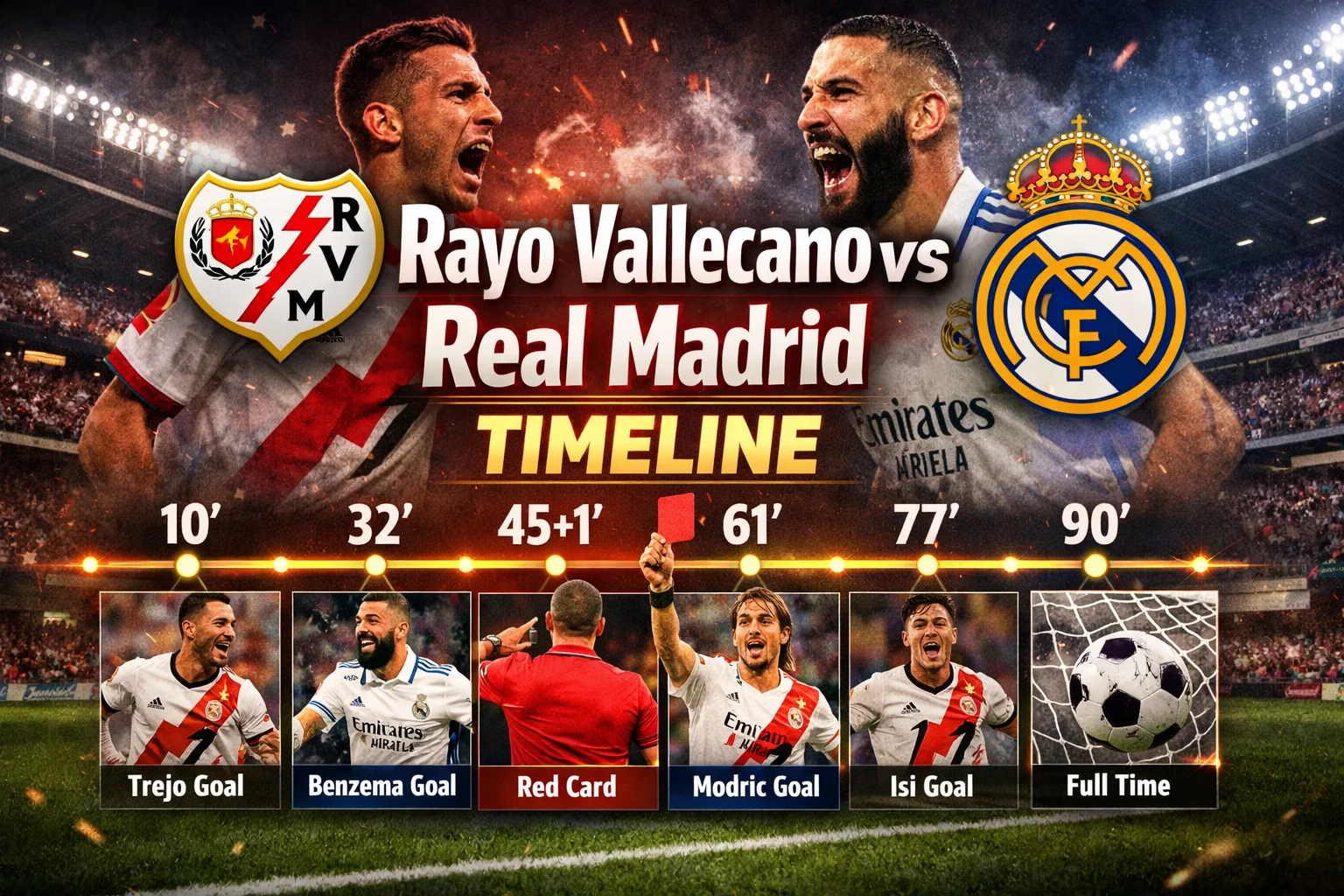
The Rayo Vallecano vs Real Madrid fixture is one of the most exciting Madrid derbies in Spanish football. Although Real Madrid has traditionally dominated Spanish football with its long history of trophies and world-class players, Rayo Vallecano has repeatedly shown that it can challenge the giants, especially when playing at home. These matches often feature dramatic goals, tactical battles, and moments that keep supporters on the edge of their seats.
In this detailed Rayo Vallecano vs Real Madrid match timeline, we’ll break down the typical flow of this rivalry, highlight key moments, analyze tactical approaches, and explain why these encounters remain so entertaining for football fans worldwide.
The History Behind the Madrid Derby
The rivalry between Rayo Vallecano and Real Madrid is rooted in geography. Both clubs are based in Madrid, making every meeting a local derby filled with pride and passion.
While Real Madrid is known as one of the world’s biggest football clubs, Rayo Vallecano represents the working-class district of Vallecas. This contrast gives every encounter a unique atmosphere, where determination often competes with star power.
Although Real Madrid has won the majority of meetings, Rayo has produced memorable performances that have surprised both fans and football analysts.
Match Timeline Breakdown
Kick-Off (0–15 Minutes)
The opening minutes usually set the tone for the entire match.
Real Madrid often begins with:
- High ball possession
- Quick passing combinations
- Early pressure in the attacking third
- Full-backs pushing forward
Meanwhile, Rayo Vallecano generally focuses on:
- Compact defensive positioning
- Fast counterattacks
- Aggressive pressing
- Winning midfield battles
The first fifteen minutes are often tactical rather than chaotic, as both sides look for weaknesses.
First Major Chances (15–30 Minutes)
As the match settles, the first clear scoring opportunities begin to appear.
Real Madrid typically creates chances through:
- Through balls behind defenders
- Wing play
- Quick one-touch passing
- Individual brilliance from attacking players
Rayo Vallecano responds by:
- Breaking quickly after interceptions
- Targeting spaces behind Madrid’s advanced defenders
- Delivering dangerous crosses from wide areas
This period often determines which team gains momentum.
End of the First Half (30–45 Minutes)
The final part of the opening half usually becomes more open.
If Real Madrid scores first, they often increase possession to control the game.
If Rayo manages to stay level, confidence grows throughout the squad, with supporters creating an energetic atmosphere that pushes the team forward.
Key moments during this phase frequently include:
- Long-range shots
- Set pieces
- Corner kicks
- Goalkeeper saves
- VAR reviews
Many memorable derby goals have arrived just before halftime.
Second Half Timeline
Early Second Half (46–60 Minutes)
Managers often make tactical adjustments during halftime.
Real Madrid may:
- Increase attacking width
- Push midfielders higher
- Introduce fresh attacking options
Rayo Vallecano often responds with:
- More aggressive pressing
- Faster transitions
- Greater attacking intent
This period frequently features end-to-end football as both teams search for control.
Mid-Second Half (60–75 Minutes)
Fatigue begins to influence the game.
This stage usually includes:
- Tactical substitutions
- Formation changes
- Increased physical battles
- More open spaces
Real Madrid often benefits from its squad depth, bringing experienced players from the bench who can immediately impact the match.
Rayo Vallecano, however, often relies on teamwork and relentless effort to remain competitive.
Final Minutes (75–90+)
The closing stages are often the most dramatic.
Possible late-game scenarios include:
Late Winning Goal
Real Madrid has earned numerous late victories thanks to patient attacking football and clinical finishing.
Rayo Vallecano Equalizer
Rayo has also produced dramatic late goals, especially in home fixtures where crowd support becomes a significant advantage.
Defensive Masterclass
If protecting a lead, both teams may:
- Drop deeper defensively
- Slow the tempo
- Make defensive substitutions
- Focus on set-piece organization
Added time often produces unforgettable moments in this Madrid derby.
Tactical Analysis
Real Madrid’s Strategy
Real Madrid typically emphasizes:
- Possession-based football
- Fast attacking transitions
- Technical superiority
- Flexible formations
- High-quality individual performances
The team usually dominates possession while creating numerous goal-scoring opportunities.
Rayo Vallecano’s Approach
Rayo Vallecano often succeeds through:
- High pressing
- Defensive discipline
- Quick counterattacks
- Strong work rate
- Team chemistry
Their aggressive style frequently disrupts Real Madrid’s rhythm.
Key Battles on the Pitch
Midfield Control
Winning midfield possession often determines the outcome.
The battle involves:
- Ball recovery
- Passing accuracy
- Press resistance
- Transition speed
Wing Play
Wide players become crucial because both clubs frequently attack through the flanks.
Successful crosses and overlapping runs often create dangerous scoring opportunities.
Goalkeepers
Both goalkeepers usually play important roles throughout the match.
Big saves can completely change momentum and inspire teammates.
Memorable Match Moments
Several encounters between these clubs have featured:
Stunning Goals
Supporters have witnessed:
- Long-range strikes
- Powerful headers
- Curling free kicks
- Clinical counterattacks
Tactical Surprises
Managers occasionally surprise opponents by:
- Changing formations
- Introducing unexpected substitutions
- Pressing higher than anticipated
- Switching defensive structures
Emotional Finishes
Late drama remains one of the defining characteristics of this fixture, with goals in stoppage time often deciding valuable La Liga points.
What Makes This Fixture Special?
Despite the difference in club stature, Rayo Vallecano consistently approaches these matches without fear.
Fans appreciate the fixture because it combines:
- Local derby intensity
- Technical quality
- Tactical variety
- Passionate supporters
- Unpredictable moments
Every meeting offers the possibility of another memorable chapter in Madrid football.
Key Takeaways from the Match Timeline
When analyzing the Rayo Vallecano vs Real Madrid match timeline, several consistent patterns emerge:
- Real Madrid usually dominates possession and creates more scoring chances.
- Rayo Vallecano remains dangerous through pressing and counterattacks.
- Midfield control often decides the result.
- Tactical substitutions become increasingly important after the 60th minute.
- Late goals frequently shape the final outcome.
Understanding these patterns helps fans appreciate not only the scoreline but also the tactical decisions and momentum shifts that define this exciting Madrid derby.
Conclusion
The Rayo Vallecano vs Real Madrid match timeline demonstrates why this local rivalry remains one of La Liga’s most entertaining fixtures. While Real Madrid often enters as the favorite due to its world-class squad and winning tradition, Rayo Vallecano repeatedly proves that determination, tactical discipline, and home support can create fiercely competitive contests.










Leave a Reply