

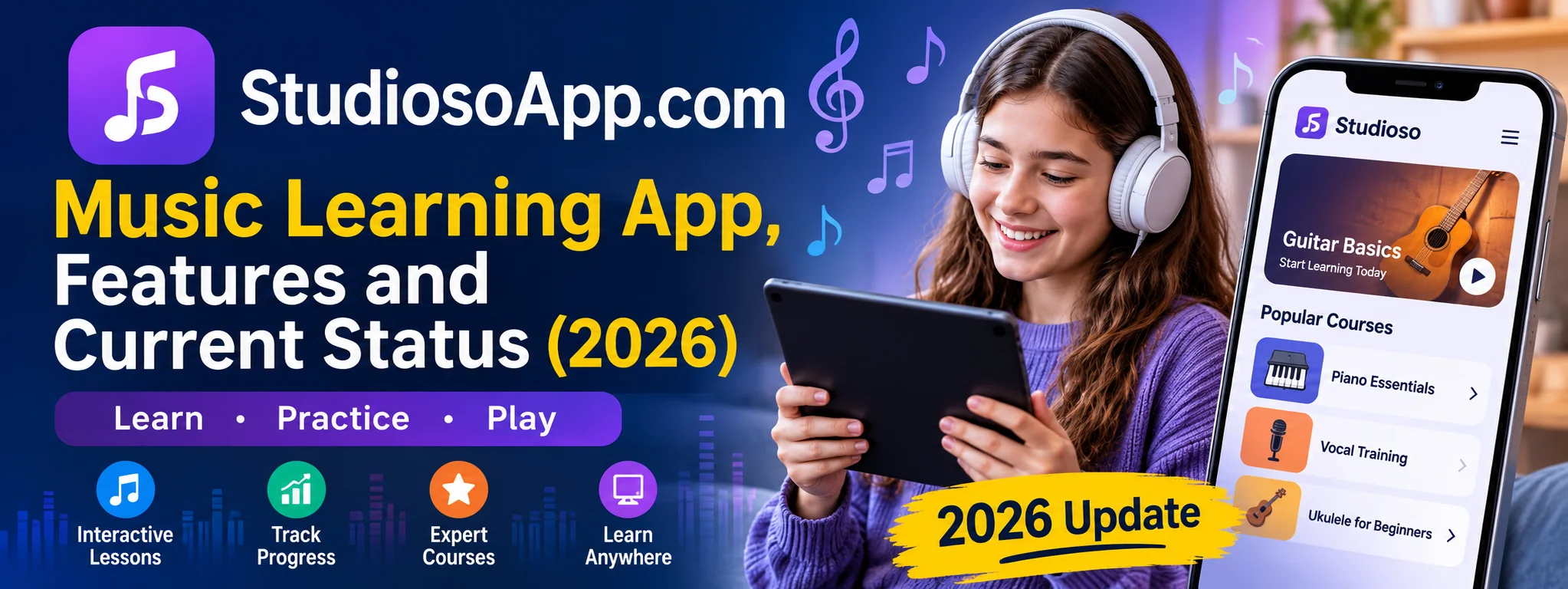
StudiosoApp.com is a name associated with a music education platform designed to connect music teachers with their students and make learning an instrument more organized. The original Studioso application focused on improving communication, managing practice assignments, monitoring student progress, and helping learners stay consistent between music lessons. For people searching for studiosoapp.com, understanding its original purpose and available features is important, especially because newer applications now use the Studioso name.
Learning music requires more than attending a weekly class. Students need regular practice, clear instructions, useful feedback, and motivation to improve their skills. Studioso was developed around these needs by creating a digital environment where teachers and students could stay connected outside traditional lessons.
Platform’s background, its historical features, how it supported music education, its potential benefits, and what users should know about its current availability. It also explains the difference between the original music education platform and the newer Studioso AI application.
Understanding the Background of StudiosoApp.com
StudiosoApp.com was historically associated with Studioso, an education technology project developed to improve the relationship between music instructors and learners. Its main purpose was to make music practice more structured while preserving the personal guidance that makes traditional music lessons valuable.
In conventional music education, teachers usually provide instructions during a scheduled lesson. Students then return home and attempt to follow those instructions independently. Without an organized practice plan, it can become difficult to remember exercises, maintain consistency, or understand which areas need improvement.
Studioso aimed to address this challenge through mobile technology. It provided a way for teachers to communicate assignments, establish practice objectives, and monitor students’ progress.
The platform was particularly relevant to instrumental music education, where regular practice and ongoing feedback are essential. Rather than replacing instructors, the application was intended to extend their guidance beyond the classroom.
Historical startup information identifies Studioso LLC as the company behind the original project. Its earlier product descriptions provide evidence of its focus on music education, although they should not be interpreted as confirmation of its current business operations.
Main Features of the Original Studioso Platform
The original Studioso concept included several tools intended to make music education more convenient for both instructors and students. Its features focused on practice management, communication, recording assignments, and progress monitoring.
1. Practice Management and Organization
Consistent practice is one of the most important parts of learning an instrument. However, students sometimes struggle to organize their daily exercises or remember everything discussed during lessons.
Studioso addressed this problem through practice-related tools that helped learners follow their assignments.
A structured practice routine can help students understand what they need to accomplish before their next lesson. Instead of practising randomly, they can work toward specific objectives and gradually improve their performance.
2. Teacher-Student Communication
Communication between lessons is another important part of music education.
The historical platform was designed to help teachers and students remain connected outside their scheduled sessions. Teachers could provide instructions and share learning objectives, while students could use the application to stay informed about their practice responsibilities.
This type of communication can reduce misunderstandings and make independent learning more productive.
3. Progress Tracking
Progress tracking was another significant part of the Studioso concept.
Music students develop at different speeds. Some may quickly understand musical notes but struggle with rhythm, while others may have difficulty with finger positioning or coordination.
A progress-tracking system can help teachers identify these differences and provide more focused guidance.
Historical descriptions of Studioso also mention practice logs, allowing instructors to gain a better understanding of students’ practice activities.
4. Recording Assignments
Recording assignments were among the more interesting features associated with the original application.
Teachers could create assignments that required students to record themselves playing a musical exercise or piece. Instructors could then listen to submitted recordings and assess their performance.
This approach offered an additional way to evaluate learning outside face-to-face lessons.
5. Technique Library
Another historically documented feature was a Technique Library.
A collection of technique-related learning materials can help students revisit exercises and reinforce important musical skills. Instead of depending entirely on memory, learners can refer to educational resources while practising.
However, the exact current availability and contents of this historical feature have not been independently verified.
How Studioso Supported Different Types of Music Learners
The original platform had potential value for different people involved in music education. Its teacher-student approach made it relevant to private instructors, beginner musicians, and families supporting young learners.
Music Teachers
Teachers could use the platform to organize assignments and maintain better communication with students. It also offered a way to review recorded performances and monitor practice activities.
For instructors managing multiple students, having learning information organized digitally could make lesson preparation more convenient.
Beginner Music Students
Beginners often need additional guidance because they are still developing basic musical skills. A structured practice routine can help them understand which exercises to complete and how to prepare for their next lesson.
Parents and Families
Parents can play an important role in helping children develop musical interests. Digital practice instructions and progress information can make it easier for families to understand learning goals and encourage consistent practice.
However, the original platform’s exact parental controls and account features have not been independently confirmed.
The History and Development of Studioso LLC
Studioso was not simply an unknown name appearing in music education searches. Historical records provide evidence that it was a real startup project.
Studioso LLC was associated with Eden Prairie, Minnesota, and developed its music education concept around 2017. The company also received recognition through the Minnesota Cup startup competition.
In 2018, the University of Minnesota’s Carlson School of Management listed Studioso LLC among the MN Cup division winners in its Youth category. This provides independent historical evidence of the company’s participation in the startup ecosystem.
The company’s original vision focused on making music education more connected and organized. Its approach recognized that students spend considerably more time practising independently than receiving direct instruction.
This history helps explain why Studioso focused on communication, assignments, and practice monitoring rather than offering only general educational content.
Is StudiosoApp.com Still Available in 2026?
One important consideration for anyone researching studiosoapp.com is its present availability.
During the research for this article, the original website could not be accessed. Historical company information and archived application descriptions remain available, but they do not establish whether the original service is still operating.
There are several details that prospective users should verify:
-
Whether the original website currently loads.
-
Whether the original teacher and student applications remain available through official app stores.
-
Whether existing users can still access their accounts.
-
Whether customer support and account recovery services are active.
-
Whether an updated privacy policy and subscription information are available.
An unavailable website does not automatically mean that a business has permanently closed. It is therefore more accurate to describe Studioso’s current operational status as unconfirmed rather than declare that the company has shut down.
StudiosoApp.com vs. the New Studioso AI Application
Another reason people search for Studioso is the appearance of a newer application with a similar name.
The newer Studioso AI application has a different purpose. Rather than concentrating on music lessons, it is positioned as an AI-powered academic study companion.
| Feature | Original Studioso | New Studioso AI |
|---|---|---|
| Main purpose | Music education | Academic assistance |
| Target users | Music teachers and students | Students and learners |
| Practice management | Yes, historically | Not its main focus |
| Teacher assignments | Yes, historically | Not a documented core feature |
| Recording tools | Music performance assignments | Audio transcription |
| Document summaries | Not historically documented | Yes |
| Homework scanning | Not historically documented | Yes |
| Developer | Studioso LLC | LIBERTY GLOBAL DEVELOPMENT LLC |
No reliable evidence reviewed for this article establishes a business or ownership connection between these two products.
Important Things to Consider Before Using a Music Learning App
Although digital platforms can make music education easier, choosing an appropriate application requires more than looking at its advertised features.
Students and teachers should consider whether the application genuinely supports their learning requirements.
Here are five important considerations:
-
Ease of use: The interface should be simple enough for beginners, teachers, and younger students to understand.
-
Practice organization: Look for clear assignments, reminders, and tools that help maintain consistent practice.
-
Progress monitoring: Useful progress records should show more than the number of minutes spent practising.
-
Privacy protection: Review how student information, recordings, and personal details are collected and stored.
-
Device compatibility: Check whether the application supports your current smartphone, tablet, or computer.
These considerations are especially important when an application is intended for children or stores personal recordings.
What Makes a Digital Music Practice Platform Useful?
A successful music learning platform should do more than record practice sessions. Its real value comes from helping students improve their musical abilities.
For example, a beginner learning piano may need to practise hand coordination, note recognition, and rhythm. A violin student may need to concentrate on bow control and accurate positioning.
A useful platform should help teachers communicate these individual learning objectives and provide meaningful feedback.
Another important factor is consistency. Practising for a short period regularly can be more productive than completing one long session without a clear plan.
Studioso’s original approach was interesting because it attempted to bring practice organization, communication, and performance feedback into one educational workflow.
However, these are general principles of effective digital music education, not a guarantee of the original application’s current capabilities.
Final Thoughts
StudiosoApp.com has an interesting history in the music education technology industry. Its original platform was developed to help teachers and students stay connected, organize practice assignments, monitor progress, and improve the learning experience outside traditional music lessons.
Features such as practice tracking, recording assignments, teacher communication, and the Technique Library made its concept relevant to instrumental music education. Its historical recognition in the 2018 Minnesota Cup competition also provides evidence of its development as a startup project.
However, the original website’s current availability and operational status remain unconfirmed. Users should verify official downloads, developer information, privacy policies, and customer support before relying on the service.
It is equally important to distinguish the original music-focused Studioso from the newer Studioso AI application, which concentrates on academic learning and AI-powered study tools.
Ultimately, studiosoapp.com represents an interesting example of how technology can support music education by connecting teachers, students, and independent practice.
Frequently Asked Questions
1. What is StudiosoApp.com known for?
StudiosoApp.com was historically associated with a music education application that connected teachers and students through practice assignments, communication, and progress monitoring.
2. Who developed the original Studioso application?
Historical company records identify Studioso LLC as the organization behind the original music education platform.
3. Is StudiosoApp.com still working in 2026?
Its current operational status could not be verified. The original website was inaccessible during the research for this article.
4. Is Studioso AI the same as the original Studioso?
There is no confirmed connection between them. The original application focused on music education, while the newer Studioso AI application provides academic study assistance.
5. What were the main features of Studioso?
Its historically documented features included practice management, teacher-student communication, progress tracking, recording assignments, and a Technique Library.









Leave a Reply