

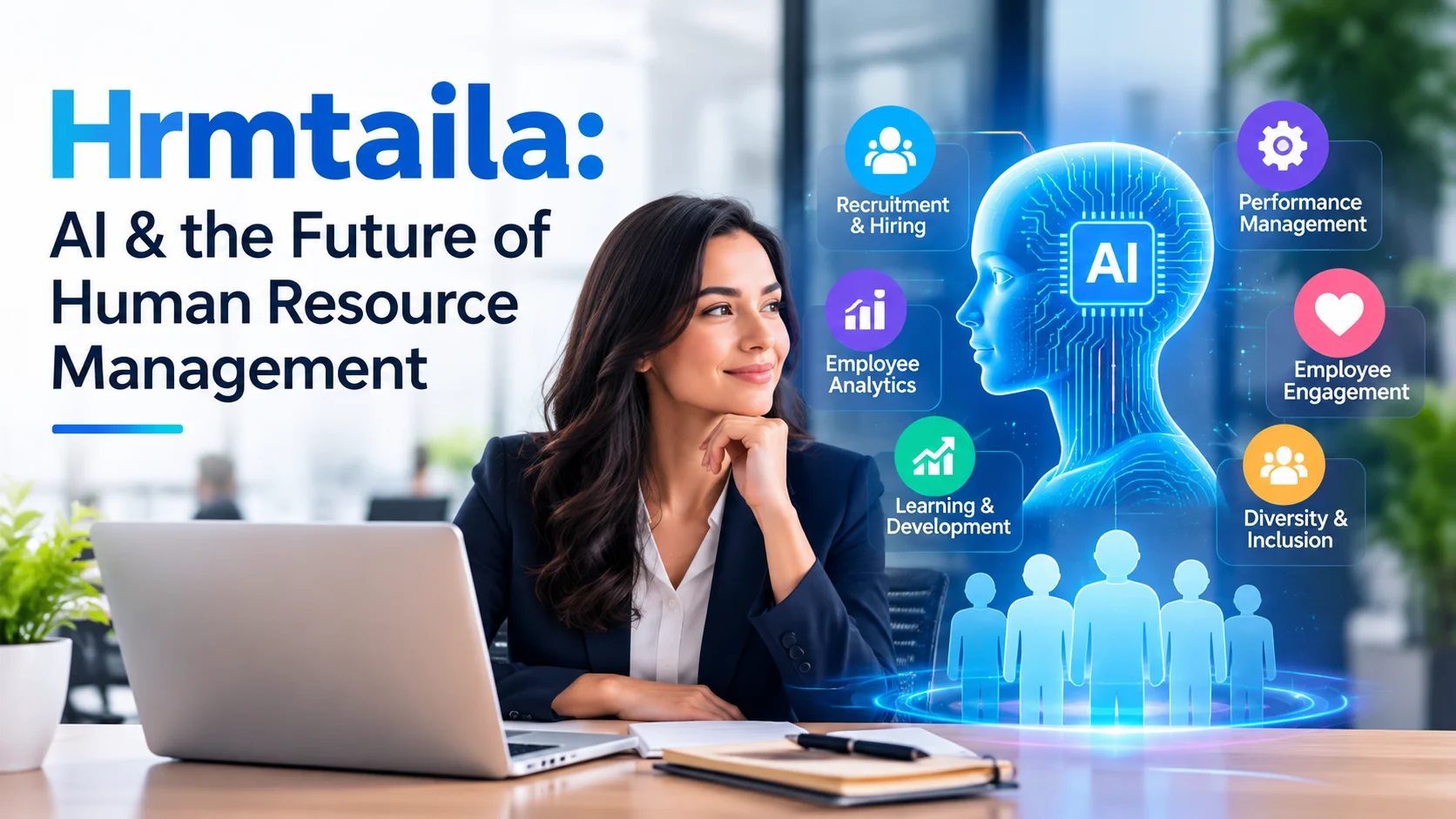
Human resource management is changing rapidly as businesses adopt digital tools, automation, and artificial intelligence to improve the employee experience. HRMtaila represents an emerging concept associated with the intersection of AI, human resources, workplace technology, and modern talent management. As organizations look for smarter ways to recruit, support, and retain employees, technology is becoming an increasingly important part of HR strategy.
Traditional HR processes often involve repetitive administrative work, manual recordkeeping, lengthy recruitment procedures, and time-consuming employee management tasks. AI-powered systems can help streamline many of these activities while giving HR professionals more time to focus on people, culture, and strategic decisions.
Understanding the HRMtaila Concept
A Modern Approach to HR Technology
HRMtaila can be viewed as a digital-era HR concept centered around the use of intelligent technology in human resource management. Its relevance comes from the growing demand for tools that can analyze information, automate routine processes, and support better workforce decisions.
Modern HR departments increasingly rely on software for recruitment, payroll, employee communication, performance tracking, learning, and workforce planning. AI adds another layer by helping organizations process large amounts of information more efficiently.
Why AI Matters in Human Resources
Artificial intelligence can identify patterns in data and assist with tasks that previously required significant manual effort. For example, AI can help organize applications, identify relevant skills, generate reports, and support employee engagement initiatives.
However, AI should support HR professionals rather than completely replace human judgment. Employment decisions can have significant consequences, making fairness, transparency, and human oversight essential.
How AI Is Transforming Human Resource Management
Smarter Recruitment
Recruitment is one of the areas where AI can have a major impact. Organizations may receive hundreds or thousands of applications for a single position. Intelligent recruitment systems can help sort applications according to predefined qualifications and identify candidates whose skills align with job requirements.
AI can also assist with scheduling interviews, preparing communications, and maintaining candidate records. These capabilities can reduce administrative workloads and help recruiters spend more time interacting with applicants.
Employee Onboarding
The onboarding process is another area where digital HR systems can provide value. New employees often need information about policies, benefits, workplace procedures, training, and company culture.
AI-powered assistants can provide answers to common questions and guide employees through different onboarding stages. This can create a more organized experience while reducing repetitive questions directed toward HR teams.
Performance Management
Employee performance management is increasingly becoming data-driven. HR platforms can organize goals, feedback, reviews, and development plans in one place.
AI can help identify patterns in performance information and highlight areas that may require attention. Managers can then use these insights as one part of a broader evaluation process.
HRMtaila and Employee Experience
Personalized Workplace Support
Employees have different skills, goals, working styles, and development needs. Technology can help HR teams create more personalized experiences.
For example, digital platforms may recommend training resources based on an employee’s role or suggest development opportunities that match existing skills. This can make professional development more relevant and accessible.
Better Internal Communication
Communication is a major part of workplace culture. AI-assisted HR systems can help employees locate policies, benefits information, internal resources, and answers to frequently asked questions.
When employees can quickly find accurate information, HR teams can also spend less time handling repetitive administrative requests.
The Role of Data in Modern HR
Workforce Analytics
Data has become an important resource for HR decision-making. Workforce analytics can provide insights into areas such as employee engagement, recruitment patterns, retention, training participation, and staffing requirements.
HRMtaila’s connection with AI highlights how organizations can use technology to turn workforce data into useful insights. However, data should be interpreted carefully rather than treated as an automatic replacement for professional judgment.
Protecting Employee Information
With greater use of digital HR systems comes greater responsibility for protecting employee information. HR departments may handle sensitive personal, employment, compensation, and performance-related data.
Strong security practices, appropriate access controls, privacy policies, and responsible data management are therefore essential. Organizations should also understand applicable privacy and employment regulations before deploying AI-based HR systems.
Benefits of AI-Powered HR Management
Businesses exploring AI and HR technology may gain several potential advantages:
- Greater efficiency: Automation can reduce repetitive administrative work.
- Faster processes: Digital tools can accelerate recruitment and employee support.
- Data-driven decisions: Analytics can help HR teams identify workforce patterns.
- Improved employee experiences: Personalized digital services can make workplace resources easier to access.
- Better strategic planning: HR professionals can spend more time on workforce development and organizational goals.
These benefits depend on how effectively technology is implemented. Poorly designed systems can create new challenges rather than solve existing ones.
Challenges of Using AI in HR
Bias and Fairness
AI systems can produce unfair outcomes if they are trained on biased or incomplete information. This is particularly important in recruitment, promotion, and performance evaluation.
Organizations should regularly review AI-supported processes and maintain human oversight to reduce potential discrimination and unintended bias.
Privacy Concerns
Employee information requires careful handling. Organizations should collect only appropriate information, clearly explain how data is used, and apply suitable security measures.
Transparency can also help employees understand when automated systems are involved in workplace decisions.
Human Judgment Still Matters
AI can process information quickly, but it does not understand workplace relationships in the same way people do. HR professionals need empathy, communication skills, ethical awareness, and contextual understanding.
For this reason, the most effective approach is often a combination of technology and human expertise.
The Future of HRMtaila and Intelligent HR
AI as an HR Assistant
The future of HR is likely to involve AI working alongside HR professionals. Rather than treating artificial intelligence as a complete replacement for human resources teams, businesses can use it as an assistant for research, analysis, communication, and administrative tasks.
This approach allows professionals to focus on complex decisions that require human understanding.
More Personalized Employee Development
AI may also contribute to more individualized career development. Systems can potentially analyze skills, training history, interests, and organizational requirements to identify learning opportunities.
This could help employees build relevant skills while helping organizations prepare their workforce for changing business needs.
Continuous Evolution
AI technology is developing quickly, meaning HR systems will continue to evolve. Businesses that adopt new tools should therefore evaluate them regularly instead of assuming that one technology will remain suitable indefinitely.
A successful HR technology strategy should combine innovation with employee trust, security, fairness, and clear organizational objectives.
Frequently Asked Questions:
1. What is HRMtaila?
HRMtaila can be understood as an emerging concept associated with artificial intelligence, HR technology, and modern human resource management.
2. How can AI help HR departments?
AI can assist with recruitment, employee support, data analysis, onboarding, communication, and other repetitive HR activities.
3. Can AI replace HR professionals?
AI can automate certain tasks, but HR professionals remain important for communication, ethical decisions, employee relationships, and complex workplace situations.
4. Is AI in HR safe for employee data?
AI-based HR systems can be used responsibly when organizations apply strong security, privacy controls, appropriate access policies, and regulatory compliance measures.
5. Why is AI becoming important in human resources?
AI can help organizations manage information efficiently, automate repetitive work, identify workforce patterns, and provide more personalized employee support.
Final Thought
HRMtaila reflects the broader movement toward smarter, technology-driven human resource management. Artificial intelligence can make many HR processes faster and more organized, from recruitment and onboarding to workforce analytics and employee development.
However, successful digital HR management is not simply about adopting the newest technology. Organizations also need to prioritize fairness, privacy, transparency, security, and human judgment. The strongest future for HR is likely to come from combining intelligent technology with the empathy and decision-making skills of experienced HR professionals.









Leave a Reply