

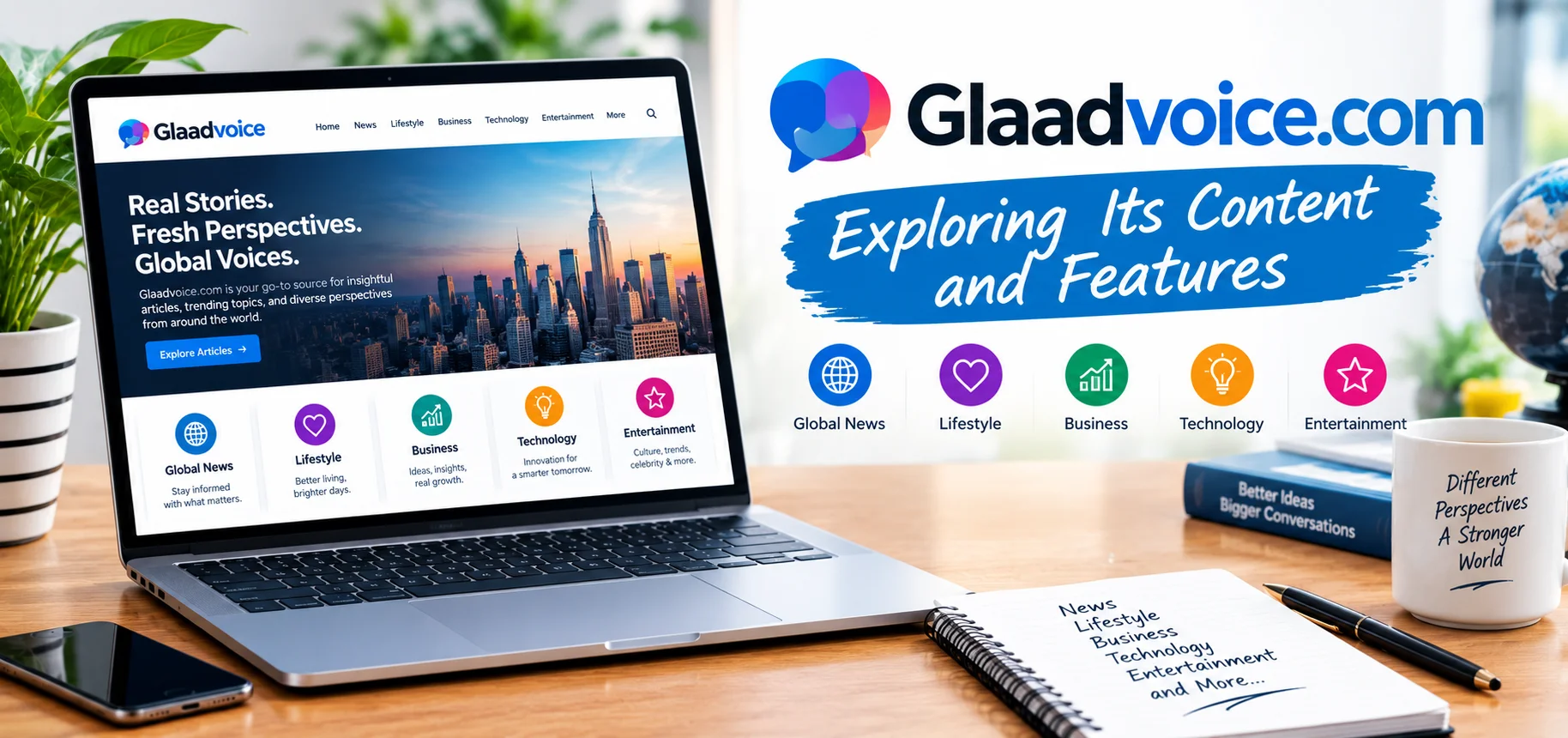
The internet has changed the way people access information, discover new ideas, and stay informed about different industries. Digital publishing platforms have become an important part of this transformation by making articles, insights, and informational resources available to online audiences. Glaadvoice.com is associated with independent digital publishing, making it a relevant subject for readers exploring online publications and their place in the modern digital landscape.
Unlike traditional newspapers and magazines, online publications can distribute content without relying on printed editions. Readers can browse articles, explore different subjects, and access information from various devices. However, the value of a digital publication depends on more than its online presence. Content quality, originality, transparency, and user experience are also important factors.
This guide examines Glaadvoice.com in the broader context of digital publishing, explaining the features readers should evaluate, the role of search engine optimization, and the practices that help online publications deliver meaningful information.
Understanding Glaadvoice.com and Its Publishing Model
Glaadvoice.com can be considered in the context of independent online publishing. Digital publishing platforms provide a way to distribute written content, share ideas, and connect information with people interested in particular subjects.
Online publications have several advantages over traditional print formats. Publishers can update existing articles, introduce new material, and organize content into categories without waiting for another printed edition. These capabilities make digital publishing a flexible option for content creators and independent media platforms.
Nevertheless, the specific publishing activities and features of Glaadvoice.com should be confirmed by reviewing its current website.
The Expansion of Independent Digital Media
Independent digital publishing has created new opportunities for writers, editors, entrepreneurs, and media professionals. Website-building tools and content management systems allow publishers to establish an online presence without operating a traditional printing business.
This accessibility has encouraged the growth of websites covering different subjects and audience interests. Some publications focus on specialized industries, while others explore a broader selection of informational topics.
Greater accessibility also brings increased competition. Publishers need to offer useful, original, and dependable content to distinguish themselves from similar websites.
When exploring Glaadvoice.com, readers can examine its published articles, available categories, author information, and editorial presentation to understand its approach to online content.
Why Online Publishing Is Important
Digital publishing makes information easier to distribute and access. Readers can explore educational resources, learn about emerging developments, and research unfamiliar subjects from almost anywhere with an internet connection.
Online platforms can also update information when circumstances change. This flexibility is especially useful for reference materials, industry discussions, and topics that develop over time.
However, publishing quickly does not automatically make information reliable. Responsible publishers should verify important claims, identify opinion-based material, and provide appropriate context so readers can make informed judgments.
Important Features of a Digital Publishing Website
A useful publishing website needs more than an attractive design. Visitors also expect clear navigation, readable articles, relevant information, and a browsing experience that works across different devices.
Simple Navigation and Organized Categories
Website organization plays an important role in helping readers discover content. Clear menus, descriptive headings, useful category pages, and relevant internal links make it easier to locate specific information.
When reviewing Glaadvoice.com, readers should check whether its available articles are arranged logically and whether important pages can be found without unnecessary effort.
A well-organized structure also helps visitors discover related subjects. Instead of leaving after reading one article, they can explore additional material that supports their interests.
Informative and Reader-Friendly Content
Readable writing makes digital information more accessible. Excessively long paragraphs, unclear explanations, and repetitive statements can make an article difficult to follow.
Effective online content generally uses concise paragraphs, descriptive subheadings, relevant examples, and a logical progression of ideas. These elements help readers identify important points without struggling through unnecessary details.
Quality also depends on substance. Articles should explain their subjects clearly, answer relevant questions, and provide information that readers can use.
For Glaadvoice.com, the most useful assessment would involve reviewing its actual articles to determine whether they offer meaningful information rather than simply repeating familiar statements.
Mobile Compatibility and Accessibility
Many people read online content using smartphones and tablets, making mobile compatibility an important consideration for digital publications.
Responsive layouts allow website content to adjust to different screen sizes. Readable text, appropriately sized images, functional links, and accessible menus can improve the overall experience.
Accessibility matters as well. Clear link descriptions, sufficient color contrast, and meaningful alternative text for informative images help make content easier to use.
Readers evaluating Glaadvoice.com should check how its pages perform on different devices rather than assuming that these features are available.
Glaadvoice.com and the Value of Quality Content
The success of a digital publishing platform depends partly on the usefulness of its information. Readers benefit when articles explain complicated subjects, answer practical questions, and provide reliable context.
Originality and Editorial Quality
Originality gives readers a reason to explore one publication instead of relying exclusively on other sources. Meaningful original content can include independent analysis, fresh examples, clear explanations, and useful connections between ideas.
Simply rearranging existing information or replacing a few words does not necessarily create valuable material. Strong editorial work contributes additional understanding and presents information in a way that serves the audience.
Readers exploring Glaadvoice.com can assess whether its available articles provide distinct perspectives, relevant details, and explanations that support independent learning.
Accuracy, References, and Transparency
Trust is essential for any online publication. Readers should be able to distinguish factual information from commentary, personal opinions, and promotional statements.
Several factors can help establish credibility:
- Clear author information and publication dates.
- References supporting important factual claims.
- Reliable sources for statistics and technical information.
- Transparent corrections when significant mistakes occur.
- A clear distinction between editorial content and advertising.
A professional-looking website does not automatically guarantee accuracy. Readers should consider the evidence behind important statements and compare information with dependable sources when necessary.
These standards provide a useful framework for evaluating Glaadvoice.com without making assumptions about its current editorial practices.
Content That Matches Reader Interests
Useful publications understand the questions their audiences want answered. Depending on their focus, readers may be interested in educational explanations, industry developments, practical guides, or general informational articles.
Good content addresses the main question directly while providing enough background for readers to understand the subject. Unnecessary repetition should not replace meaningful explanations.
Publishers can use audience feedback and responsible website analytics to identify subjects that deserve further coverage. However, audience interest should be balanced with accuracy, originality, and editorial responsibility.
The Role of SEO in Digital Publishing
Search engine optimization, commonly known as SEO, helps search engines understand online content and connect relevant pages with appropriate searches. For digital publishers, a sustainable SEO strategy combines useful writing, logical organization, and sound technical practices.
Keyword Research and Search Intent
Keyword research helps publishers understand how people search for information. These search phrases can guide article topics, page titles, descriptions, and subheadings.
However, keywords should fit naturally into the content. Repeating the same phrase excessively can reduce readability and make an article appear artificial.
For Glaadvoice.com, search terms should accurately reflect the website and the subjects being discussed. Publishers should avoid unsupported claims or misleading headlines designed solely to attract clicks.
Understanding search intent is equally important. Someone searching for a definition may need a straightforward explanation, while someone researching a complicated topic may benefit from a detailed guide.
Content Structure and Internal Linking
A clear article structure improves readability and helps search engines understand how information is organized.
Useful structural elements include:
- Descriptive headings and subheadings.
- A focused introduction and informative conclusion.
- Tables that summarize important comparisons.
- Bullet points for practical recommendations.
- Internal links to relevant supporting articles.
Internal linking can help readers explore related material and understand connections between subjects. However, links should be relevant and useful rather than added simply to increase the number of links on a page.
Technical SEO and Website Performance
Written content is only one part of SEO. Technical performance can also influence how easily search engines access pages and how comfortably visitors use a website.
Publishers should pay attention to page loading speed, mobile usability, secure connections, broken links, duplicate content, and website structure.
Image optimization and accessible page layouts can also contribute to a better browsing experience.
SEO does not guarantee a particular ranking or amount of traffic. Sustainable search visibility usually requires consistent content quality, appropriate technical maintenance, and information that satisfies readers’ needs.
Benefits of Digital Publishing for Readers and Writers
Digital publishing creates opportunities for people who produce, distribute, and consume information.
Convenient Access to Information
Online publications allow readers to access articles from different locations and devices. This convenience supports everyday learning, professional research, and the discovery of unfamiliar subjects.
Readers can also bookmark useful pages, share relevant resources, and return to information whenever necessary.
Greater Opportunities for Content Creators
Independent publishers can reach audiences beyond their immediate communities. Writers may develop portfolios, explore specialized topics, and establish an editorial identity through online platforms.
Digital publishing tools also make it possible to revise articles when information changes. This flexibility can be particularly valuable for reference guides and subjects that require regular updates.
Understanding Audience Engagement
Website analytics help publishers understand how visitors discover articles, which pages receive attention, and where users may encounter difficulties.
These insights can support improvements in content organization, navigation, and editorial planning.
However, high traffic does not automatically indicate high-quality publishing. Accuracy, originality, accessibility, and reader satisfaction remain important measures of a publication’s value.
What Should Readers Evaluate on Glaadvoice.com?
Before deciding whether an online publication meets their needs, readers should examine several practical factors. The following table provides a straightforward evaluation framework.
| Evaluation factor | What to check | Why it matters |
|---|---|---|
| Content quality | Accuracy, depth, and originality | Helps assess informational value |
| Editorial transparency | Author details and contact information | Supports accountability |
| Website navigation | Menus, categories, and internal links | Makes content easier to find |
| Readability | Headings, paragraphs, and language | Improves understanding |
| Source reliability | References and supporting evidence | Helps verify important claims |
| Mobile usability | Layout, text size, and loading speed | Supports convenient browsing |
| Privacy and security | Privacy policy and secure connection | Helps readers understand website practices |
These factors are general evaluation criteria, not confirmed features of Glaadvoice.com. Readers should inspect the website directly before reaching conclusions about its current services, content quality, or editorial standards.
Five Practical Tips for Using Online Publications
Readers can make better use of digital publications by following a few straightforward practices.
- Verify important information: Check publication dates, author details, and supporting sources before relying on significant claims.
- Compare credible sources: Consult more than one dependable reference when researching complex or controversial subjects.
- Explore related content: Follow relevant internal links to develop a broader understanding of a topic.
- Protect personal information: Review privacy policies and avoid sharing unnecessary details with websites.
- Focus on useful material: Prioritize articles that provide clear explanations, meaningful examples, and relevant information.
These habits help readers evaluate online content more carefully, regardless of which publication they visit.
The Future of Digital Publishing
Digital publishing continues to change as technology influences how people create, distribute, and consume information. Artificial intelligence, mobile-first design, multimedia content, personalized recommendations, and accessibility improvements are shaping the development of online media.
Artificial Intelligence and Content Creation
Artificial intelligence can support several publishing tasks, including proofreading, transcription, research organization, and routine editorial assistance.
When used responsibly, these tools may help publishers work more efficiently. However, AI-generated material can contain incorrect facts, incomplete explanations, or misleading statements.
Human review remains important for verifying information, checking context, improving originality, and maintaining editorial standards.
Publishers that combine useful technology with careful oversight can improve their workflows without treating automation as a replacement for responsible editorial judgment.
Building Lasting Reader Trust
As online information becomes more abundant, readers need practical ways to identify dependable material. Transparent sourcing, clear authorship, responsible corrections, and consistent editorial standards can help publications build credibility.
Independent publishers also need to focus on long-term value rather than traffic alone. Helpful articles, accessible design, and honest communication can contribute to stronger relationships with readers.
For Glaadvoice.com, the same principles offer a useful framework for understanding the importance of quality and transparency in digital publishing.
Frequently Asked Questions
1. What is Glaadvoice.com?
Glaadvoice.com is associated with independent digital publishing. Its current content categories and publishing activities should be confirmed by visiting the website.
2. Why does digital publishing matter?
Digital publishing allows writers and organizations to distribute information online, reach wider audiences, and update content more easily than traditional print publications.
3. How can readers assess an online publication?
Readers can examine content accuracy, originality, author transparency, source quality, readability, navigation, and privacy practices.
4. Can SEO improve a publishing website?
SEO can help search engines understand content and connect relevant pages with appropriate searches, but it does not guarantee higher rankings or increased traffic.
5. What makes an online article valuable?
A valuable article provides accurate, relevant, original, and clearly organized information that addresses the needs of its intended audience.
Final Thoughts
Glaadvoice.com: A Closer Look at Digital Publishing and Online Content explores the broader role of independent publishing in an increasingly connected world. Online platforms give writers opportunities to share ideas, distribute information, and reach audiences interested in different subjects.
However, the presence of a website alone does not establish its credibility or usefulness. Readers should consider originality, factual accuracy, editorial transparency, accessibility, and the overall browsing experience when evaluating a digital publication.
Glaadvoice.com can be assessed using these principles, alongside a direct review of its available content and current website features. Ultimately, dependable digital publishing depends on delivering meaningful information, communicating transparently, and respecting the needs of readers.














Leave a Reply