

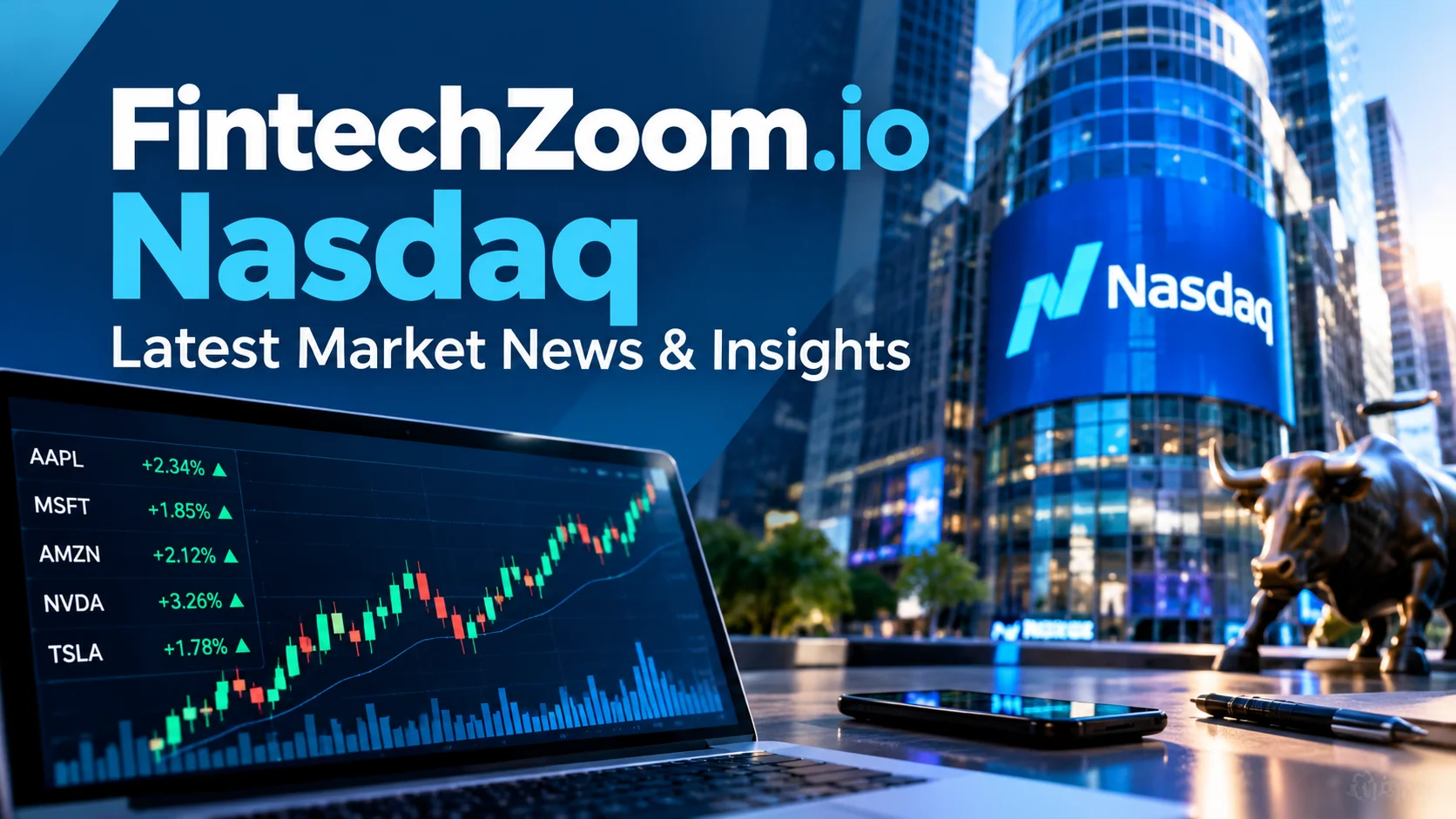
The modern financial ecosystem moves at an unprecedented velocity, driven by automated data feeds, digital transformation, and the constant intersection of technology and capital markets. For retail traders, long-term investors, and financial analysts tracking global exchanges, staying informed requires access to timely data and clear contextual breakdowns.
Platforms like FintechZoom.io have established themselves as prominent digital resources for tracking key equity indexes, with a heavy emphasis on the Nasdaq Composite, technology sector developments, and broader macroeconomic indicators.
The Evolution of Digital Financial Media
The landscape of financial journalism and market reporting has undergone a massive paradigm shift over the past decade. Traditional morning newspapers and delayed evening broadcasts have been replaced by continuous, real-time digital newsrooms.
Democratizing Access to Market Data
Historically, comprehensive stock market analytics, institutional-grade charting tools, and rapid earnings breakdowns were restricted to Wall Street professionals and major investment banks. Digital aggregation platforms have fundamentally democratized this information. By packaging complex exchange data into user-friendly formats, these portals allow everyday retail participants to review corporate balance sheets, track pre-market movers, and read up to-the-minute macroeconomic reports without needing an institutional terminal.
The Need for Real-Time Context
Accessing raw stock prices is no longer sufficient for modern market participants. When a major technology company releases its quarterly earnings report or the Federal Reserve announces an adjustment to interest rates, the market reaction happens within seconds. Financial tracking portals serve a vital role by offering immediate context explaining not just what happened to an index, but why it moved based on underlying market sentiment, institutional capital flows, and sector wide performance shifts.
Decoding the Nasdaq Composite Through FintechZoom
As the leading global benchmark for technology, innovation, and growth-oriented equities, the Nasdaq Composite commands immense daily attention from international investors.
Why the Nasdaq Sets the Pace for Global Equities
Unlike indices heavily anchored by traditional industrial, energy, or utility enterprises, the Nasdaq is heavily populated by companies driving digital disruption, cloud computing, software-as-a-service (SaaS), and advanced hardware manufacturing. Consequently, its daily performance is widely interpreted as a barometer for investor appetite toward high-growth assets. When risk-on sentiment prevails, the Nasdaq frequently outperforms broader market indexes; conversely, during periods of economic tightening, high-valuation tech stocks often experience sharper corrections.
Tracking Sector Rotations and Market Breadth
Platforms monitoring the Nasdaq provide granular insights into sector rotation the recurring market cycle where institutional capital shifts dynamically out of technology and into defensive sectors, or vice versa. Understanding these rotational patterns helps investors differentiate between a localized pullback in a specific tech sub-sector and a broader, systemic shift in macroeconomic health.
Key Metrics and Analytical Frameworks Highlighted in Market Reports
Successful equity research requires a disciplined balance between quantitative financial metrics and qualitative market indicators. Financial portals typically organize these data points to assist users in evaluating individual asset health.
Fundamental Analysis and Earnings Breakdowns
Quarterly earnings announcements remain the ultimate test of public company valuation. Financial coverage consistently focuses on core performance pillars, including:
Revenue Growth Year-Over-Year: Measuring a company’s ability to organically expand its core business operations and capture market share.
Earnings Per Share (EPS): Comparing actual corporate profitability against Wall Street consensus expectations.
Forward Guidance: Executive commentary outlining projected performance for upcoming quarters, which frequently triggers heavier immediate price volatility than historical results.
Technical Indicators and Price Action
For active traders utilizing digital research portals, technical indicators form the backbone of short-term strategy. Commonly discussed metrics include moving averages, relative strength index (RSI) parameters, and volume breakouts. These indicators help market participants identify optimal entry and exit zones, spot momentum shifts, and evaluate critical support and resistance levels on major Nasdaq-listed equities.
The Dominance of Mega-Cap Tech and Artificial Intelligence
It is impossible to analyze current Nasdaq trends without addressing the outsized influence of mega-cap technology corporations.
The Semiconductor and AI Infrastructure Boom
Recent market cycles have been heavily dictated by rapid advancements in artificial intelligence, machine learning, and advanced semiconductor fabrication. Chipmakers, hyper-scale cloud providers, and digital infrastructure companies have experienced unprecedented enterprise demand. Platforms tracking these trends evaluate how supply chain adjustments, international trade policies, and massive capital expenditure allocations into data centers dictate the multi-year outlook of the tech sector.
Software, Cloud Computing, and Digital Adoption
Beyond hardware, cloud infrastructure and recurring-revenue software platforms anchor the stability of the Nasdaq. Monitoring enterprise software spending provides clear signals regarding broader corporate health. When enterprise clients tighten IT budgets or delay software upgrades, it frequently serves as an early indicator of wider economic slowing.
Risk Management and Portfolio Diversification Strategies
While high growth technology equities offer substantial capital appreciation potential, they inherently carry elevated volatility and drawdown risk. A recurring theme across professional financial commentary is the absolute necessity of rigorous risk management.
Mitigating Concentration Risk
One of the most frequent traps for growth focused investors is over-concentration in a single sector. Maintaining a balanced portfolio across diversified asset classes such as healthcare, consumer staples, and financials helps cushion portfolios during tech-led market downturns.
Navigating Macroeconomic Headwinds
Interest rate policy, inflation prints, and geopolitical developments exert a profound influence on equity valuations. Growth stocks, whose projected cash flows lie far out in the future, are exceptionally sensitive to discount rate adjustments driven by central bank policies. Financial tracking resources help investors contextualize how macroeconomic data releases directly affect corporate borrowing costs and net margins.
The Interconnected Nature of Modern Financial Markets
Digital finance portals rarely analyze traditional equities in a vacuum; they frequently examine how cross-asset sentiment influences stock market behavior.
Crypto Sentiment and Risk-On Correlating Behavior
Digital assets, blockchain infrastructure developments, and decentralized finance (DeFi) ecosystems often exhibit high correlation with risk-on sentiment in the broader technology sector. When speculative and institutional capital flows freely into digital risk assets, high-growth tech stocks often experience synchronized momentum.
Safe-Haven Flows and Commodities
Conversely, during periods of heightened geopolitical tension or persistent inflation, institutional capital frequently rotates out of growth-oriented equities and into commodities, precious metals like gold, or fixed-income instruments. Monitoring these cross-asset capital flows gives investors a more holistic view of true market risk appetite.
The Future of Digital Financial Research and AI Integration
As artificial intelligence continues to reshape data aggregation and financial journalism, research platforms are undergoing a continuous technological evolution.
Predictive Modeling and Automated Insights
The integration of advanced machine learning algorithms allows modern research portals to process massive volumes of unstructured data ranging from global social sentiment to complex regulatory filings at unprecedented speeds. This capability helps market observers identify emerging sector trends and micro-economic shifts long before they become widespread mainstream consensus.
The Importance of Independent Verification and Diligence
Despite massive advancements in real-time data delivery and analytical software, the ultimate responsibility for capital preservation rests with the individual investor. Financial information portals serve as exceptional starting points for trend identification, earnings tracking, and macroeconomic awareness, but they should always be supplemented by independent research, thorough due diligence, and official regulatory filings.












Ponas Robotas: The World of Smart Technology - Football club menu
[…] lies a triad of core elements: sensors, connectivity, and artificial intelligence. Together, these components act as the eyes, nervous system, and brain of modern automated […]