

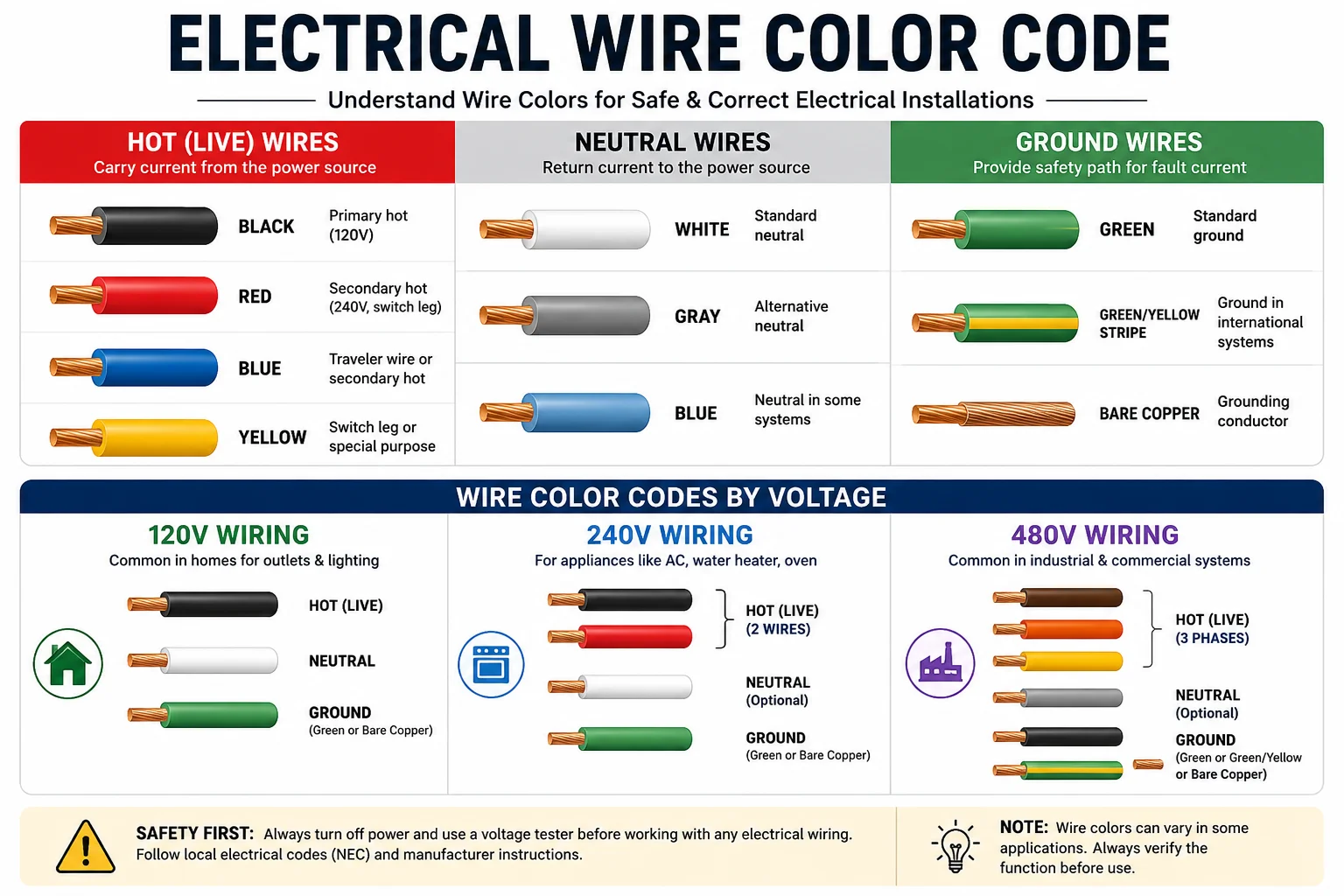
An electrical wire color code is a standardized system that uses different wire colors to identify the purpose and function of electrical conductors within a circuit. These color markings help electricians, technicians, and homeowners quickly recognize which wire carries power, which serves as a neutral path, and which provides grounding for safety.
Why Wire Colors Matter for Electrical Safety
Electrical wire colors play a critical role in ensuring safety, accuracy, and efficiency during installation, maintenance, and troubleshooting. The color-coding system allows electricians and technicians to instantly identify the function of each wire, reducing the risk of dangerous mistakes that could lead to electric shocks, equipment damage, or electrical fires.
Electrical Wire Color Code Chart
Understanding wire color codes helps identify the function of each conductor and reduces the risk of electrical hazards. While standards may vary by country, the following colors are commonly used in residential and commercial electrical systems.
| Wire Color | Function | Description |
|---|---|---|
| Black | Hot (Live) | Carries electrical current from the power source. |
| Red | Hot (Live) | Secondary live wire used in certain circuits and switches. |
| Blue | Hot (Live) | Common live wire color in some international systems. |
| Yellow | Hot (Live) | Often used as a switched or secondary live wire. |
| White | Neutral | Returns current to the electrical panel. |
| Gray | Neutral | Alternative neutral wire color in some installations. |
| Green | Ground | Provides a safe path for fault current. |
| Bare Copper | Ground | Uninsulated grounding conductor used in many systems. |
| Green/Yellow Stripe | Ground | Common grounding color in international wiring standards. |
Hot Wire Colors
Hot wires, also known as live wires, carry electrical current from the power source to outlets, switches, fixtures, and appliances. These wires are energized and should always be handled with caution.
Black: Primary hot wire in most residential circuits.
Red: Secondary hot wire used in 220V circuits, smoke detectors, and switched outlets.
Blue: Frequently used as a live conductor in international wiring systems.
Yellow: Often used for switched legs, traveler wires, or secondary hot conductors.
Before working on any hot wire, always turn off power at the circuit breaker and verify the circuit is de-energized with a voltage tester.
Neutral Wire Colors
Neutral wires complete the electrical circuit by carrying current back to the electrical panel. Although they are not intended to be energized like hot wires, they can still carry current during normal operation.
White: Standard neutral wire color in North American electrical systems.
Gray: Alternative neutral conductor color accepted by many electrical codes.
Neutral wires should never be used as ground wires unless specifically permitted by local electrical regulations.
Ground Wire Colors
Ground wires are a critical safety feature that protects people and equipment from electrical faults. They provide a low-resistance path for excess electricity to travel safely to the ground.
Green: Standard grounding conductor color.
Bare Copper: Uninsulated ground wire commonly found in residential wiring.
Green with Yellow Stripe: Widely used as the protective earth conductor in international electrical systems.
Electrical Wire Colors Explained
Electrical wire colors are used to identify the purpose of each conductor within a circuit. Understanding what each color represents can help prevent wiring mistakes, improve troubleshooting, and ensure compliance with electrical safety standards.
Black Wire Meaning
Black wires are typically used as hot (live) conductors that carry electricity from the electrical panel to outlets, switches, and appliances. Common uses include:
- Standard 120V power circuits
- Wall outlets and receptacles
- Lighting circuits
- Switch connections
Because black wires are energized, they should always be treated as live unless verified otherwise with a voltage tester.
Red Wire Meaning
Red wires are also considered hot wires and are commonly used as secondary live conductors. Typical applications include:
- 240V circuits
- Switched outlets
- Smoke detector interconnections
- Ceiling fan wiring
- Three-way switch systems
A red wire can carry electrical current at all times or only when a switch is activated, depending on the circuit design.
White Wire Meaning
White wires are generally designated as neutral conductors in North American electrical systems. Their primary role is to:
- Return current to the electrical panel
- Complete the electrical circuit
- Maintain proper voltage balance
White wires should not be used as hot conductors unless they are properly re-identified according to local electrical codes.
Gray Wire Meaning
Gray wires serve the same purpose as white wires in most installations and are commonly used as neutral conductors. Gray wiring is often found in:
- Commercial buildings
- Industrial facilities
- Larger electrical systems
Like white wires, gray wires help complete the circuit by carrying current back to the power source.
Green Wire Meaning
Green wires are used exclusively for grounding purposes and are an essential part of electrical safety systems. Their functions include:
- Protecting against electrical shock
- Providing a fault-current path
- Helping circuit breakers trip during faults
Green wires should never be used as hot or neutral conductors.
Blue Wire Meaning
Blue wires are commonly used as hot conductors in many international wiring systems and specialized installations. Typical uses include:
- Switched live connections
- Traveler wires in multi-way switching systems
- Three-phase electrical installations
- International residential wiring
The exact function of a blue wire depends on the wiring standard being followed.
Brown Wire Meaning
Brown wires are widely recognized as live (hot) conductors in modern international electrical standards, particularly in Europe and many other countries. Common applications include:
- Residential electrical wiring
- Commercial installations
- Single-phase power systems
In many countries, the brown wire is the primary conductor that delivers power from the electrical source.
Orange Wire Meaning
Orange wires are often used to indicate a special-purpose hot conductor. They may be found in:
- Switched circuits
- HVAC systems
- High-voltage control circuits
- Commercial and industrial equipment
Because orange wire usage can vary, it is important to consult wiring diagrams and local electrical codes before making connections.
Yellow Wire Meaning
Yellow wires are generally used as secondary hot conductors or switch-leg wires. Common uses include:
- Ceiling fan connections
- Lighting control systems
- Traveler wires in switch circuits
- Commercial electrical installations
AC Electrical Wire Color Codes
AC electrical wire color codes are standardized systems used to identify the function of wires in alternating current systems, helping ensure safe installation and accurate troubleshooting.
Hot (Live) Wires: Commonly black, red, brown, blue, yellow, or orange depending on the country and circuit type. These conductors carry electrical current directly from the power source to your connected devices.
Neutral Wires: Typically white or gray in North American systems, and blue in many international standards. They complete the electrical circuit by safely returning the current back to the main electrical panel.
Ground Wires: Usually green, green with a yellow stripe, or bare copper. These provide a critical low-resistance safety path for fault current to protect people and equipment from shocks.
Although these color conventions are widely followed, they can vary based on regional electrical codes such as the NEC or IEC. Proper verification using a voltage tester is always necessary before working on any AC wiring system.
DC Electrical Wire Color Codes
DC electrical wire color codes are standardized systems used to identify the function of wires in direct current systems, which are commonly found in automotive applications, solar power setups, and electronic devices.
Positive Wires (+): Typically red in standard low-voltage DC electronics and automotive applications, though the NEC specifies black for the positive (ungrounded) conductor in some solar and industrial DC power systems. These carry current from the source to the load.
Negative Wires (-): Commonly black in automotive and basic electronic circuits, whereas white or gray is often used in larger industrial or solar DC systems to represent the negative (grounded) conductor.
Ground Wires: Usually green, green with a yellow stripe, or bare copper. Similar to AC systems, these conductors act as a safety mechanism to provide a path for fault currents to prevent shocks and equipment damage.
Because DC standards shift heavily between automotive applications (SAE standards) and building power systems (NEC or IEC standards), it is absolutely critical to verify polarity using a digital multimeter before making any connections.
Electrical Wire Color Codes by Voltage
Electrical wire colors can vary depending on the voltage level and system type. Different voltage systems such as 120V, 240V, and 480V use specific color conventions to help identify conductors and maintain electrical safety.
120V Wiring Colors
120V circuits are commonly used in residential homes for standard outlets and lighting. These circuits typically include one hot wire, one neutral wire, and one ground wire.
- Black or Red: Hot (live) wire
- White: Neutral wire
- Green or Bare Copper: Ground wire
This is the most basic and widely used residential wiring setup.
240V Wiring Colors
240V circuits are used for high-power appliances such as air conditioners, water heaters, and electric ovens. These systems usually involve two hot wires and may or may not include a neutral wire.
- Black and Red: Hot wires (both live)
- White: Neutral wire (if required, often re-identified in some cases)
- Green or Bare Copper: Ground wire
In many 240V setups, no neutral is used if the appliance only requires two hot conductors.
480V Wiring Colors
480V systems are typically found in industrial and commercial environments and are commonly used for heavy machinery and large electrical equipment. These are usually three-phase systems with additional grounding and sometimes neutral conductors.
- Brown: Phase 1 (L1)
- Orange: Phase 2 (L2)
- Yellow: Phase 3 (L3)
- Gray: Neutral wire (if present)
- Green or Green/Yellow Stripe: Ground wire
US Electrical Wire Color Code Standards
US electrical wire color code standards, based on the National Electrical Code (NEC), provide a consistent system for identifying conductors in residential, commercial, and industrial wiring to ensure safety and reduce errors.
Hot (Live) Wires: Typically black as the primary conductor and red as a secondary or switched live wire. Blue and yellow wires may also be used as traveler wires or for specialized circuit functions depending on the specific installation.
Neutral Wires: Usually white, or gray in some commercial installations. These conductors are responsible for returning electrical current back to the main electrical panel to complete the circuit.
Ground Wires: Identified by green, green with a yellow stripe, or bare copper. These are used strictly for safety to carry dangerous fault current away from users and equipment.
Although these color standards are widely followed under NEC guidelines, variations can still exist in specific applications. Proper testing and verification of all wires using a voltage tester is always required before performing any electrical work.
Solar Panel Wire Color Codes
Solar panel wire color codes are used to identify positive, negative, and grounding conductors in photovoltaic (PV) systems, helping ensure safe installation, proper energy flow, and easy troubleshooting. While color standards may vary slightly by manufacturer or region, most solar installations follow widely accepted conventions based on electrical safety guidelines.
Positive Wires (+): Commonly red in typical solar PV systems. These carry direct current (DC) power directly from the solar panels into the inverter or charge controller.
Negative Wires (-): Usually black to complete the DC circuit by returning current. In some specialized system designs or regional standards, additional colors such as blue or white may also be utilized.
Ground Wires: Typically green or green with a yellow stripe, and in some cases may be bare copper. These provide vital protection against electrical faults, grounding the system safely and mitigating lightning surges.
Because solar systems often operate at higher voltages and are exposed to harsh outdoor conditions, proper wire identification is especially important to prevent incorrect connections, system inefficiency, or safety hazards. Always follow manufacturer instructions and local electrical codes when working with solar panel wiring.
















Leave a Reply