

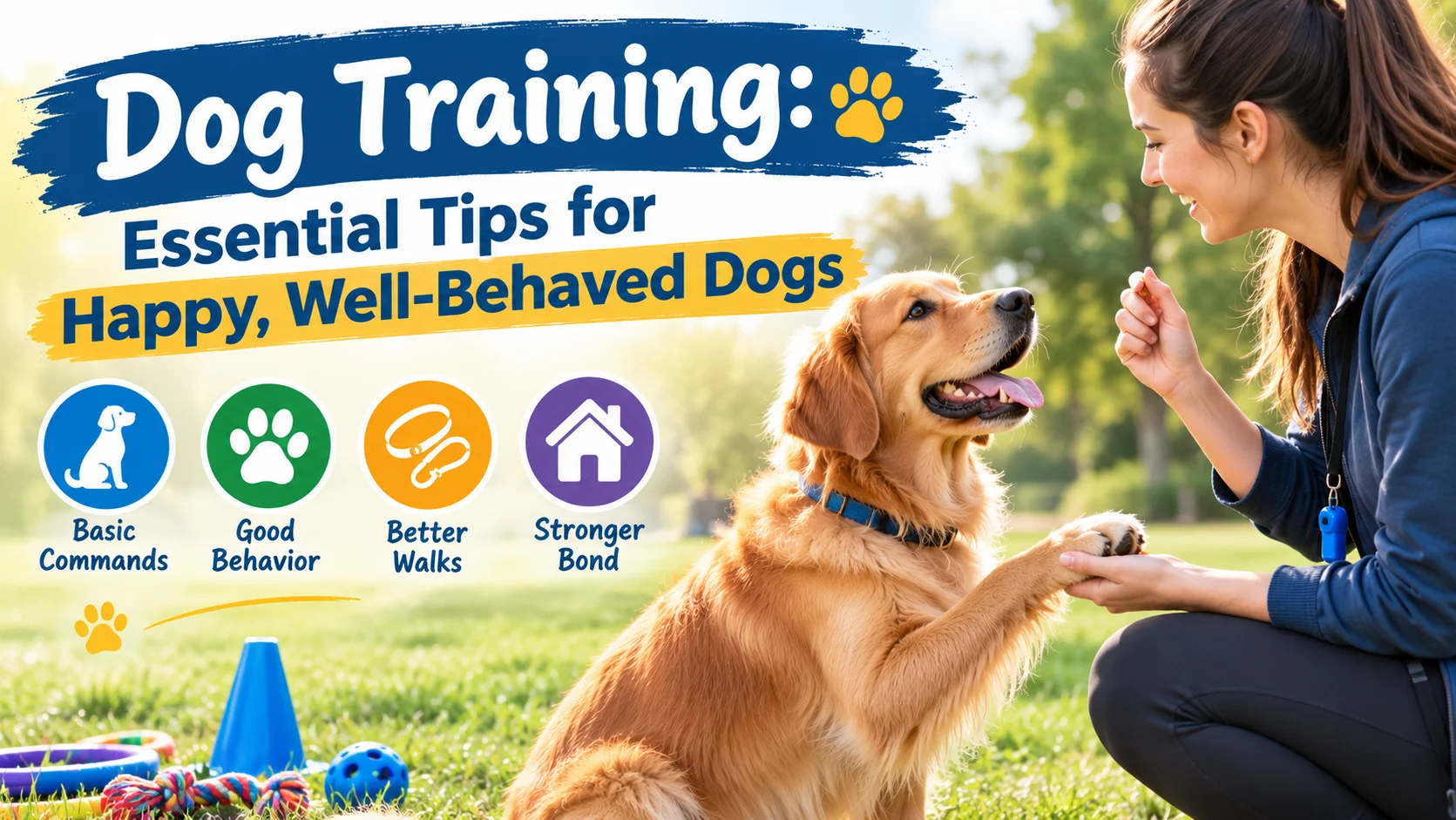
Dog training is an important part of helping a dog become confident, responsive, and comfortable in everyday situations. Whether you have welcomed a young puppy into your home or are working with an older dog, training can build communication between you and your pet.
Effective training does not have to be complicated. Consistency, patience, positive reinforcement, and clear expectations can make learning easier. With regular practice, dogs can learn basic commands, household routines, good manners, and appropriate behaviors.
Why Dog Training Matters
Training provides more than a list of commands. It helps dogs understand what is expected of them and gives owners practical ways to communicate.
Building Communication
Dogs do not naturally understand human language in the same way people do. Training connects words, gestures, actions, and rewards so that your dog can learn what a particular cue means.
For example, consistently using a word such as “sit” before rewarding the desired behavior can help a dog associate the cue with the action.
Encouraging Good Habits
Training can help establish routines around feeding, walking, resting, greetings, and play. Clear expectations can make everyday interactions more predictable.
Supporting Confidence
Learning new skills can provide mental stimulation and give dogs opportunities to succeed. Training should be introduced gradually so that the dog has a reasonable chance of understanding and completing each task.
Start With Basic Commands
Basic commands are a useful foundation for further training. Begin with simple behaviors and practice them regularly.
Sit
“Sit” is one of the most commonly taught commands. Start in a quiet environment with minimal distractions. Use a reward to guide the dog into the desired position, then give the verbal cue and reward the successful response.
Keep sessions short and repeat the exercise regularly.
Stay
Once a dog understands basic positioning, you can gradually introduce “stay.” Start with a very short duration and small distance. Increase the challenge slowly as your dog becomes comfortable.
Come
A reliable recall can be especially useful during appropriate off-leash activities and everyday situations. Practice “come” in a safe, controlled environment and reward your dog for returning.
Avoid turning recall practice into something unpleasant. You want your dog to associate returning to you with a positive experience.
Leave It
“Leave it” can help teach a dog not to pick up or investigate certain objects. Start with low-distraction items and reward the dog for shifting attention toward you.
Use Positive Reinforcement
Positive reinforcement means rewarding a behavior you want the dog to repeat. Rewards can include small treats, praise, play, or another activity the dog enjoys.
Reward the Right Moment
Timing matters. Deliver the reward soon after the desired behavior so the dog can make the connection between the action and the reward.
Keep Rewards Appropriate
Rewards should fit the individual dog. Some dogs respond strongly to food, while others may be particularly interested in toys, play, or praise.
Avoid Confusing Signals
Consistency is important. If one behavior is allowed one day but discouraged the next, the dog may struggle to understand the expectation.
Everyone in the household should try to use similar cues and rules.
Keep Training Sessions Short
Dogs can lose focus when training sessions become too long. Short, regular sessions are often easier to manage than lengthy lessons.
Practice Throughout the Day
Training does not have to happen only during a formal session. You can practice simple behaviors during normal routines.
For example, ask for a calm sit before putting down a food bowl or before opening a door.
End on a Positive Note
Finish sessions after a successful repetition when possible. This can help keep training enjoyable and encourage future participation.
Teach Good Walking Habits
Walking provides exercise, exploration, and mental stimulation. It can also be an opportunity to reinforce training.
Introduce the Leash Gradually
Some dogs need time to become comfortable wearing a collar or harness and walking on a leash. Introduce equipment calmly and allow the dog to adjust at an appropriate pace.
Reward Calm Walking
Reward your dog when they walk calmly beside you or respond to your cues. If pulling becomes a recurring problem, focus on reinforcing the behavior you want rather than turning the walk into a constant struggle.
Reduce Distractions Initially
Start practicing in quieter environments before moving into busier areas. As your dog improves, gradually introduce more distractions.
Socialization and Everyday Manners
Training and socialization work together. Dogs benefit from gradual, positive exposure to different environments, sounds, people, animals, surfaces, and everyday experiences.
Introduce New Experiences Gradually
A new experience should not overwhelm the dog. Give your pet enough space and time to observe and adjust.
Teach Calm Greetings
Dogs can become excited when visitors arrive. Teaching a calm greeting routine can make these situations easier.
For example, reward your dog for keeping four paws on the floor instead of jumping on guests.
Practice Around Distractions
Once a behavior is reliable at home, gradually practice it in other suitable environments. This helps the dog learn that the same cue applies in different situations.
Address Unwanted Behaviors
Dogs may display behaviors such as excessive barking, jumping, chewing, or digging. Understanding the reason behind a behavior can make training more productive.
Identify the Trigger
Consider when the behavior occurs, what happens immediately beforehand, and what the dog appears to gain from it.
For example, barking may be connected to excitement, attention, fear, boredom, or environmental triggers.
Provide Appropriate Alternatives
Instead of focusing only on stopping an unwanted behavior, teach an alternative behavior. A dog that jumps for attention can be taught to sit when greeting people.
Be Consistent
Changing expectations repeatedly can make behavior training harder. Establish clear household rules and reinforce them consistently.
Create a Training-Friendly Environment
The environment can have a major effect on learning.
Reduce Distractions
When teaching a new skill, choose a relatively quiet location. Once the behavior becomes familiar, gradually increase distractions.
Prepare Rewards in Advance
Having appropriate rewards available makes it easier to reinforce good behavior immediately.
Establish a Routine
Regular practice can help turn individual training exercises into everyday habits.
Common Dog Training Mistakes
Even well-intentioned owners can make training more difficult without realizing it.
Expecting Immediate Results
Dogs learn at different rates. Some behaviors may require many repetitions before they become reliable.
Changing Commands
Using several words for the same behavior can create confusion. Choose clear cues and use them consistently.
Making Sessions Too Difficult
If a dog repeatedly fails to perform a behavior, the exercise may be too challenging. Return to an easier version and build gradually.
Ignoring Good Behavior
Owners often notice unwanted behavior more quickly than calm, appropriate behavior. Rewarding good choices can help reinforce them.
Frequently Asked Questions:
What is the best way to start dog training?
Begin with simple behaviors such as sit, come, stay, and leave it. Use clear cues, positive reinforcement, and short practice sessions.
How long should dog training sessions be?
Short sessions can be effective, particularly when teaching a new behavior. Several brief sessions throughout the day may be easier for some dogs than one long session.
Can older dogs learn new commands?
Yes. Older dogs can learn new behaviors. Training may require patience and adjustments based on the dog’s previous experiences and abilities.
How can I stop my dog from jumping on people?
Teach and reward an alternative behavior, such as sitting calmly when someone approaches. Consistency from everyone interacting with the dog is important.
When should professional help be considered?
If a behavior is persistent, difficult to manage, or involves safety concerns, a qualified veterinarian or appropriately trained professional can help identify possible causes and develop a suitable plan.
Final Thought
Dog training is an ongoing process rather than a one-time lesson. Clear communication, positive reinforcement, patience, and consistency can help dogs understand expectations while making learning enjoyable. Start with manageable skills, practice regularly, and gradually increase distractions as your dog becomes more confident. With time and thoughtful guidance, training can strengthen the everyday relationship between dogs and their owners.












Leave a Reply