

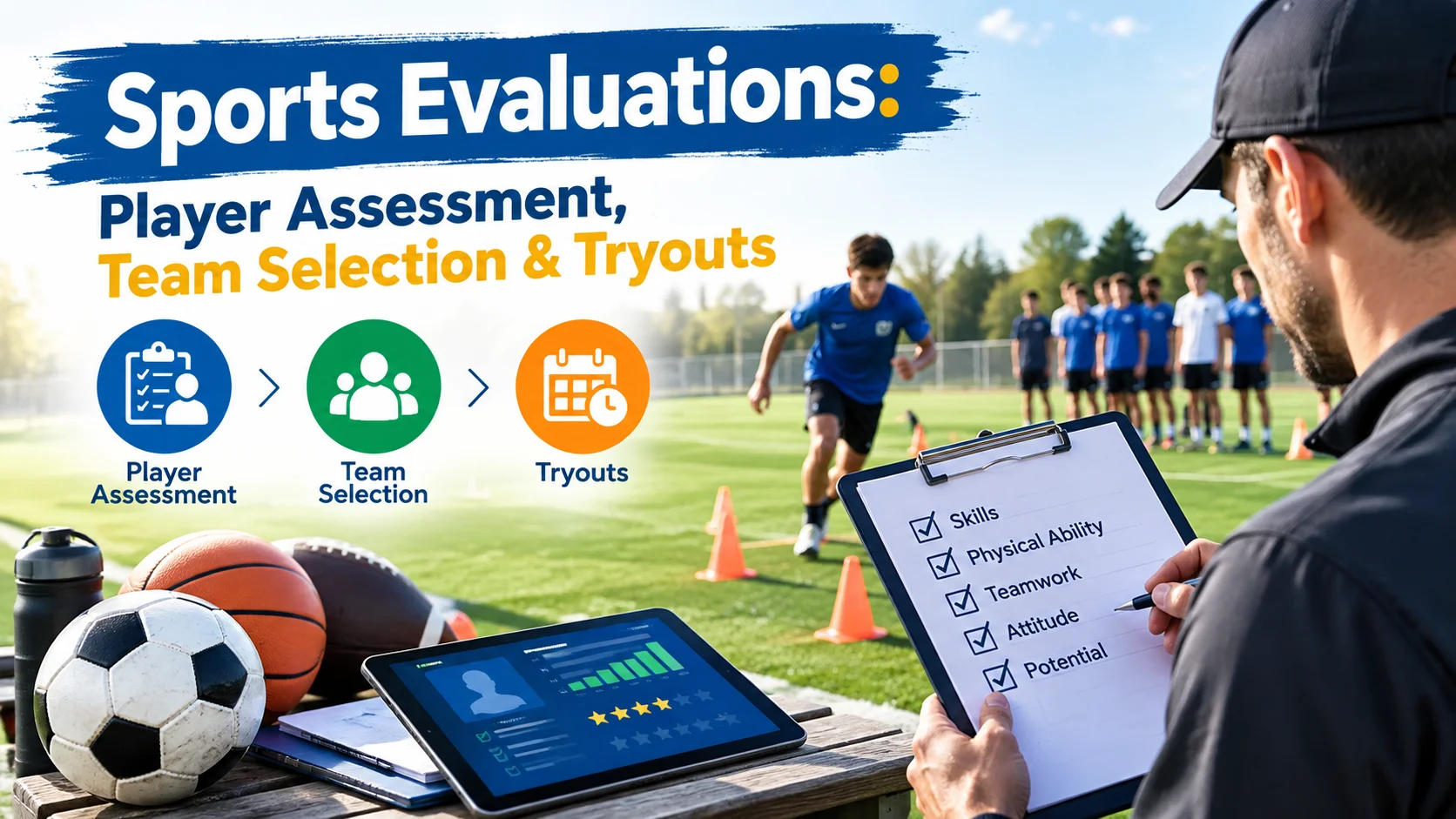
Sports evaluations play an important role in helping coaches, clubs, schools, and athletic organizations understand player abilities and make informed team-selection decisions. Whether a program is organizing youth tryouts, evaluating returning athletes, or building a competitive roster, a structured evaluation process can make the experience more organized and consistent.
Instead of relying only on general impressions, sports evaluations allow coaches to assess specific skills, athletic qualities, teamwork, attitude, and performance. When combined with effective tryout scheduling and clear selection criteria, the process can become easier for both evaluators and athletes.
What Are Sports Evaluations?
Sports evaluations are structured assessments used to measure an athlete’s abilities and potential in a particular sport. The evaluation may focus on technical skills, physical performance, decision-making, communication, teamwork, and other qualities relevant to the position or sport.
Key Areas of Player Assessment
Depending on the sport, coaches may evaluate:
- Technical skills
- Speed and agility
- Coordination
- Game awareness
- Communication
- Teamwork
- Decision-making
- Position-specific abilities
- Consistency
- Coachability
The evaluation criteria should match the needs of the team. For example, a soccer assessment may examine passing, dribbling, shooting, positioning, and defensive awareness, while a basketball evaluation may focus on shooting, ball handling, passing, defense, and court awareness.
Why Structured Player Assessment Matters
A structured evaluation system can help reduce confusion during tryouts. When every athlete is assessed using similar criteria, coaches have a clearer way to compare performances.
Consistent Evaluation Criteria
Consistency is particularly important when many athletes participate in a single tryout. Written criteria or digital evaluation forms can help evaluators focus on the same categories for each player.
Better Coaching Decisions
Evaluation data can give coaches additional information when selecting teams. Instead of remembering every performance from a busy tryout session, coaches can review recorded assessments and notes before making final decisions.
Clearer Feedback
A structured process can also make player feedback more useful. Coaches can identify areas where an athlete performs well and areas that could benefit from additional practice.
Team Selection and Tryouts
Team selection is one of the most important stages of an athletic program. A well-organized tryout gives players an opportunity to demonstrate their abilities while giving coaches the information needed to build balanced teams.
Establish Selection Criteria
Before a tryout begins, coaches should determine what they are looking for. Criteria can include technical ability, athletic performance, teamwork, game intelligence, and position-specific skills.
Clear criteria also help evaluators stay focused throughout the process.
Create Different Evaluation Activities
A tryout does not need to depend on one exercise. Coaches can create multiple activities that test different abilities.
For example, a session might include:
- Warm-up and movement drills
- Technical skill exercises
- Position-specific drills
- Small-sided games
- Competitive activities
- Teamwork exercises
Using several activities can provide a broader picture of an athlete’s abilities.
Tryout Scheduling Made Easier
Scheduling can become challenging when dozens or hundreds of athletes need to attend evaluations. A well-planned scheduling process helps avoid overcrowding and unnecessary delays.
Organize Players Into Groups
Players can be divided into age groups, positions, skill levels, or time slots. This allows coaches to create manageable evaluation sessions.
For example, a program could schedule different groups throughout the day rather than asking every athlete to arrive at the same time.
Manage Multiple Sessions
Some organizations may need several evaluation dates. A scheduling system can help administrators keep track of available sessions and communicate the appropriate time to each participant.
This can make the process easier for coaches, parents, athletes, and administrators.
Benefits of Sports Evaluation Technology
Digital sports evaluation tools can simplify many administrative tasks associated with player assessment and team selection.
Digital Evaluation Forms
Instead of relying entirely on paper forms, coaches can record ratings and notes digitally. Information can then be organized for later review.
Centralized Player Information
A centralized system can keep player profiles, evaluation results, schedules, and team information together. This can reduce the need to manage information across multiple spreadsheets or documents.
Faster Communication
Digital systems can also support communication about tryout schedules, changes, evaluation requirements, and team information.
How to Build an Effective Evaluation Process
Creating an effective sports evaluation process requires preparation. Coaches should consider the goals of the program before designing the assessment.
Step 1: Define the Goal
Determine whether the evaluation is being used for team selection, player development, position assignment, or general assessment.
Step 2: Select Evaluation Categories
Choose categories that directly relate to the sport and the goals of the program. Avoid adding unnecessary criteria that do not contribute to the decision-making process.
Step 3: Create a Rating System
A simple rating scale can make results easier to understand. For example, coaches may use a consistent numerical scale for each category.
Step 4: Train Evaluators
If multiple coaches are evaluating athletes, they should understand the criteria before the session begins. This can help improve consistency between evaluators.
Step 5: Review the Results
After the tryouts, coaches can compare evaluations and discuss observations before making selections.
Tips for Coaches During Tryouts
Tryouts can be stressful for athletes, so coaches should create an environment where participants understand what is expected.
Explain the Process
Tell athletes what activities they will complete and which skills will be assessed. Clear instructions can help participants focus on their performance.
Observe More Than One Skill
A single drill rarely demonstrates every aspect of an athlete’s ability. Combining individual exercises with game situations can provide broader information.
Take Useful Notes
Short, specific notes can be more helpful than vague comments. Coaches might record observations about decision-making, communication, positioning, or consistency.
Keep Development in Mind
Team selection is only one part of player development. Evaluation results can also help coaches identify skills that athletes can continue working on throughout the season.
Common Challenges in Sports Evaluations
Even organized evaluations can present challenges.
Subjectivity
Different evaluators may view the same performance differently. Clear criteria and evaluator training can help create greater consistency.
Limited Evaluation Time
Large tryouts may give coaches only a short time to observe each athlete. Multiple sessions or carefully planned drills can provide additional opportunities for assessment.
Athlete Anxiety
Some players may not perform at their usual level because of tryout pressure. Creating a supportive environment can help athletes demonstrate their abilities more naturally.
Frequently Asked Questions:
What is a sports evaluation?
A sports evaluation is a structured assessment of an athlete’s skills, performance, physical abilities, teamwork, and other qualities relevant to a sport or position.
Why are sports evaluations important?
They provide coaches with organized information that can support player development, team selection, position assignments, and tryout decisions.
What should be included in a player evaluation?
Common categories include technical skills, athletic ability, decision-making, teamwork, communication, consistency, and position-specific performance.
How can tryouts be organized efficiently?
Tryouts can be organized by creating defined time slots, grouping athletes, preparing evaluation activities, and communicating schedules clearly.
Can sports evaluations be done digitally?
Yes. Digital tools can help coaches record evaluations, organize player information, manage schedules, and review assessment results.
Final Thought
Sports evaluations provide a structured way to understand player abilities and support more organized team selection. When clear assessment criteria are combined with well-planned tryouts and efficient scheduling, coaches can create a smoother experience for everyone involved. Most importantly, evaluation should not only support team decisions but also help athletes understand their strengths and identify opportunities for continued development.











Leave a Reply