

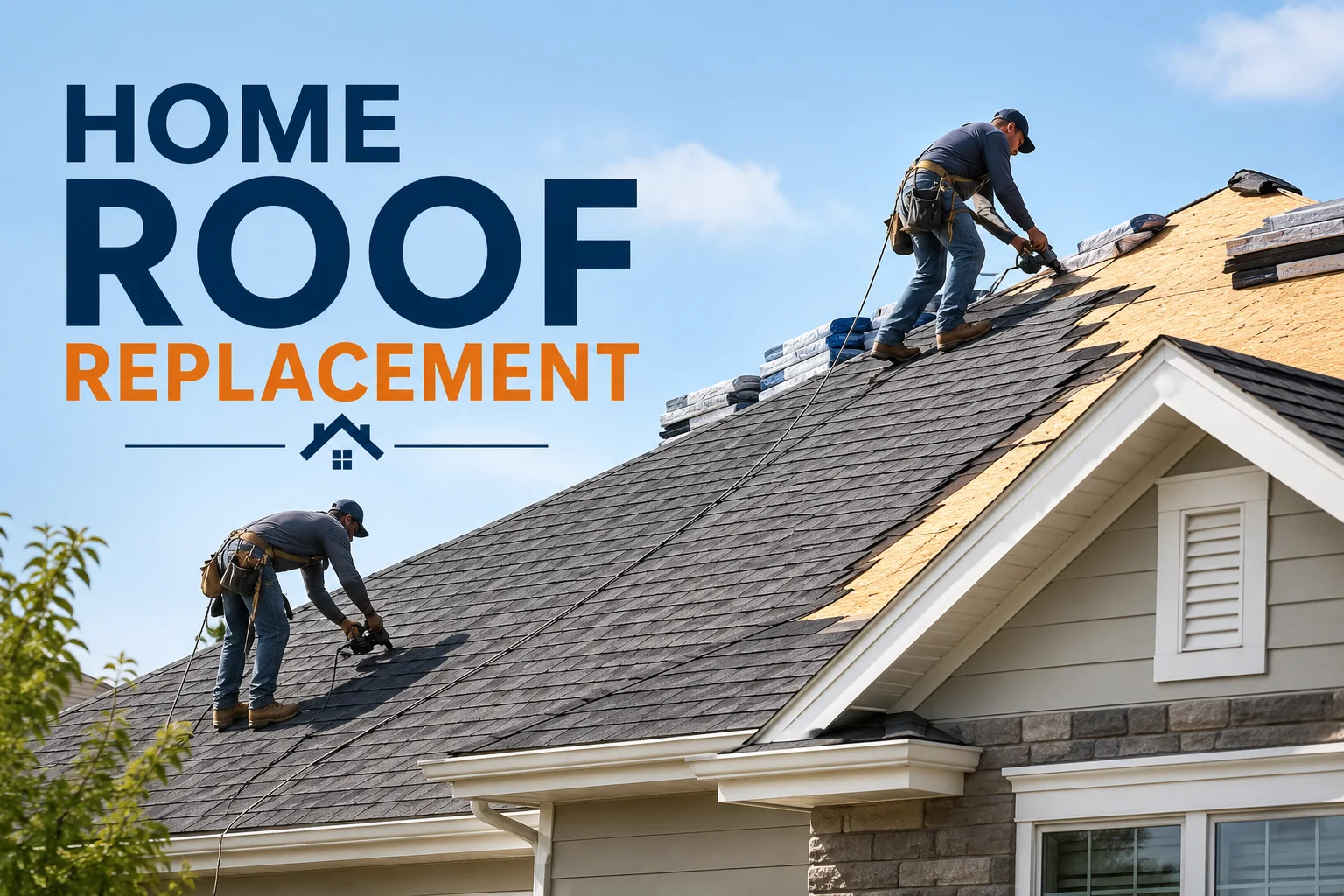
Signs You Need a Roof Replacement
Knowing when to replace your roof can save you from costly structural damage and interior repairs. Here are the most common warning signs that your home may need a full roof replacement rather than simple repairs.
Leaks
If you notice water stains on ceilings or walls, recurring leaks after rainfall, or damp insulation in the attic, it often indicates that your roofing system has failed in multiple areas. Persistent leaks usually mean repairs will not be enough.
Sagging Roof
A sagging or uneven roofline is a serious structural warning sign. It can indicate weakened decking, long-term water damage, or compromised support beams. This issue typically requires immediate inspection and full replacement.
Missing Shingles
If shingles are cracked, curling, or missing in multiple areas, your roof is losing its protective barrier. While a few missing shingles can be repaired, widespread damage suggests the roof is nearing the end of its lifespan.
Age Factor
Most roofs last around 20–25 years depending on materials and weather conditions. If your roof is approaching or has passed this age range, replacement is usually more cost-effective than ongoing repairs, even if visible damage seems minimal.
Roof Replacement Cost in 2026
Roof replacement cost in 2026 varies widely depending on home size, roofing material, labor rates, and roof complexity. On average, homeowners can expect costs to range from moderate to high investment, especially for long-lasting or premium materials.
Cost per Square Foot Breakdown
Most roofing projects are priced per square foot, making it easier to estimate total expenses based on your home size.
- Basic asphalt shingles: $3 – $6 per sq ft
- Mid-range architectural shingles: $5 – $8 per sq ft
- Premium materials: $9 – $20+ per sq ft
For a typical 1,500–2,000 sq ft roof, the total cost can range significantly depending on material quality and local labor rates. Complex roof designs with multiple slopes or chimneys can increase pricing further.
Cost by Roof Type (Asphalt, Metal, Tile)
Different roofing materials come with different price points and lifespans:
- Asphalt Shingles: Most affordable option, typically $5,000 – $12,000 for an average home.
- Metal Roofing: Higher upfront cost but longer lifespan, usually $10,000 – $25,000+.
- Tile Roofing: Premium option with strong durability, often $15,000 – $40,000+ depending on design and structure requirements.
Each material offers a different balance of cost, durability, and maintenance needs.
Labor vs Material Cost Split
In most roof replacement projects, costs are divided between materials and labor:
- Materials: ~40% – 50% of total cost
- Labor: ~50% – 60% of total cost
Roof Replacement Process Step-by-Step
Inspection and estimate
A professional contractor conducts a comprehensive inspection of your current roof's condition, assessing damage, measuring the surface area, and identifying structural weaknesses. Following the assessment, you receive a detailed cost estimate covering materials, labor, and project timelines.
Old roof removal
The existing layers of old shingles or materials are completely stripped down to the bare wooden decking. This step is critical because it allows the installation crew to inspect the structural wood underneath for hidden rot, water damage, or warping that must be repaired before proceeding.
Installation process
With the structural decking prepped and repaired, crews install fresh heavy-duty underlayment, ice and water shields, and flashing around valleys or chimneys. Finally, the new primary roofing material (such as architectural shingles, metal panels, or tile) is meticulously laid and fastened down to complete your home's protective envelope.
How Long Does Roof Replacement Take?
The time required for a roof replacement depends mainly on the size of the home, roof complexity, and weather conditions. In most cases, the process is completed within a few days, but certain factors can extend the timeline.
Small vs Large Homes
For small homes (1,000–1,500 sq ft), roof replacement is usually quick and can often be completed in 1 to 2 days, assuming normal weather conditions and a simple roof structure.
For medium to large homes (1,500–3,000+ sq ft), the project typically takes 2 to 5 days, especially if the roof has multiple layers, steep slopes, chimneys, or requires decking repairs.
Complex architectural designs or older roofs that need full tear-off and structural fixes may take even longer.
Weather Impact
Weather plays a major role in scheduling and completing roof replacement:
- Rain: Can delay work or pause installation entirely to prevent water damage
- High winds: Make it unsafe for workers to handle roofing materials
- Extreme heat: Slows down labor efficiency and requires additional safety breaks
- Cold or wet conditions: Can affect shingle sealing and adhesion quality
Roof Repair vs Roof Replacement
Choosing between roof repair and roof replacement depends on the extent of damage, roof age, and long-term cost considerations. While repairs are cheaper in the short term, replacement is often more cost-effective for older or severely damaged roofs.
| Factor | Roof Repair | Roof Replacement |
|---|---|---|
| Cost | Low to moderate | High upfront cost |
| Scope of Work | Fixes specific damaged areas | Replaces entire roofing system |
| Lifespan Extension | Short-term solution | Long-term solution (20–30+ years) |
| Best For | Minor leaks, small damage areas | Aging roof or widespread damage |
| Time Required | Few hours to 1 day | 1–5 days or more |
| Long-Term Value | Limited | High (increases home value) |
How To Choose a Roofing Contractor
Selecting the right roofing contractor is one of the most important steps in a successful roof replacement. A qualified professional ensures proper installation, safety, and long-term durability, while a poor choice can lead to costly repairs and repeated issues.
Licensing Checklist
Before hiring a roofing contractor, verify the following:
- Valid business license in your area
- Proof of liability insurance (covers property damage)
- Workers’ compensation insurance (protects you from worker injury claims)
- Written contract with clear project scope and cost breakdown
- Manufacturer certifications (for installing branded roofing systems)
- Local permits handled by the contractor
A legitimate contractor will provide these documents without hesitation.
Red Flags to Watch Out For
Be cautious if you notice any of the following warning signs:
- Asking for large upfront cash payments
- No physical business address or online presence
- Refusal to provide written estimates or contracts
- High-pressure sales tactics (“today-only discount”)
- Lack of insurance or licensing proof
- Extremely low bids compared to others (often indicates poor quality work)
- No warranty offered on labor or materials
Best Roofing Materials for Replacement
Choosing the right roofing material is one of the most important decisions in a roof replacement project. Each option offers a different balance of cost, durability, appearance, and maintenance needs.
Asphalt Shingles
Asphalt shingles are the most common roofing material for residential homes due to their affordability and ease of installation.
- Cost: Low to moderate
- Lifespan: 15–30 years
- Pros: Budget-friendly, widely available, easy to repair
- Cons: Shorter lifespan compared to premium materials
- Best For: Standard residential homes and cost-conscious homeowners
Metal Roofing
Metal roofing is known for its strength, energy efficiency, and long lifespan, making it a popular long-term investment.
- Cost: Moderate to high
- Lifespan: 40–70 years
- Pros: Highly durable, fire-resistant, energy-efficient
- Cons: Higher upfront cost, can be noisy during rain if not insulated
- Best For: Modern homes, extreme weather areas, long-term investment
Tile Roofing
Tile roofing offers a premium look and exceptional durability, often seen in Mediterranean or Spanish-style homes.
- Cost: High
- Lifespan: 50–100 years
- Pros: Extremely durable, weather-resistant, low maintenance
- Cons: Heavy weight requires strong roof structure, expensive installation
- Best For: Luxury homes and hot climates
Flat Roofs
Flat roofing systems are commonly used for modern residential designs and commercial buildings.
- Cost: Moderate
- Lifespan: 10–30 years (depending on material)
- Pros: Easy access for maintenance, space for HVAC or solar panels
- Cons: Drainage issues if not properly installed, more maintenance required
- Best For: Modern homes and commercial properties
Frequently Asked Questions
Find quick answers to the most common questions regarding roof replacement timelines, cost factors, and choosing the right materials.
How often should a typical residential roof be replaced?
Most standard asphalt shingle roofs have a functional lifespan of roughly 20 to 25 years. However, this timeline depends heavily on the quality of original materials, regional weather extremes, and proper ventilation. Premium materials like metal or tile can last significantly longer, ranging from 40 to over 70 years.
Can I install a new roof over my old shingles to save on replacement costs?
While some local building codes allow a second layer of shingles to be installed over an existing layer, it is generally not recommended. Layering traps extra heat, adds substantial weight to your home's structural framing, and prevents contractors from inspecting and repairing rot or water damage in the wooden decking beneath.
What is the most cost-effective roofing material for home replacements?
Traditional asphalt shingles remain the most budget-friendly and widely available material for residential homes. Within this category, architectural shingles offer the best balance of cost-efficiency and long-term performance, providing better durability and wind resistance than basic three-tab shingles at a moderate price point.
How can I identify hidden roof leaks before they cause structural damage?
Key warning signs include water stains or peeling paint on ceilings and walls, mysterious mold growth, dark streaks on attic insulation, or a sudden, unexplained rise in monthly utility bills due to compromised insulation. Checking your attic with a flashlight during a heavy downpour is a reliable way to spot early failures.
Will home insurance policies cover the total cost of a roof replacement?
Standard homeowners insurance policies typically cover roof replacement costs if the damage is caused by sudden, unpreventable acts of nature, such as heavy hail storms, fallen trees, or severe high winds. Insurance generally will not cover structural failures resulting from age, normal wear and tear, or long-term neglect.














Leave a Reply