
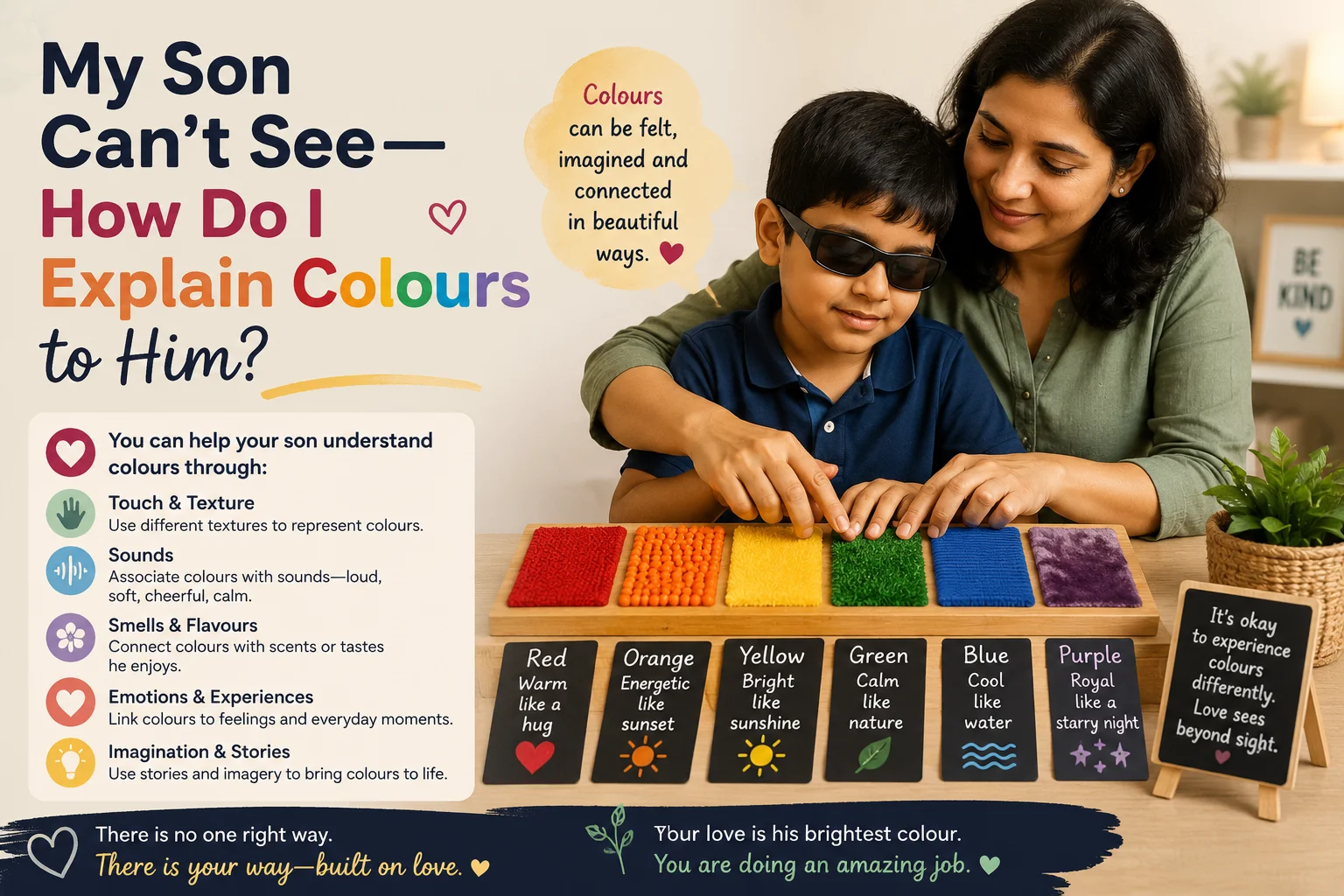
If your son can’t see, explaining colours may feel impossible at first. Since colours are usually taught visually, many parents wonder how to describe something their child has never experienced. The good news is that colour can be explained through touch, temperature, emotions, sounds, smells, and everyday experiences—helping your child build meaningful associations in his own way.
Can Blind Children Understand Colors?
Yes—blind children can absolutely understand colors, even if they experience them differently from sighted people.
Should You Explain Colors to a Child Who Can’t See?
Yes—explaining colors to a child who can’t see can still be valuable and meaningful.
Even if your child has never experienced color visually, color words are used everywhere—in conversations, books, school lessons, and daily life. Understanding what colors represent can help your child communicate more confidently and feel more included in the world around them.
Colors often carry emotional, practical, and symbolic meaning. For example, people talk about a “green light” to mean permission, feeling “blue” when sad, or seeing “red flags” as warnings. Learning these associations helps blind children better understand language and social cues.
Teaching colors can also encourage curiosity and imagination. By connecting colors to sensations like warmth, sounds, textures, smells, or emotions, your child can build their own personal understanding of each color—even without seeing it.
How Blind Children Learn Color Differently
Blind children often learn colors in a very different way than sighted children—and that difference is completely natural.
Most sighted children learn colors by seeing them repeatedly: a red apple, a blue sky, or green grass. Blind children, however, build their understanding of color through associations and experiences rather than visual observation.
Instead of asking “What does red look like?” they may learn that red feels warm, sounds energetic, or represents excitement. Blue might be connected to cool water, calm music, or a peaceful feeling. Over time, these sensory and emotional links help color words develop meaning.
The Best Way to Explain Colors Using the Five Senses
One of the most effective ways to explain colors to a child who can’t see is by connecting each color to the five senses—touch, sound, smell, taste, and temperature. Since blind children often understand the world through sensory experiences, these connections can make color concepts more meaningful and easier to remember.
Instead of describing how a color looks, focus on how it feels, sounds, smells, or tastes in everyday life.
Read more : How Fast Does MiraLAX Work in Adults (1–3 Day)
Touch: Let Colors Be Felt
Textures can help bring colors to life through physical experiences.
- Green might feel like soft grass, leaves, or moss.
- White can feel like smooth cotton, clean sheets, or fluffy
How to Explain Each Color to Your Blind Child
Red = Warmth, Energy, Danger
You can describe red as the feeling of warmth on your skin when standing in the sun or placing your hands near a warm cup. It can also feel like excitement—your heart beating faster when running or playing. Red is often linked to strong emotions, energy, and caution, like the heat from a stove or the urgency of a warning sound.
Blue = Cool, Calm, Water
Blue can be explained as the cool sensation of dipping your hands into water or feeling a gentle breeze on your face. It represents calmness, peace, and quiet—like sitting near a calm lake or listening to soft rain. Blue often feels soothing and relaxing.
Yellow = Sunshine, Happiness
Describe yellow as the warmth of sunshine on a bright morning or the cheerful feeling of laughter and joy. It can feel bright and uplifting, like hearing happy music or enjoying a favorite treat. Yellow is often connected with happiness, energy, and positivity.
Green = Nature, Freshness
Green can be described through the smell of fresh-cut grass, the touch of soft leaves, or walking barefoot on cool grass. It represents life, growth, and calmness—like being in a peaceful garden or hearing birds in the trees.
Orange = Excitement, Citrus
Explain orange as a lively, energetic feeling—like the scent of a peeled orange or the tangy taste of citrus fruit. It can feel playful and warm, combining the energy of red with the happiness of yellow.
Purple = Softness, Mystery
Purple can be connected to soft fabrics like velvet or the calming scent of lavender. It often feels gentle and special, sometimes mysterious—like bedtime stories or quiet moments before sleep.
Black = Quiet, Depth
Describe black as silence, stillness, and depth. It may feel like a quiet room with no sounds or the comfort of wrapping yourself in a heavy blanket. Black can represent calm, seriousness, or the unknown.
White = Clean, Lightness
White can be explained as the feeling of fresh sheets, fluffy clouds, or clean snow. It feels light, pure, and open—like a deep breath of fresh air or the softness of cotton.
Brown = Earth, Strength
Brown can be described through the smell of soil after rain, the rough texture of tree bark, or the firmness of wood. It represents stability, warmth, and reliability—something strong and grounding.
Gray = Clouds, Neutrality
Explain gray as the feeling of a cloudy day—neither bright nor dark, neither warm nor cold. It can feel calm and balanced, like a soft sweater or a quiet afternoon when everything feels peaceful.
Sensory Activities to Teach Colors at Home
Helping a blind child understand colors becomes much easier when learning is connected to touch, sound, smell, taste, and emotion. These simple sensory activities can make colors feel meaningful and memorable.
Color Matching Through Temperature
Use warm and cool objects to connect feelings with different colors. For example, a warm towel or heating pad can represent red or yellow, while a cool metal spoon or chilled cloth can represent blue or green. This helps your child associate colors with physical sensations.
Helpful Books and Tools for Teaching Colors to Blind Children
The right books and learning tools can make color concepts easier for blind children to understand. Look for resources that combine Braille, tactile elements, sound, and sensory storytelling so your child can explore colors through touch and imagination.
Common Mistakes Parents Should Avoid
Teaching colors to a blind child can be meaningful and rewarding, but some common mistakes can make the process more confusing or frustrating. Avoiding these can help your child build a more natural and confident understanding of color.
Avoid Explaining Colors Only Visually
Saying things like “red looks bright” or “blue is a dark color” may not help a child who has never experienced sight. Instead, connect colors to things they can feel, hear, smell, taste, or emotionally understand.
Don’t Assume Colors Have to Be Taught the Same Way
Blind children may understand colors differently than sighted children—and that’s okay. The goal is not to replicate visual understanding, but to help your child create their own meaningful associations with each color.
FAQs
Can a blind child truly understand color?
Yes. They can understand color through meanings, feelings, and sensory associations.
What if my child asks what blue looks like?
Explain it using experiences like cool water, calmness, or a gentle breeze.
Should schools teach colors to blind students?
Yes. It helps with communication and understanding everyday descriptions.
Are there tactile books for colors?
Yes. Many use textures, Braille, and sensory elements to teach colors.
Do blind people imagine colors differently?
Yes. They understand colors through emotions, sounds, and concepts instead of visuals.