

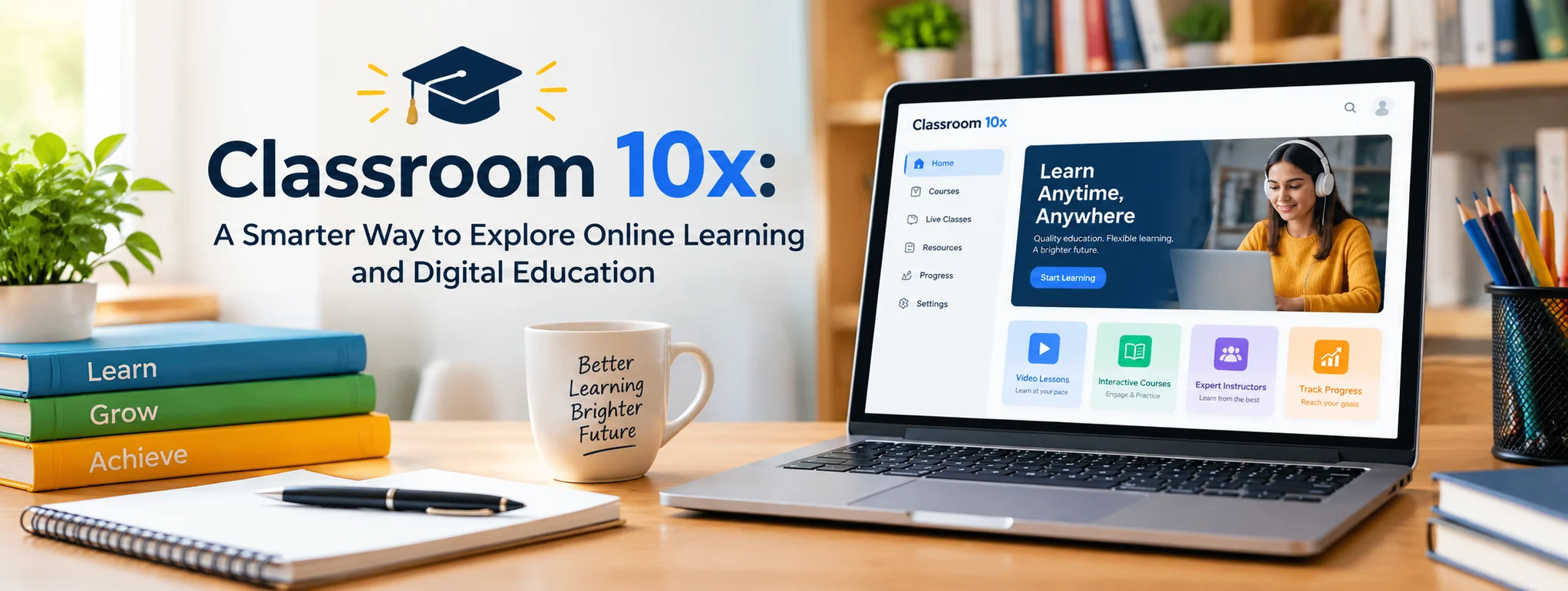
Education continues to evolve as technology becomes an essential part of classrooms, schools, and online learning environments. Students and teachers now use digital platforms to organize lessons, share resources, complete assignments, and make learning more engaging. Classroom 10x is a keyword associated with the idea of improving traditional learning through modern educational experiences, interactive activities, and technology-driven tools.
For students, the goal is to make learning easier to understand and more enjoyable. For teachers, it is about creating lessons that encourage participation, improve communication, and help learners develop valuable skills. Whether someone encounters Classroom 10x while searching for educational resources or exploring new ways to study, understanding its possible applications can help them make informed decisions.
Classroom 10x and the Changing World of Education
Classrooms have changed significantly over the past decade. Printed textbooks and traditional lectures remain important, but digital resources now provide additional ways to explain complicated subjects and support different learning styles.
Classroom 10x can be understood as a search term connected with enhanced classroom experiences and technology-supported learning. However, the name alone does not establish that it represents one specific educational platform, an official school product, or a verified service. Users should confirm the identity of any website or application using this name before creating an account or sharing personal information.
The broader concept behind modern classroom improvement is straightforward: students need accessible information, meaningful practice, and clear guidance to develop their knowledge.
Technology can support these goals by helping teachers present information visually, organize educational materials, and provide opportunities for students to practice independently.
Why Modern Learning Environments Matter
Every student learns differently. Some understand a subject through reading, while others benefit from diagrams, demonstrations, discussions, or practical activities.
A flexible learning environment can accommodate these differences without making lessons unnecessarily complicated.
For example, a science teacher might explain the water cycle using a diagram, a short educational video, and a classroom experiment. Students can then answer questions to demonstrate their understanding.
This combination of explanation, visualization, and practice creates a more meaningful learning experience than relying on memorization alone.
Key Features Associated With Classroom 10x Learning
Although specific features depend on the actual website or service being discussed, modern digital classrooms commonly include several useful capabilities.
1. Interactive Learning Activities
Interactive activities encourage students to participate rather than simply read or listen. Quizzes, puzzles, educational games, and practice exercises can make difficult subjects easier to approach.
For instance, students learning multiplication can solve timed exercises, receive immediate feedback, and repeat questions until they understand the process.
These activities are especially valuable when they reinforce a clear educational objective. Games should support learning rather than distract students from the lesson.
2. Organized Educational Resources
A well-organized learning environment makes it easier to find lesson notes, assignments, reference materials, and revision exercises.
Digital organization can reduce the time students spend searching for information. Teachers can also group resources by subject, topic, or learning level.
A student preparing for an examination might organize materials into separate sections for mathematics, science, English, and revision. This structure makes daily study sessions more manageable.
3. Progress Tracking and Feedback
Progress tracking helps students identify what they understand and which subjects require additional attention.
Some educational platforms provide scores, completion indicators, or performance summaries. These tools can help learners recognize improvement over time.
However, a single score does not always reflect a student’s complete understanding. Teachers should consider participation, written explanations, practical work, and individual circumstances when evaluating progress.
4. Flexible Learning Opportunities
Digital learning materials can allow students to review lessons outside regular classroom hours.
A learner who struggles with a particular topic can revisit an explanation, complete additional exercises, or review notes before an examination.
This flexibility can be especially useful when students need more time to understand a concept. Nevertheless, online resources work best when combined with appropriate guidance and regular study habits.
5. Communication and Collaboration
Modern educational tools may support discussions, shared assignments, announcements, and communication between teachers and students.
Collaboration encourages learners to exchange ideas, explain their reasoning, and develop teamwork skills.
For example, a group working on a history assignment could divide research responsibilities, prepare a shared presentation, and discuss different interpretations of historical events.
Clear communication also helps teachers explain deadlines and expectations, reducing confusion about coursework.
How Classroom 10x Can Support Students
The value of a digital learning environment depends on how effectively students use it. Simply accessing educational technology does not guarantee better academic results. Consistent practice, curiosity, and thoughtful guidance remain essential.
Students can use the broader Classroom 10x learning approach to develop stronger study routines and become more independent learners.
Making Difficult Subjects Easier to Understand
Complex subjects often become easier when divided into smaller sections.
A student studying algebra, for example, can first review basic equations, then practice substitution, and finally solve more advanced problems. Short exercises provide opportunities to identify mistakes before moving forward.
Visual explanations and worked examples can further improve understanding.
Instead of repeatedly memorizing a formula without understanding it, students should learn why the formula works and when it should be applied.
Building Confidence Through Practice
Confidence develops when learners receive opportunities to practice and recognize their progress.
Small, achievable goals can make academic challenges feel less overwhelming. Completing a few practice questions each day may be more effective than attempting to study an entire subject in one exhausting session.
Useful habits include:
- Reviewing lesson notes shortly after class.
- Practicing difficult questions regularly.
- Setting realistic daily learning goals.
- Asking teachers for clarification when necessary.
- Reviewing mistakes instead of ignoring them.
These habits can help students approach examinations with greater confidence and a clearer understanding of their responsibilities.
Benefits of Technology-Supported Classroom Learning
Educational technology can create meaningful opportunities when it is used with a clear purpose.
Better Engagement and Participation
Interactive presentations, demonstrations, and guided activities can encourage students to participate more actively.
Students who hesitate to answer questions in front of a large class may feel more comfortable completing a private practice quiz before discussing their answers with the teacher.
This additional participation can help educators recognize misunderstandings and adjust their teaching methods.
More Personalized Learning
Students do not always progress at the same speed. Some understand a topic immediately, while others need repeated explanations.
Digital resources can provide additional exercises or alternative explanations for learners who need support. More advanced students may also benefit from challenging assignments that extend their knowledge.
Personalized learning should not mean isolating students from their classmates. Group discussions and teacher guidance remain important parts of a balanced educational experience.
Convenient Revision and Study Planning
Digital notes and practice materials can make revision more organized.
Students can prepare a weekly timetable, identify important topics, and allocate extra time to subjects they find difficult.
For example, a learner preparing for final examinations could dedicate each weekday to a different subject and reserve the weekend for reviewing mistakes and practicing past questions.
A consistent plan can reduce last-minute pressure and make academic responsibilities easier to manage.
Stronger Digital Skills
Responsible use of educational technology helps students develop skills that are increasingly important in higher education and professional life.
These include searching for reliable information, organizing digital files, communicating appropriately online, and protecting personal data.
Students should also learn to evaluate information critically rather than assuming that every website, answer, or automated explanation is accurate.
Classroom 10x for Teachers and Educators
Teachers play a central role in determining whether technology improves learning. The most effective educational tools support clear teaching objectives instead of replacing meaningful instruction.
Creating More Engaging Lessons
Teachers can combine explanations with diagrams, demonstrations, short assessments, and practical activities.
A geography lesson about climate, for instance, could include a map, a discussion of regional weather patterns, and a short exercise comparing different environments.
These methods provide multiple ways for students to engage with the same concept.
Identifying Learning Gaps
Short assessments can help teachers identify topics that require further explanation.
If many students struggle with the same question, the problem may indicate that a concept needs to be taught differently. Reviewing the material and providing another example can prevent confusion from affecting later lessons.
Teachers should use assessment results as guidance rather than treating every incorrect answer as evidence of poor effort.
Improving Classroom Organization
Digital calendars, assignment lists, and shared resources can simplify classroom management.
Teachers can communicate expectations clearly, prepare materials in advance, and maintain a consistent schedule.
However, introducing too many applications can create unnecessary complexity. Schools should prioritize tools that are accessible, reliable, and appropriate for their students.
Important Considerations Before Using Classroom 10x
Because the keyword Classroom 10x does not, by itself, identify a verified product, users should investigate the specific service they encounter before relying on it.
Verify the Website or Application
Check the website address, the organization responsible for the service, and any available documentation. Look for clear contact information, privacy policies, and explanations of the platform’s purpose.
Be cautious if a website makes extraordinary promises about academic performance without providing credible evidence.
Protect Personal Information
Students should avoid sharing passwords, home addresses, private school records, or other sensitive information with unverified services.
Parents and teachers should review account requirements and privacy settings before allowing younger learners to register.
If a service requests unnecessary permissions or sensitive details without a clear explanation, consider using a more established alternative.
Check Compatibility and Accessibility
A useful educational resource should work on the devices students can realistically access.
Before adopting a platform, consider internet availability, mobile compatibility, language options, accessibility features, and potential costs.
Schools should also consider students who have limited internet access or do not own personal devices. Educational opportunities should remain inclusive.
Balance Screen Time With Other Activities
Technology should complement, not replace, reading printed materials, writing by hand, practical experiments, physical activity, and face-to-face discussions.
Extended screen use can contribute to eye strain, fatigue, and distraction. Regular breaks and sensible study schedules help maintain a healthier learning routine.
How to Make the Most of a Digital Learning Environment
Students, parents, and educators can follow a simple process to introduce technology effectively.
| Step | Recommended Action | Expected Benefit |
|---|---|---|
| 1 | Identify a specific learning goal | Keeps study sessions focused |
| 2 | Choose a suitable educational resource | Reduces unnecessary distractions |
| 3 | Practice with questions and activities | Strengthens understanding |
| 4 | Review mistakes and feedback | Identifies areas for improvement |
| 5 | Track progress and adjust the plan | Supports consistent development |
Start with one subject or learning objective instead of changing every study habit at once. Once a useful routine is established, additional tools can be introduced when they offer a clear advantage.
Parents can support this process by discussing learning goals with children and encouraging regular practice without creating excessive pressure.
Teachers can evaluate whether a new tool improves participation, comprehension, or assignment completion before making it part of their regular teaching routine.
Frequently Asked Questions About Classroom 10x
1. Is Classroom 10x an official educational platform?
The name alone does not verify an official platform. Check the specific website and its ownership before using the service.
2. How can Classroom 10x help students?
The broader concept of enhanced digital learning can support practice, revision, organization, and interactive educational activities.
3. Can teachers use Classroom 10x?
Teachers can apply digital learning principles to lesson planning, classroom activities, feedback, and student progress monitoring.
4. Is Classroom 10x free to use?
Its pricing cannot be confirmed from the keyword alone. Check the actual service for subscription fees, free features, and payment requirements.
5. Is Classroom 10x safe for students?
Safety depends on the specific website or application. Verify its privacy practices, security measures, ownership, and suitability for the student’s age.
Final Thoughts
Classroom 10x represents a useful topic for exploring how modern educational experiences can become more interactive, organized, and accessible. Digital learning tools can help students practice challenging subjects, review lessons, develop independent study habits, and build essential technology skills.
For teachers, these tools can support engaging lessons, clearer communication, and more informed decisions about student progress. Their effectiveness, however, depends on thoughtful implementation, reliable resources, and a balanced approach to education.
Anyone searching for Classroom 10x should first establish which specific service or website the name refers to. Verifying its authenticity, reviewing its privacy policies, and understanding its features are important steps before creating an account or sharing information.












Leave a Reply