

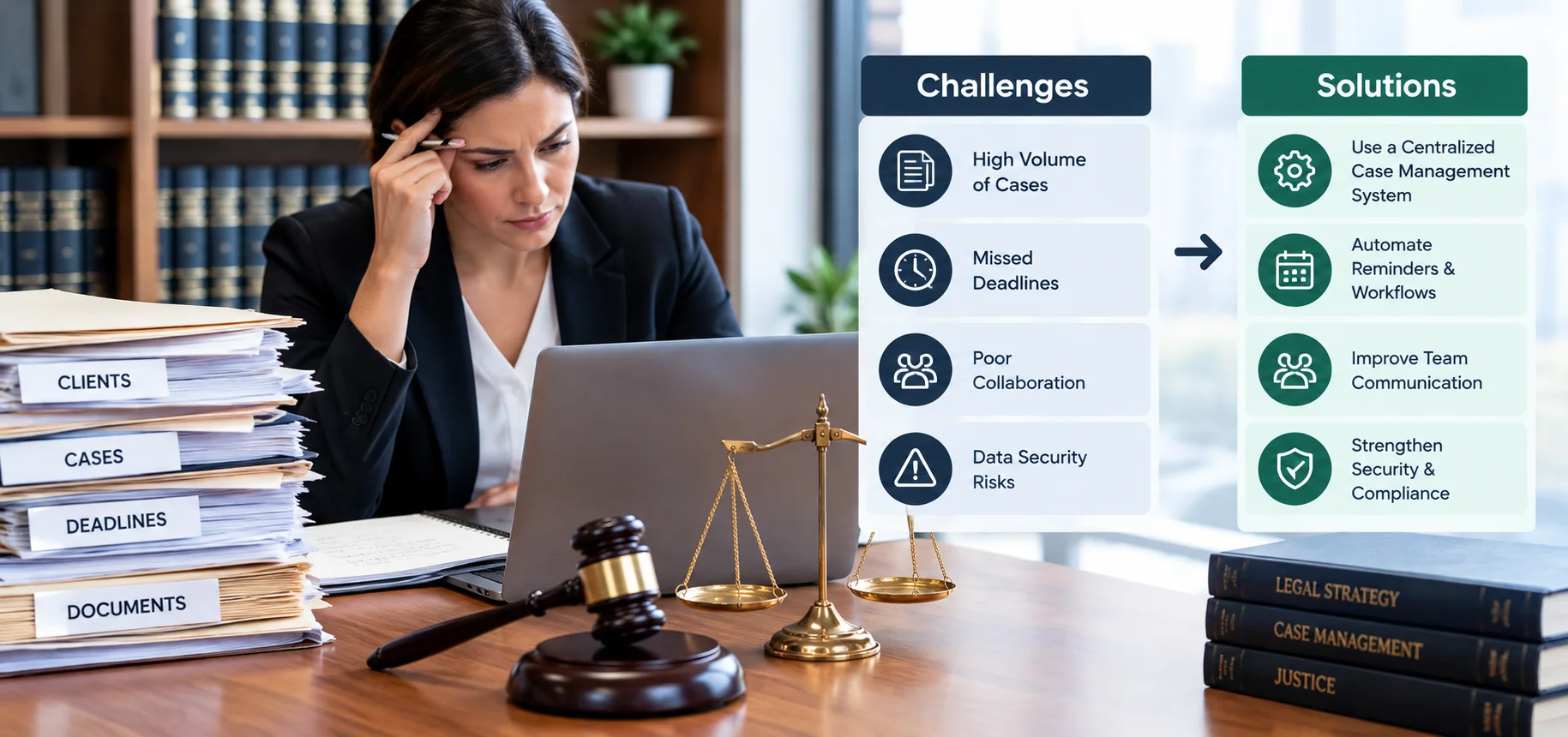
Legal teams work in demanding environments where organization, accuracy, communication, and time management can influence the outcome of important cases. From preparing legal documents to tracking deadlines and coordinating with clients, every stage requires careful attention. When processes become disorganized, even experienced professionals can struggle to manage their responsibilities efficiently.
Legal teams case management challenges have become an important topic for law firms, corporate legal departments, and organizations that handle complex legal matters. Growing workloads, fragmented information, limited resources, and changing technology can make it difficult to maintain consistent workflows. These challenges are also relevant to sports organizations, where legal departments may oversee player contracts, sponsorship agreements, disputes, and regulatory obligations.
Understanding the causes of these difficulties is the first step toward building more reliable systems. With clear responsibilities, structured workflows, secure document management, and appropriate technology, legal teams can improve efficiency without compromising professional standards.
Understanding Legal Teams Case Management Challenges
Case management refers to the process of organizing and overseeing legal matters from initial intake through resolution or closure. It includes gathering information, assigning responsibilities, managing documents, monitoring deadlines, communicating with relevant parties, and reviewing progress.
Legal teams case management challenges arise when these activities become difficult to coordinate. A small law firm may struggle because it has limited administrative support, while a large legal department may face problems involving multiple offices, complex approval processes, and large volumes of information.
Sports organizations can experience similar issues. A professional football club, for example, may need to coordinate player agreements, employment disputes, image rights, sponsorship contracts, and league compliance requirements. Without reliable systems, important information can become difficult to locate, and responsibilities may overlap.
The goal of effective case management is not simply to store information. It is to ensure that the right people can access accurate information, understand their responsibilities, and complete the appropriate tasks at the right time.
Major Legal Teams Case Management Challenges
1. Managing Large Volumes of Documents
Legal cases often involve contracts, correspondence, evidence, court filings, meeting notes, financial records, and other supporting materials. As a case develops, the amount of documentation can increase significantly.
When files are stored across individual computers, email accounts, and disconnected folders, team members may spend excessive time searching for the information they need. They may also accidentally use an outdated document or overlook an important record.
Document management becomes even more complicated when several attorneys and external advisers work on the same matter.
Practical solutions include:
-
Establishing a centralized document management process.
-
Using consistent file naming and folder structures.
-
Maintaining version histories for important documents.
-
Restricting access to confidential records according to responsibilities.
-
Creating a clear process for reviewing, approving, and storing final documents.
These practices help legal professionals locate information more quickly and reduce confusion during important stages of a case.
2. Tracking Deadlines and Important Dates
Deadlines are among the most sensitive aspects of legal case management. Court filing dates, hearing schedules, contract renewal periods, disclosure requirements, and client commitments may all require timely action.
When deadlines are tracked manually through spreadsheets, paper calendars, or individual reminders, the process can become unreliable. A deadline may be overlooked when an employee is absent, a case changes direction, or a new task is added without updating the central record.
For sports legal departments, contract expirations, registration windows, disciplinary hearings, and sponsorship renewal dates can create additional scheduling pressure.
A structured deadline management system should assign every important date to a responsible person. Automated reminders, shared calendars, escalation procedures, and regular reviews can provide additional protection.
Technology helps, but it should not replace professional verification. Legal teams must confirm deadlines against the applicable rules, court orders, agreements, and other authoritative documents.
3. Communication Gaps Between Team Members
Successful case management depends on effective communication. Attorneys, paralegals, administrators, clients, expert witnesses, and outside counsel may all contribute to the same matter.
Problems arise when updates are shared through disconnected email threads, informal conversations, or inconsistent reporting methods. One person may believe a task is complete while another is still waiting for approval.
These gaps can cause duplicated work, delays, and uncertainty about the next steps.
Legal teams can improve coordination by establishing clear communication procedures. Each case should have an identified owner, a defined method for sharing updates, and an agreed process for escalating urgent issues.
Regular meetings can also help, provided they focus on decisions, unresolved questions, responsibilities, and upcoming deadlines rather than unnecessary status reporting.
4. Limited Staffing and Heavy Workloads
Many legal departments must manage growing responsibilities without a corresponding increase in staffing or budget. Lawyers may be expected to review contracts, advise business teams, prepare litigation documents, respond to clients, and complete administrative tasks simultaneously.
This creates pressure on both productivity and work quality. When every request appears urgent, teams may struggle to distinguish genuinely time-sensitive matters from routine work.
The following practices can improve workload management:
-
Prioritize matters according to urgency, risk, and business impact.
-
Assign tasks according to experience and availability.
-
Standardize repetitive administrative activities.
-
Review workloads regularly to identify bottlenecks.
-
Consider external support when appropriate and permitted.
Effective workload planning does not mean rushing every task. It means distributing work realistically so that important matters receive the attention they require.
5. Protecting Confidential Information
Legal teams routinely handle sensitive information, including personal data, business records, settlement discussions, financial details, and privileged communications where applicable.
Weak access controls, unsecured file sharing, poor password practices, and accidental disclosure can expose this information to unauthorized individuals.
The consequences may include financial loss, reputational damage, regulatory problems, and harm to client relationships.
A practical information security strategy should include role-based access, secure storage, appropriate encryption, multi-factor authentication, staff training, and documented incident response procedures.
Teams should also review how information is shared with outside counsel, consultants, clients, and other authorized parties.
When using artificial intelligence tools, legal professionals must understand how submitted information is processed, retained, and protected. Confidential or privileged material should not be entered into a tool unless its use is permitted under applicable professional obligations, organizational policies, and the tool’s security terms.
Comparing Common Case Management Problems and Solutions
The following table summarizes recurring difficulties and practical ways to address them.
| Challenge | Possible consequence | Practical solution |
|---|---|---|
| Disorganized documents | Delays and incorrect versions | Centralized document control |
| Missed deadlines | Procedural or contractual risk | Verified calendars and reminders |
| Poor communication | Conflicting instructions | Clear ownership and reporting |
| Heavy workloads | Delays and staff fatigue | Risk-based prioritization |
| Security weaknesses | Unauthorized disclosure | Access controls and staff training |
| Inconsistent processes | Uneven work quality | Standard operating procedures |
| Limited reporting | Poor visibility into progress | Consistent matter tracking |
| Technology resistance | Low system adoption | Training and workflow integration |
No single solution addresses every problem. Legal teams should evaluate their own working practices before investing in new systems or introducing major procedural changes.
How Technology Can Improve Legal Case Management
Technology can help legal professionals organize information, automate routine tasks, and gain a clearer view of active matters. However, successful implementation depends on selecting tools that match the team’s actual needs.
Centralized Case Management Platforms
A case management platform can bring matter details, task assignments, deadlines, contact information, and documents into a more organized environment.
Instead of asking several colleagues for updates, authorized team members can review the case record and identify outstanding tasks.
Before selecting a platform, legal departments should evaluate its security features, reporting capabilities, integration options, ease of use, and suitability for their practice area.
Workflow Automation
Automation can reduce repetitive administrative work. For example, a system may generate task reminders when a new matter is opened or notify a responsible employee when a review deadline approaches.
Standardized workflows can also guide staff through recurring activities such as client intake, document approval, and matter closure.
Nevertheless, automated processes require careful configuration. Incorrect dates, incomplete information, or poorly designed rules can create new problems rather than eliminate existing ones.
Artificial Intelligence and Document Review
AI-powered tools may assist with document classification, information extraction, summarization, and preliminary review. These capabilities can be useful when legal teams must process large quantities of material.
However, AI-generated content may contain factual errors, omit relevant details, or misinterpret legal language. Human review remains essential, particularly when decisions involve legal rights, significant financial consequences, confidential information, or court submissions.
Legal professionals should establish clear rules governing permitted uses, verification, accountability, and data protection before adopting AI-assisted workflows.
Case Management Differences Across Legal Teams
Not every legal department experiences the same problems. Team size, case complexity, industry, and available resources all influence the most appropriate management strategy.
| Team type | Common difficulty | Recommended focus |
|---|---|---|
| Small law firms | Limited staff and administrative support | Simple workflows and deadline control |
| Large law firms | Complex matters and multiple contributors | Clear roles and coordinated reporting |
| Corporate legal departments | High request volumes and business demands | Matter prioritization and budget visibility |
| Sports organizations | Contracts, disputes, and regulatory obligations | Contract tracking and specialist coordination |
| Public-sector legal teams | Documentation and procedural requirements | Recordkeeping and consistent processes |
Sports organizations offer a useful example of why structured legal operations matter. A football club may need its legal, finance, recruitment, and management departments to coordinate around a player transfer. Each department has different responsibilities, but the overall process depends on accurate information and timely approvals.
If responsibilities are unclear, the club may experience avoidable delays or administrative mistakes. A centralized matter record and a clearly assigned workflow can help authorized staff coordinate their work.
Building a More Effective Case Management Process
Improving legal case management does not always require a major technology investment. Many improvements begin with a review of existing procedures and a commitment to consistency.
Step 1: Assess Current Workflows
Identify how new matters are received, assigned, documented, monitored, and closed. Look for repeated delays, missing information, duplicate tasks, and unnecessary approval stages.
Ask team members which activities consume the most time and where communication frequently breaks down.
Step 2: Establish Standard Procedures
Create clear instructions for recurring activities. These may cover opening a matter, collecting client information, naming files, recording deadlines, approving documents, and closing completed cases.
Standard procedures make expectations easier to understand and reduce dependence on individual working habits.
Step 3: Assign Clear Responsibilities
Every active matter should have an appropriate owner, even when several professionals contribute to the work.
Responsibility for each task should be explicit. Team members should understand who prepares documents, who reviews them, who approves key decisions, and who communicates with clients.
Step 4: Measure Performance
Useful performance indicators can reveal whether changes are improving operations. Teams might monitor:
-
Average time required to process a new matter.
-
Percentage of tasks completed by their agreed deadlines.
-
Number of overdue actions across active cases.
-
Time spent locating and reviewing documents.
-
Legal spending against approved budgets.
-
Workload distribution among team members.
These measures should support better decisions rather than encourage staff to prioritize speed over accuracy.
Step 5: Review and Improve Regularly
Case management is an ongoing process. Teams should review their procedures periodically, learn from completed matters, and adjust workflows when their workload, technology, or regulatory obligations change.
Feedback from attorneys, support staff, clients, and relevant business departments can help identify problems that are not immediately visible in performance reports.
Five Practical Tips for Overcoming Legal Case Management Challenges
-
Keep information organized: Maintain reliable matter records and use consistent document naming conventions.
-
Make deadlines visible: Record important dates centrally and establish reminders with clear responsibility for verification.
-
Improve team coordination: Use agreed communication channels and document significant decisions.
-
Protect sensitive records: Apply appropriate access controls and review information-sharing practices regularly.
-
Use technology carefully: Choose tools that solve identified problems, train employees, and verify automated outputs.
These measures can help organizations build a more predictable working environment while preserving the professional judgment that legal matters require.
Common Mistakes Legal Teams Should Avoid
Even well-intentioned improvements can fail when the underlying process is poorly designed.
One frequent mistake is introducing new software without explaining how employees should use it. If the platform creates extra work or duplicates existing systems, staff may continue relying on informal methods.
Another problem is collecting excessive information without defining its purpose. Records should be accurate, relevant, accessible to authorized people, and maintained according to appropriate retention requirements.
Teams should also avoid relying exclusively on individual memory, informal messages, or automated reminders for critical obligations. Important decisions and deadlines need dependable records and suitable verification procedures.
Finally, managers should not judge case management success solely by the number of matters closed. Case complexity, quality of work, risk reduction, client needs, and compliance obligations also matter.
Frequently Asked Questions
1. What are legal teams case management challenges?
They are the operational difficulties involved in organizing legal matters, tracking deadlines, managing documents, coordinating employees, protecting confidential information, and monitoring case progress.
2. Why is case management important for legal teams?
Effective case management helps legal professionals maintain organized records, coordinate responsibilities, reduce avoidable delays, and identify important tasks before they become urgent problems.
3. How can technology help legal teams manage cases?
Case management software can centralize matter information, organize documents, track deadlines, automate routine reminders, and provide reports about workload and progress. Human oversight remains essential.
4. What challenges do sports organizations face in legal case management?
Sports organizations may manage player contracts, employment matters, sponsorship agreements, image rights, disciplinary disputes, and regulatory requirements. These responsibilities often require coordination between legal and non-legal departments.
5. How can a small legal team improve case management without a large budget?
A small team can start by standardizing intake procedures, maintaining a shared deadline calendar, assigning clear task owners, organizing documents, and reviewing workloads regularly. More advanced software can be considered when existing processes are no longer sufficient.
Final Thoughts
Legal teams case management challenges can affect efficiency, communication, document accuracy, confidentiality, and the ability to manage important obligations. These problems often develop when workflows are fragmented, responsibilities are unclear, or available resources do not match the volume and complexity of the work.
The most effective response combines structured procedures, clear accountability, reliable information management, and appropriate technology. Legal teams should begin by identifying their most significant operational weaknesses and introducing improvements that address those specific problems.














Leave a Reply