

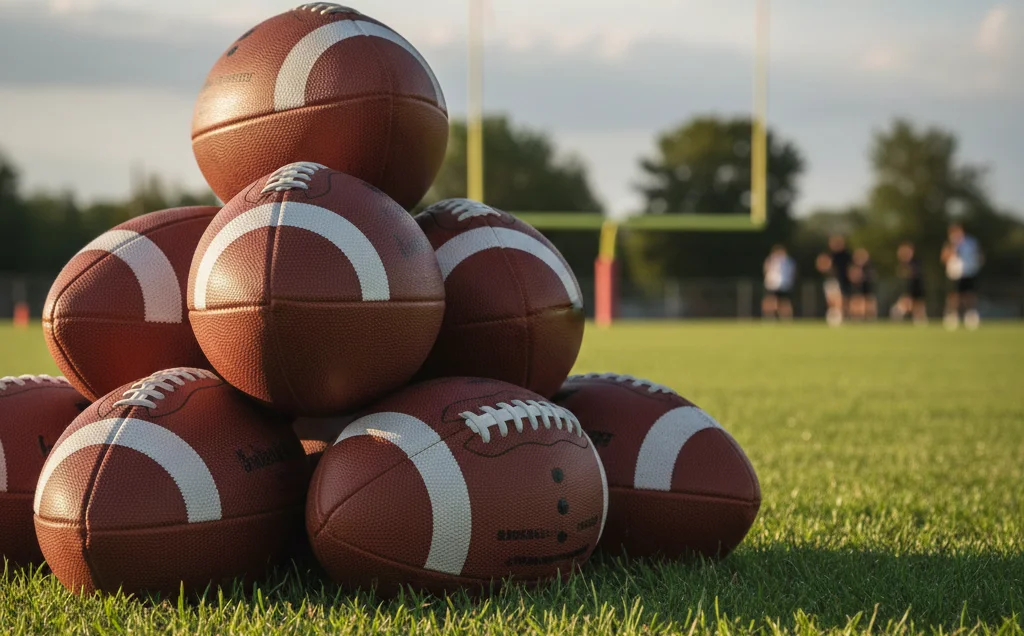
Understanding the differences between football and soccer balls, how to care for them, and selecting the right type for your needs is key to improving performance and enjoyment. From the shape, material, and play style, to professional FIFA-certified balls, training balls for everyday use, and youth resources for skill development, this guide covers everything players, coaches, and parents need to know to choose, maintain, and use footballs effectively.
Football vs Soccer Ball Differences
1. Shape & Size
Soccer Ball: Round, usually size 5 for adults (27–28 inches circumference).
Football: Oval/oblong, roughly 11 inches long with pointed ends.
2. Material & Grip
Soccer Ball: Synthetic leather or PU, smooth with stitched or bonded panels for kicking precision.
Football: Leather or composite, textured grip for throwing, catching, and hand control.
3. Usage & Play
Soccer Ball: Kicked with feet; emphasis on rolling, dribbling, and shooting.
Football: Carried, thrown, or kicked; passing and catching skills are key.
4. Weight
Soccer Ball: Lighter, about 410–450 grams.
Football: Heavier, around 400–430 grams, denser and shaped for aerodynamic throwing.
5. Field Requirements
Soccer Ball: Rectangular grass/turf fields, 100–130 yards long.
Football: 100-yard field with goalposts and end zones.
How to Care for Leather Footballs
Proper care keeps your leather football in top condition, maintaining grip, shape, and durability for longer use.
Clean After Every Use
Wipe with a dry or slightly damp cloth to remove dirt and mud. Avoid soaking in water, as excess moisture can damage the leather.
Keep It Dry
Let it air dry naturally at room temperature. Do not use heaters, hair dryers, or direct sunlight — this can cause cracking.
Condition the Leather
Apply a small amount of leather conditioner occasionally to prevent drying and cracking. Use a soft cloth and rub gently.
Store Properly
Store in a cool, dry place away from humidity. Keep it slightly inflated to help maintain its shape.
Maintain Correct Air Pressure
Check the recommended PSI near the valve. Proper inflation prevents stress on seams and keeps performance consistent.
Avoid Rough Surfaces
Use leather footballs mainly on grass fields. Playing on concrete or rough turf can quickly wear down the surface.
Top Professional / FIFA-Certified Footballs
Elite footballs trusted in professional matches and high-level training.
adidas Al Rihla Pro
Seamless PU shell for ultra-stable flight and precision. Used in world-class competitions.
FIFA Quality ProPUMA Orbita 2 Thermo Bonded
Thermo-bonded design for shape retention and aerodynamic consistency during intense matches.
FIFA Quality ProSelect Brilliant Super
Premium 32-panel thermally bonded ball with water resistance and long-lasting durability.
FIFA Quality ProBest Footballs by Use Case — Comparison Chart
Find the perfect football for your needs — from professional matches to casual play.
| Use Case | Recommended Ball Type | Key Features | Ideal For |
|---|---|---|---|
| Professional Matches | FIFA Quality Pro Match Balls | Certified performance, high precision, stable flight | Pro leagues, official matches |
| Competitive Training | FIFA Quality Training Balls | Durable, consistent bounce, great control | High‑level club training |
| Everyday Practice | Standard Training Balls | Durable TPU/PU build, good feel | Daily drills, skill work |
| Youth / Beginner | Size 3 or 4 Training Balls | Lighter, smaller size for skill development | Kids, academies |
| Grass & Turf | Multi-Surface Training Balls | Tough outer shell, consistent play | Grass fields, artificial turf |
| Budget Friendly | Entry-Level TPU Balls | Affordable, durable materials | Casual play, beginners |
| Match-Like Feel | Premium PU Match Balls | Soft touch, near match-ball feel | Friendly games, club matches |
| Recreational & Casual | Recreational / Street Balls | Good durability on rough surfaces | Parks, streets |
Youth Soccer Resources — Training, Coaching & Development
Free and paid resources to help young players, coaches, and parents improve skills, plan sessions, and grow in the game.
Coaching Guides & Training Libraries
SoccerHelp: Age-specific drills and no-line practice games.
SoccerDrive.com: 2,000+ drills, small-sided games, goalkeeping sessions.
SoccerXpert: Free, mobile-friendly drills.
US Youth Soccer Manual: Coaching philosophy & exercises for U5-U14.
Youth Soccer Guides: Skills & training tips for young players.
Video & Visual Learning
US Youth Soccer Video Library: Coaching videos on fundamentals like first touch and heading.
MOJO Sports (App): Soccer curriculum with practice plan videos, many free features.
Additional Support & Community
Positive Coaching Alliance: Coaching philosophy, mindset, and positive environment.
Parent & Coach Tips: Home-training and development articles.
Online Communities: Forums, Reddit, and YouTube playlists for drills and lesson plans.
Football FAQs
Conclusion
Pick a football based on age, skill, and purpose. Youth need smaller balls, adults use Size 5, and FIFA‑certified balls are best for matches. Proper care and the right type ensure better performance and longer life.








Leave a Reply