

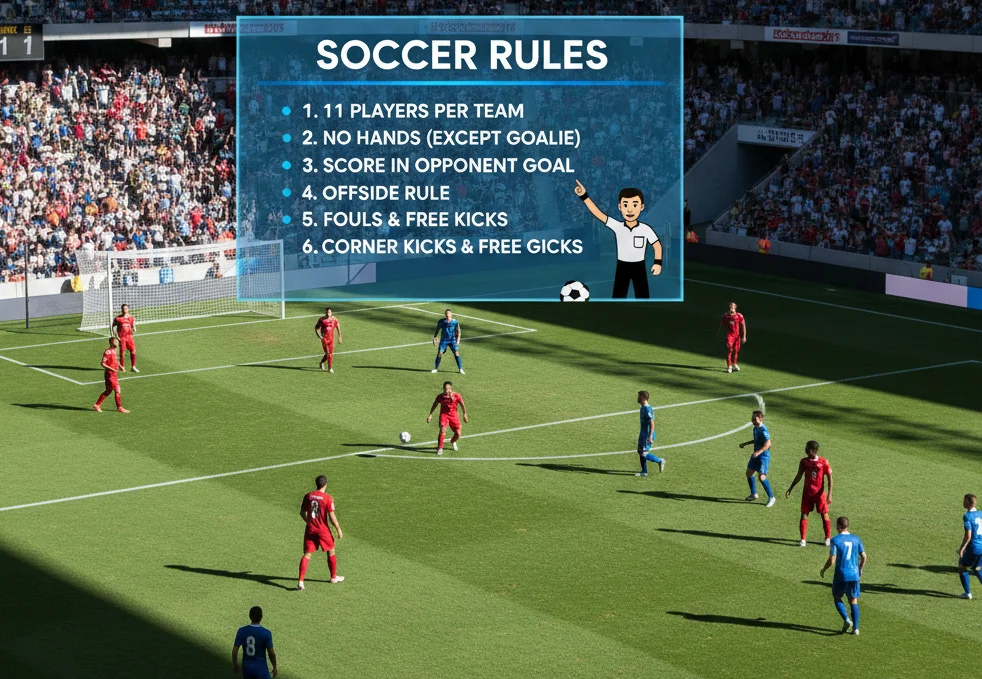
Mastering the Throw-In: Your Complete Guide to Soccer’s Overlooked Restart
A throw-in Complete Guide to Soccer Throw-In Rules may look simple, but it’s far more than just tossing the ball back into play. From maintaining possession to creating attacking opportunities near the opponent’s goal, mastering throw-ins can give players and teams a strategic edge. Whether you’re a beginner learning the rules or an advanced player perfecting long throws, understanding proper technique, tactical use, and common mistakes is essential to making every throw count.
What Is a Throw-In? (Definition + Context)
A throw-in is a method of restarting play in soccer (football) when the entire ball crosses the touchline (sideline), either on the ground or in the air. It is awarded to the opposing team of the player who last touched the ball before it went out of bounds.
Simple Definition
A throw-in happens when:
- The ball fully crosses the touchline
- Play is stopped
- The other team throws the ball back into play using their hands
When Is a Throw-In Given?
According to the Laws of the Game, a throw-in is awarded when:
- The whole ball crosses the sideline
- It touches a player last from one team
- The referee signals possession to the opposing team
Note: The throw is taken from the exact point where the ball went out.
Key Throw-In Rules
To take a legal throw-in, the player must:
- Face the field of play
- Have part of both feet on or behind the touchline
- Use both hands
- Deliver the ball from behind and over the head
If the throw-in is taken incorrectly, possession is given to the opposing team.
Why Throw-Ins Matter
Although it may seem like a simple restart, throw-ins can:
- Help teams maintain possession
- Create attacking opportunities
- Be used strategically near the opponent’s penalty area
Some teams even treat long throw-ins like corner kicks, using them as attacking weapons.
Official Rules (Law 15 in Detail)
The throw-in is governed by Law 15 of the Laws of the Game, written and maintained by The International Football Association Board and applied worldwide, including competitions organized by FIFA.
Under Law 15, a throw-in is awarded when the whole ball crosses the touchline, on the ground or in the air, and it is given to the opponents of the player who last touched the ball.
Key Points Under Law 15
- The throw-in is taken from where the ball left the field
- A goal cannot be scored directly from a throw-in
- The ball is in play once it enters the field
- The thrower cannot touch the ball again until another player touches it
How It’s Taken – Step-By-Step
To take a legal throw-in, the player must follow these exact steps:
- Face the field of play
- Have part of both feet on the touchline or outside the touchline
- Hold the ball with both hands
- Deliver the ball from behind and over the head
- Release the ball so it enters the field of play
If all conditions are met and the ball enters the field, play continues immediately.
Important: The thrower cannot touch the ball again before another player does. Opponents must stand at least 2 meters (2 yards) away.
Offenses & Sanctions
1. Incorrect Technique
- One foot fully inside the field
- Ball not thrown from behind and over the head
- One-handed throw
Sanction: Throw-in awarded to the opposing team.
2. Double Touch
- Thrower touches the ball again before another player touches it
Sanction: Indirect free kick to the opposing team.
If deliberate handball occurs → Direct free kick.
3. Opponent Encroachment
- Defender stands closer than 2 meters
Sanction: Cautioned (yellow card) for unsporting behavior.
Special Rules (Offside, Scoring, Back-Pass)
1. Offside Rule
A player cannot be offside directly from a throw-in. This makes throw-ins a useful tactical tool near the opponent’s goal.
2. Scoring From a Throw-In
- If the ball enters the opponent’s goal without touching another player → Goal kick.
- If it enters the thrower’s own goal directly → Corner kick to the opponents.
3. Back-Pass to Goalkeeper
A goalkeeper may handle the ball if it comes directly from a teammate’s throw-in. This is an exception to the normal back-pass rule (which applies only to kicks).
Techniques & Best Practices (Tactical)
While a throw-in may seem simple, teams can use it strategically to maintain possession, create attacking chances, or relieve pressure. Here’s a breakdown of techniques and tactical best practices.
1. Proper Throwing Technique
To maximize accuracy and distance:
- Grip & Stance: Hold the ball firmly with both hands and keep your feet balanced.
- Overhead Motion: Use a smooth, powerful motion from behind and over the head.
- Follow-Through: Step forward slightly to add momentum and ensure the ball travels farther.
- Targeted Aim: Focus on a teammate’s chest or feet rather than just tossing the ball anywhere.
2. Long Throw-Ins
- Can reach the penalty area for headers or flick-ons.
- Useful near the opponent’s goal to create scoring chances.
- Requires coordination with teammates to time runs perfectly.
3. Short, Quick Throws
- Keep possession under pressure.
- Helps maintain rhythm in midfield.
- Effective for counter-attacks by quickly restarting play.
4. Movement & Positioning
- Teammate Runs: Players can make diagonal or overlapping runs to receive the ball.
- Spacing: Maintain enough distance to avoid congestion, allowing accurate throws.
- Decoy Movements: Fake runs or dummy movements can confuse defenders and create space.
5. Tactical Variations
- Throw-Ins as Set Pieces: Near the corner or attacking third, long throw-ins can be planned like free kicks.
- Switching Play: A throw-in to the far side can shift the point of attack and stretch the defense.
- Safe Options: When under pressure, always have a reliable option to pass back to a defender or midfielder.
Common Mistakes & Misconceptions
Even experienced players sometimes make errors or misunderstand the rules surrounding throw-ins. Knowing these can help prevent turnovers and fouls.
Lifting a Foot Off the Ground
Mistake: Lifting one or both feet completely off the ground during the throw.
Consequence: The throw-in is considered illegal, and possession is awarded to the opposing team.
Throwing With One Hand
Mistake: Using a single hand instead of both hands to deliver the ball.
Consequence: Results in an indirect free kick for the opponent.
Double Touch
Mistake: The thrower touches the ball again before another player makes contact.
Consequence: Opponents get an indirect free kick from the spot of the infringement.
Attempting to Score Directly
Misconception: Thinking a goal can be scored directly from a throw-in.
Reality: Goals cannot be scored directly from a throw-in. If the ball enters the opponent’s goal without touching another player, a goal kick is awarded.
Ignoring Opponent Distance
Mistake: Throwing while defenders are too close (less than 2 meters).
Consequence: The referee may warn or caution the offending player for unsporting behavior.
Throwing Randomly Without a Target
Mistake: Throwing without aiming for a teammate.
Consequence: Leads to lost possession and breaks team rhythm, turning a restart into an opportunity for the opponents.
Video Examples (Visual Learning)
Watching real throw-ins in action can help you improve your technique, understand tactical choices, and learn from professional examples.
Correct Mechanics
Learn how to grip and release the ball legally, keep your feet grounded, and position your body for maximum accuracy and power.
Long vs. Short Throws
See the differences in technique depending on whether you want a quick pass or a more powerful throw into the attacking third.
Real‑World Application
Observe throw-ins in actual play to understand timing, teammate movement, and defensive positioning.
FAQ's
A throw-in is a method of restarting play when the ball crosses the touchline. It is taken by the team opposite to the player who last touched the ball, using both hands and delivering the ball from behind and over the head.
No. A goal cannot be scored directly from a throw-in. If the ball enters the opponent’s goal without touching another player, a goal kick is awarded. If it enters the thrower’s own goal directly, a corner kick is given to the opponents.
No. Players cannot be offside directly from a throw-in. This makes throw-ins a useful tool to restart play without worrying about offside traps.
- Both feet on or behind the touchline
- Facing the field of play
- Ball delivered from behind and over the head
- Both hands on the ball
- Ball enters the field to be in play
- Possession is awarded to the opposing team
- In some cases, an indirect free kick is given
- Referee may issue a caution for repeated offenses
Conclusion
Throw-ins are a fundamental part of soccer that combine skill, strategy, and precision. By following the official rules, using proper technique, and applying tactical variations, players can turn this basic restart into a powerful tool for possession and attack. Avoiding common mistakes ensures the team maintains control and maximizes every opportunity on the field. With practice and awareness, the humble throw-in can become an underestimated weapon in your soccer toolkit.












Leave a Reply