

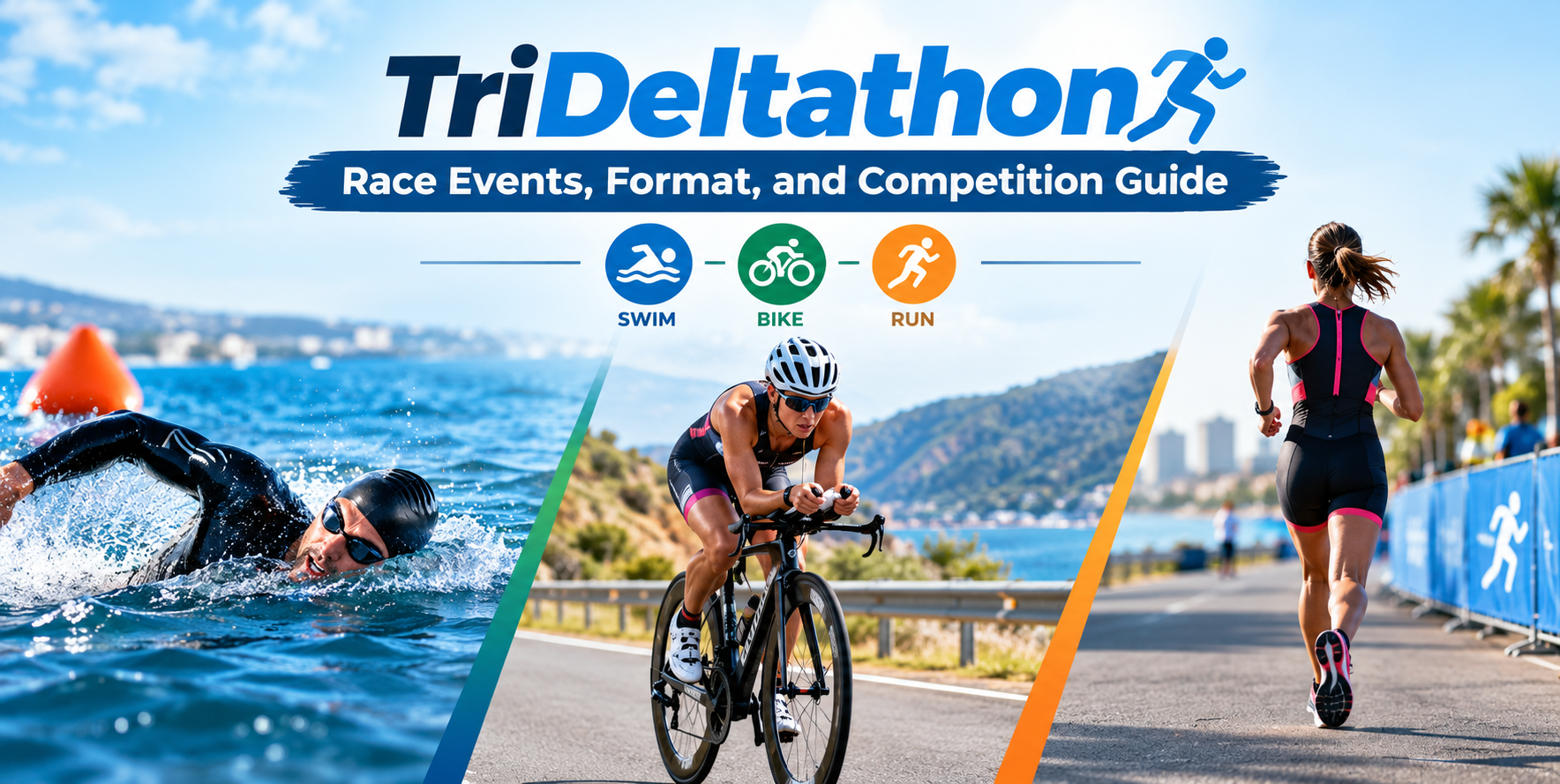
TriDeltathon is a name associated with a distinctive charity triathlon in Knoxville, Tennessee, connected with the University of Tennessee and the Delta Delta Delta sorority, commonly known as Tri Delta. The historic event brought together students, athletes, volunteers, and community supporters through a combination of swimming, cycling, and running. Beyond athletic competition, it developed a meaningful identity through its charitable purpose and university-community connections.
Understanding TriDeltathon involves more than learning its race distances. Its history, competition structure, participant categories, charitable mission, and later connection with a running event all help explain why the name continues to attract attention. This guide explores these essential details and clarifies the difference between the original triathlon and the newer TriDeltaRUN event.
TriDeltathon: An Overview of the Historic Event
TriDeltathon was a short-distance multisport competition associated with Knoxville and the University of Tennessee. Its defining feature was the combination of three athletic disciplines within one organized event.
The race was closely connected with Delta Delta Delta, a collegiate sorority whose members contributed to the event’s organization and community involvement. Fundraising for children’s causes was an important part of its identity, helping distinguish the competition from an event focused exclusively on athletic results.
The historic race appealed to people interested in endurance sports, university activities, and community fundraising. Individual participants could complete the entire course, while relay arrangements allowed teams to divide the sporting stages among members when offered.
The event also demonstrated how a relatively short competition could create a rewarding challenge. Athletes needed to manage their effort across three activities, adjust to changing physical demands, and complete transitions between disciplines.
TriDeltathon Race Events, Format, and Competition Guide
The traditional TriDeltathon followed the familiar triathlon sequence: swimming first, cycling second, and running last. Historical descriptions identify the later documented format through three main stages.
| Race Component | Historic Distance | Key Information |
|---|---|---|
| Swimming | 400 meters | Indoor pool swim at the University of Tennessee Student Aquatic Center |
| Cycling | Approximately 6 miles | Bicycle course associated with the university campus and surrounding roads |
| Running | Approximately 3 miles | Final running stage connected with the Knoxville campus area |
| Competition format | Individual and relay participation | Individual athletes completed all stages; relay teams could divide disciplines |
| Event location | Knoxville, Tennessee | Closely associated with the University of Tennessee |
| Community purpose | Charitable fundraising | Supported children’s causes through the event’s charitable connections |
These figures describe the historic triathlon, not the format of every later event associated with Tri Delta. The newer TriDeltaRUN is a separate running format rather than the original swim-bike-run competition. <Cite refs={[“turn126666search1″,”turn126666search6″,”turn126666search9”]}/>
How the Three Stages Work Together
The order of the disciplines creates the central challenge of a triathlon. Participants begin with swimming, continue to cycling, and finish with running. Each stage demands different movement patterns and skills, so competitors must adapt as the event progresses.
Transitions also form part of the overall competition. Athletes move from the pool to their bicycles and then from cycling to running. Equipment organization and familiarity with the course can influence how smoothly these changes happen.
Although the historic distances were relatively short compared with many endurance events, the combined format still required preparation and concentration.
The Swimming Stage: A Distinctive Indoor Start
The swimming stage kicks off the TriDeltathon indoors, challenging participants to demonstrate endurance, technique, and confidence before transitioning to the next race segment.
Why the Pool Format Stood Out
The indoor swim was one of TriDeltathon’s most recognizable characteristics. Many triathlons begin in lakes, rivers, or oceans, where swimmers may encounter waves, changing conditions, and open-water navigation.
An indoor pool provides a more controlled environment. Clearly defined lanes and measured distances make the swimming section easier to understand, while the absence of open-water conditions changes the nature of the challenge.
Historical descriptions identify a 400-meter swim at the University of Tennessee Student Aquatic Center. Swimmers entered the water individually at short intervals, with starting positions organized around estimated swimming times. <Cite refs={[“turn126666search4″,”turn126666search8”]}/>
The Skills Involved
Swimming efficiently requires coordination, breathing control, and consistent pacing. Competitors must also understand the pool arrangement and follow the event’s instructions.
The short distance does not remove the need for preparation. Swimming remains a technical discipline, and athletes need to be comfortable completing the required distance safely.
The indoor setting simply makes the environment different from an open-water race. That distinction helped give TriDeltathon a memorable format.
The Cycling Stage: Six Miles of Competition
The cycling stage of the TriDeltathon adds an exciting test of endurance, speed, and strategy. Covering six miles, this segment challenges participants to maintain a steady pace while managing their energy for the remaining race stages. Proper preparation, cycling technique, and consistent effort help athletes perform confidently throughout the competition.
Understanding the Bicycle Course
After completing the swim, competitors moved to the cycling stage, which covered approximately six miles in the documented historic format.
The bicycle section added another dimension to the race. Athletes had to change from swimming movements to cycling while maintaining enough energy for the final run.
The historic course was associated with the University of Tennessee campus and nearby roads, including Neyland Drive in descriptions of the event. Exact routes and arrangements could vary between editions, so historical course information should not automatically be treated as a current route.
Why Cycling Matters in a Triathlon
Cycling requires balance, coordination, and awareness of the surrounding course. Competitors must also manage their pace so they can continue running after leaving the bicycle stage.
A strong performance does not necessarily come from cycling as quickly as possible. Maintaining a consistent effort across the entire event can be just as important as speed in any single discipline.
For relay teams, the cycling stage also offered an opportunity for a participant with relevant experience to contribute to the team’s overall result.
The Running Stage: Completing the Challenge
There is a running stage where completing the challenge.
The Final Three Miles
The historic TriDeltathon concluded with a run of approximately three miles. By this point, competitors had already completed the swim and cycling stages, making the final section a test of endurance and concentration.
Running immediately after cycling can feel different from running at the beginning of a standalone race. Athletes must adjust to the change in movement while managing the effort accumulated during the earlier stages.
The relatively short distance helped keep the historic event more compact than longer triathlons. Nevertheless, completing all three disciplines remained a significant accomplishment.
Competition and the Finish
The final stage brought competitors toward the finish line, where individual performance and team participation came together.
For competitive athletes, finishing time could reflect performance across all three disciplines and the transitions between them. For other participants, completing the course and supporting the charitable purpose could be equally meaningful.
The event’s appeal came from this combination of athletic achievement and community involvement.
Individual and Relay Competition
TriDeltathon’s historic format included individual and relay participation in documented editions. These arrangements provided different ways to take part in the multisport challenge.
Individual Participants
Individual competitors completed the swim, cycling, and running stages themselves. This required them to manage the full sequence, including the transitions between sports.
The format rewarded consistency, preparation, and the ability to adjust to different physical demands. Athletes needed to consider the entire course rather than focusing on a single discipline.
Relay Teams
Relay participation allowed team members to divide the sporting stages when the event offered that option. One person could complete the swim, another the cycling, and another the run.
This arrangement created a collaborative competition in which each person’s contribution mattered. It also offered an alternative for people who preferred to participate in one discipline rather than complete the entire triathlon.
Specific relay rules, registration categories, and team requirements depended on the relevant edition.
The Charitable Mission Behind TriDeltathon
TriDeltathon was more than a sporting competition. Its connection with Delta Delta Delta and children’s charitable causes helped create a broader purpose for participants and supporters.
Historical event descriptions associate its fundraising efforts with East Tennessee Children’s Hospital and Camp Eagle’s Nest, which serves children with cancer and blood disorders.
This charitable connection gave the event a community-focused identity. Students, volunteers, competitors, and supporters could contribute to a shared goal through participation and fundraising.
Charity races can also make sporting events more inclusive in spirit. Although competitors may have different levels of experience, they can still contribute to a common purpose.
The specific beneficiaries and fundraising arrangements should be checked against the information for each event edition rather than assumed to remain unchanged.
What Happened to the Original TriDeltathon?
The original swim-bike-run competition is now best understood as a historic event. People researching the name may also encounter TriDeltaRUN, a related event that carries forward the university and charitable connections through a different athletic format.
The 2026 TriDeltaRUN edition was held on April 19, 2026, and was described as a 5K running event associated with UT Gardens and the Third Creek Greenway area in Knoxville. That date has passed, so it should not be interpreted as an upcoming race date.
Historic TriDeltathon Compared With TriDeltaRUN
The main difference is the sporting format. The historic TriDeltathon combined swimming, cycling, and running. TriDeltaRUN focuses on running a 5K distance.
The two names are connected through the broader Tri Delta and community-fundraising tradition, but they should not be treated as interchangeable race formats.
Anyone interested in participating in a future event should verify its current name, date, venue, registration details, and race structure. Historical distances do not establish the requirements for a newer running event.
Five Important Facts About TriDeltathon
- Historic location: The event was associated with Knoxville, Tennessee, and the University of Tennessee.
- Three sports: Its traditional format combined swimming, cycling, and running.
- Indoor swim: The documented swim distance was 400 meters in a university pool.
- Flexible participation: Historic editions included individual and relay participation.
- Charitable purpose: Fundraising for children’s causes was an important part of its identity.
These details help explain what made TriDeltathon distinctive while separating its historic competition from later related events.
Frequently Asked Questions
1. What was TriDeltathon?
TriDeltathon was a historic charity triathlon in Knoxville, Tennessee, associated with the University of Tennessee and Delta Delta Delta.
2. What were the TriDeltathon race distances?
The documented historic format included a 400-meter swim, approximately six miles of cycling, and approximately three miles of running.
3. Was TriDeltathon an indoor triathlon?
Its historic swimming stage took place in an indoor pool, followed by cycling and running.
4. What is the difference between TriDeltathon and TriDeltaRUN?
TriDeltathon refers to the historic swim-bike-run competition, while TriDeltaRUN is a related 5K running event.
5. Is the original TriDeltathon still held in the same format?
Available event descriptions identify the original triathlon as historic and describe the newer TriDeltaRUN as a running event. Future event details should be verified independently.
Final Thoughts
TriDeltathon holds a distinctive place in Knoxville’s university-community sporting history. Its combination of a 400-meter indoor swim, an approximately six-mile bicycle course, and a three-mile run created a compact but meaningful multisport challenge. Individual and relay participation added flexibility, while its charitable mission gave the event significance beyond competition.
Its story also illustrates how community events can evolve. The newer TriDeltaRUN carries a related charitable and university connection, but its 5K format differs from the original triathlon.
For anyone researching TriDeltathon, the most important details are its historic race structure, its connection with Tri Delta, and the distinction between the original event and later running activities. Together, these elements explain why the name remains relevant to readers interested in race history, endurance sports, and community-focused competition.














Leave a Reply