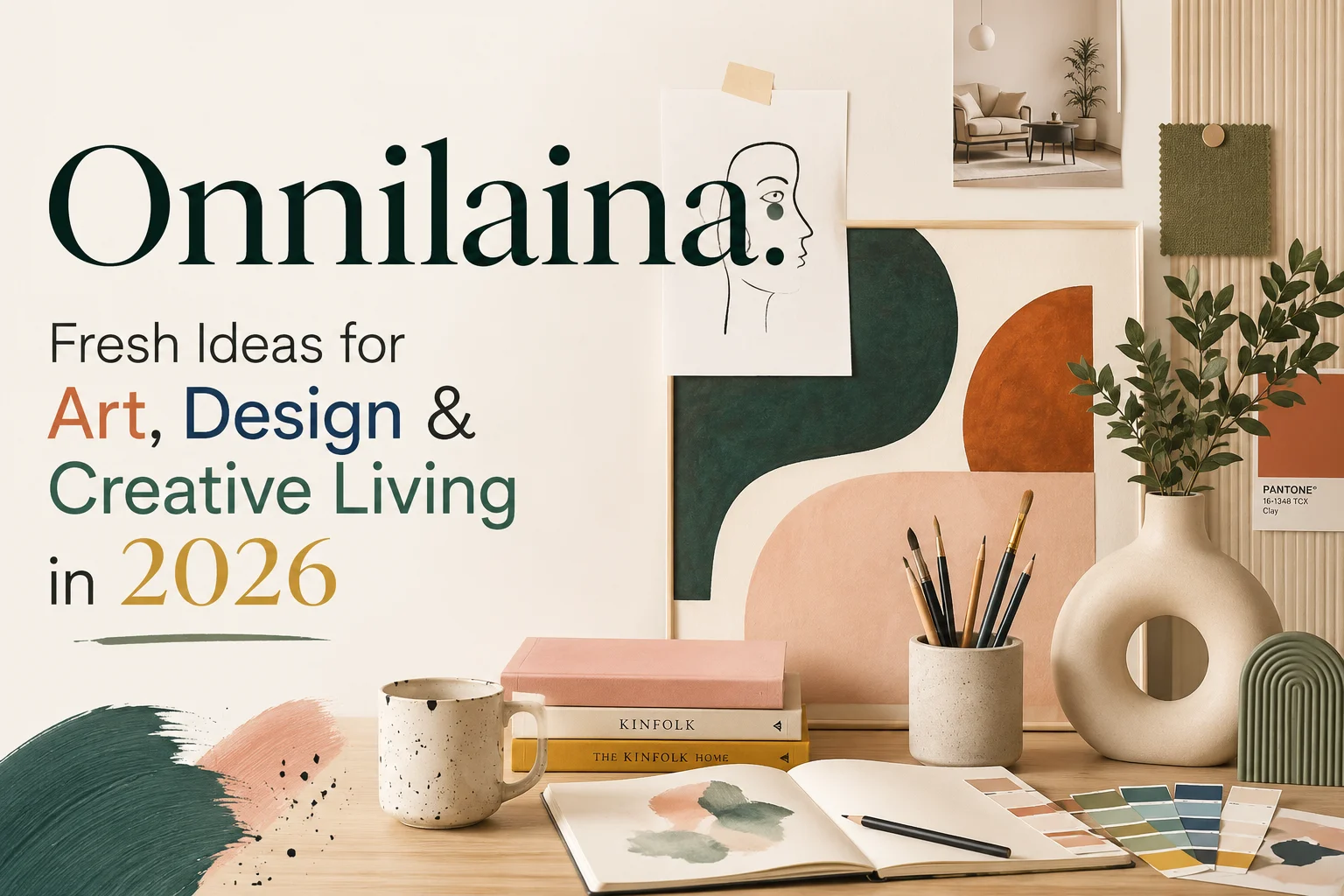
The Onnilaina Creative Living Framework is a structured way of understanding creativity as a daily system rather than a collection of random trends or inspiration bursts. Instead of treating creative living as something you “feel” occasionally, this framework positions it as something you intentionally design, repeat, and refine.
The Onnilaina Creative Living Framework
At its core, the framework is built on the idea that creativity thrives when supported by clear inputs, repeatable habits, and flexible output channels. It moves away from passive consumption of ideas and focuses on active creation through structure.
1. Input Layer (Inspiration with Direction)
This is what you consume and observe art, design trends, culture, technology, and everyday life. The key difference in the Onnilaina approach is intentional filtering: not everything is inspiration, and only relevant signals are allowed in.
2. Processing Layer (Meaning-Making)
Here, raw inspiration is transformed into usable insight. This includes sketching ideas, journaling patterns, analyzing trends, and connecting unrelated concepts. This stage prevents creative overload and turns noise into clarity.
3. Creation Layer (Output in Action)
This is where ideas become tangible—designs, content, products, writing, or digital experiences. The framework emphasizes consistency over perfection, encouraging small but continuous output cycles.
2026 Art & Design Direction
The 2026 art and design landscape is being shaped by a convergence of advanced technology, human-centered aesthetics, and a stronger emotional focus in creative environments. Rather than a single dominant style, the direction is defined by hybrid systems where digital intelligence and organic expression coexist.
AI-Integrated Creativity
Artificial intelligence has moved from a tool of automation to a collaborative design partner. In 2026, designers increasingly use AI for ideation, layout generation, and adaptive visual systems. However, the emphasis is shifting toward creative direction control—humans guide meaning and intent while AI accelerates execution and variation. This results in faster workflows but also more experimental and unpredictable design outcomes.
Organic and Imperfect Design Language
In contrast to earlier hyper-minimal digital aesthetics, 2026 design trends embrace imperfection, texture, and natural irregularity. Hand-drawn elements, fluid shapes, and biomorphic forms are becoming central to visual identity systems. This “organic revival” reflects a broader cultural desire to reconnect digital experiences with tactile, human qualities.
Emotional Interior and Spatial Design
Interior and spatial design are increasingly driven by emotional response rather than purely functional or visual standards. Spaces are being designed to influence mood, mental clarity, and comfort through lighting, material choice, and sensory layering. Soft transitions, warm neutrals, and adaptive environments are replacing rigid, uniform layouts.
Hybrid Aesthetic Systems
Across art, branding, and digital media, the dominant direction is hybridization—combining AI precision with handcrafted imperfection and emotional depth. Instead of following a single style trend, creators are building flexible visual systems that can adapt across platforms and contexts.
Core Creative Living Pillars (THIS IS KEY GAP FILLER)
The Core Creative Living Pillars define how modern creativity translates into everyday environments and personal expression. These pillars bridge aesthetics, technology, and lifestyle design, ensuring that creative living is not abstract—but actively built into how people think, design, and inhabit space.
Emotional Spaces
Emotional spaces focus on how environments make people feel rather than how they simply look. In 2026, design is increasingly shaped by psychological comfort, mood regulation, and sensory balance. Lighting, texture, color temperature, and spatial flow are used intentionally to create calm, focus, energy, or inspiration depending on the purpose of the space. The goal is to design environments that respond to human emotion rather than override it.
AI-Enhanced Creativity
AI is now embedded into the creative process as an adaptive support system rather than just a production tool. It assists in generating concepts, refining compositions, and exploring variations at scale. However, the core value remains human direction—AI expands possibilities, but intention and meaning are still defined by the creator. This pillar represents a shift toward co-creative systems where speed and experimentation are amplified without losing originality.
AI & Digital Creativity in Home Design
AI is becoming a defining layer in modern home design, shifting creativity from manual-only processes to hybrid systems where ideas can be rapidly generated, tested, and refined. This area is still underused by many competitors, which makes it a strong opportunity for differentiation in 2026 content.
AI Art Generation
AI-generated art is now widely used in home design to create unique, customized visuals that match specific interior styles. Instead of relying on mass-produced prints, homeowners and designers can generate original artwork tailored to color palettes, moods, or architectural themes. This allows interiors to feel more personal and visually cohesive, especially when art is aligned with furniture, lighting, and spatial tone.
Prompt-Based Décor Planning
Prompt-based design planning uses AI tools to translate text descriptions into interior concepts. Users can describe a space—such as “minimal warm living room with natural textures and soft lighting”—and receive visual layouts, material suggestions, and styling ideas. This approach accelerates early-stage decision-making and helps bridge the gap between imagination and execution, especially for non-professionals exploring design options.
How to Build Your Own Onnilaina Space (BIG SEO WIN)
Building an Onnilaina Space means applying a structured creative system to your environment—turning any room or home into a personalized, emotionally intelligent, and future-ready design ecosystem. The process is not about expensive redesigns, but about intentional layering of aesthetics, function, and identity.
Step-by-Step System
Start by treating your space as a creative framework rather than a fixed layout.
Step 1: Define the emotional purpose
Decide what each space should feel like (focus, calm, energy, inspiration). This becomes the foundation for every design decision.
Step 2: Build your visual direction
Create a core style direction using colors, textures, and references. AI tools or mood boards can help translate abstract ideas into visual consistency.
Step 3: Layer functional design
Align furniture placement, lighting, and flow with how you actually live in the space. Function should support emotion, not compete with it.
Step 4: Add identity elements
Introduce personal objects, custom artwork, and meaningful design pieces that reflect your personality and creative story.
Step 5: Refine through iteration
Treat the space as evolving. Adjust lighting, layouts, and decor over time based on how the environment affects mood and productivity.
FAQs
1. What is an Onnilaina Space?
It’s a creatively designed living environment built around emotion, identity, and structured design principles.
2. Do I need AI tools to build it?
No, but AI tools can speed up mood boards, layout ideas, and design planning.
3. Can I create it on a low budget?
Yes, even small changes like lighting, layout, and decluttering can create a strong impact.
4. Is it only for interior designers?
No, it’s designed for anyone who wants a more intentional and personalized living space.
5. What makes it different from regular home design?
It focuses on emotional experience and personal identity, not just aesthetics or trends.