

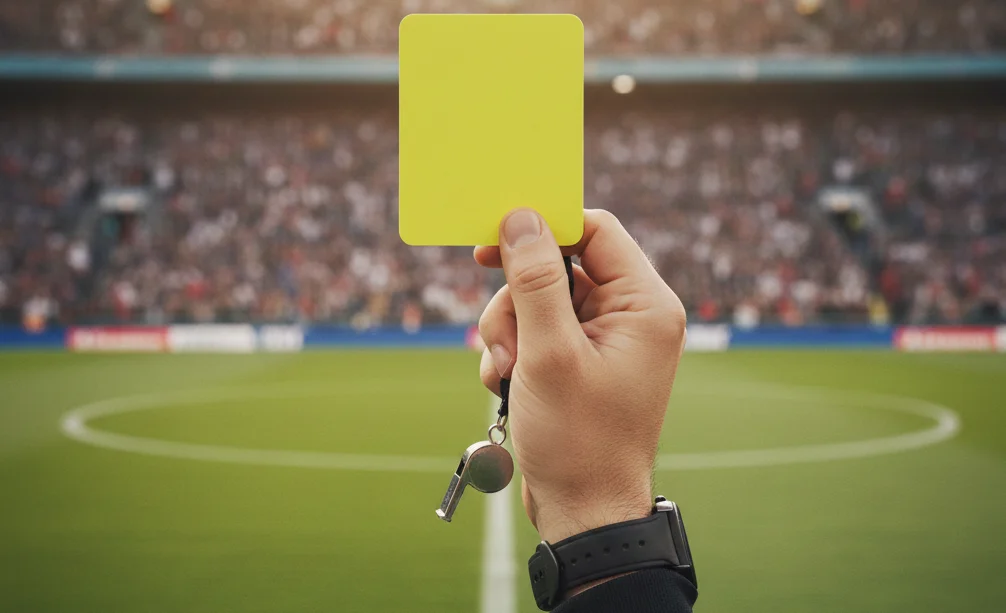
🟨 What Does a Yellow Card Mean in Football?
What it means 🚨
A yellow card is an official caution for unsporting behavior or misconduct.
The player can continue playing, but they’re on thin ice.
Common reasons for a yellow card
- Reckless or late tackles
- Dissent (arguing with the referee)
- Time-wasting
- Simulation (diving)
- Repeated minor fouls
Important rule to remember ❗
Two yellow cards in the same match = one red card ❌
→ The player is sent off and their team plays with one less player.
Tournaments & leagues 🏆
Yellow cards can accumulate across matches.
After reaching a certain number, a player may be suspended for the next game.
⚽ Why Referees Use Yellow Cards
To warn players
A yellow card is an official last warning before stronger punishment.
It tells the player to calm down and adjust their behavior.
To stop dangerous play
Discourages reckless tackles and aggressive challenges.
Helps protect players from injuries.
To maintain discipline
Prevents arguing, time-wasting, and unsporting behavior.
Keeps respect for the referee and the rules.
To ensure fairness
Penalizes cheating tactics like diving or deliberate fouls.
Stops teams from gaining unfair advantages.
To manage the match flow
Helps referees control heated moments.
Reduces repeated fouls and game disruption.
A yellow card is football’s way of saying:
“You’ve crossed the line — play responsibly from now on.”🟨 Offenses That Lead to Yellow Cards
Unsporting Behavior
This covers actions that go against the spirit of fair play. Common examples include reckless tackles, deliberate handballs to stop attacks, diving (simulation), or attempting to deceive the referee.
Even if the foul isn’t serious enough for a red card, it can still earn a yellow.
Dissent
Players can be booked for showing disrespect toward the referee’s decisions. This includes arguing, shouting, sarcastic clapping, aggressive gestures, or refusing to accept a call.
Modern laws are stricter, and even captains aren’t immune if dissent crosses the line.
Persistent Infringement
A player who commits multiple small fouls may receive a yellow card, even if each foul alone seems minor.
Referees track patterns of behavior to stop players from repeatedly breaking up play.
Time-wasting
Deliberately delaying the restart of play is a common reason for yellow cards.
Examples include holding the ball after a whistle, taking too long on throw-ins or goal kicks, or intentionally slowing substitutions—especially late in the match.
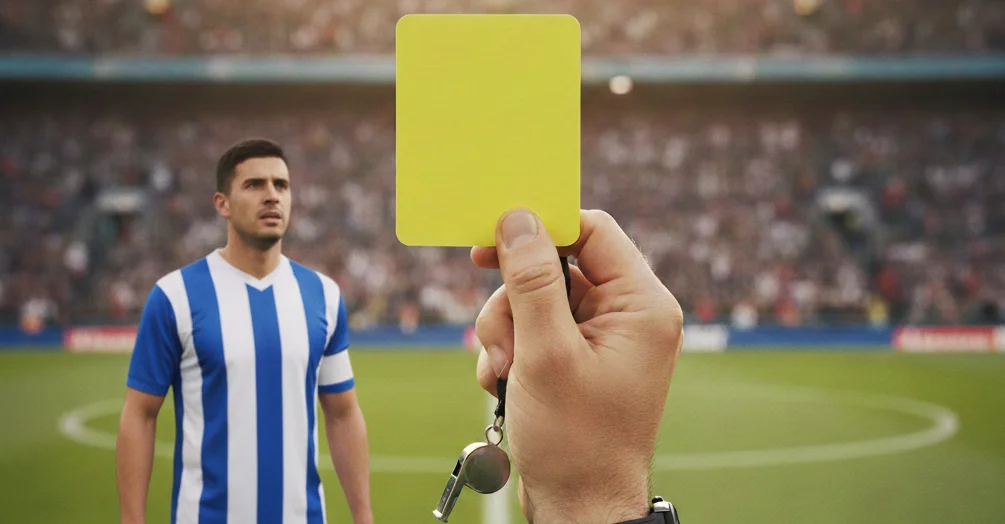
What Happens After a Yellow Card?
Second Yellow = Red Card
If a player receives two yellow cards in the same match, they are automatically shown a red card. This results in:
- The player is sent off immediately
- The team must play the rest of the match with one fewer player
- The dismissed player cannot be replaced
- The player usually receives at least a one-match suspension
This rule exists to punish repeated misconduct and help referees maintain control of the match.
Suspensions Across Leagues
Yellow cards can also carry over between matches, depending on the competition. Most leagues and tournaments apply:
- Accumulation rules (for example, suspension after 3, 5, or more yellow cards)
- Reset points, where yellow card counts are cleared after certain stages
- Stricter disciplinary rules in major tournaments
The exact number of yellow cards allowed before suspension varies by competition (Premier League, La Liga, Serie A, UEFA tournaments), but the purpose is the same: encourage disciplined play and punish repeated fouling.
Yellow Card Rules in FIFA, UEFA, and Other Competitions
FIFA Rules
- Purpose: Caution players for unsporting behavior, dissent, persistent fouls, or timewasting.
- Accumulation: Two yellow cards in different matches before the semifinals usually result in a one-match suspension.
- Reset: Yellow cards are typically cleared after the quarterfinals to prevent players from missing the final due to accumulation.
UEFA Competitions (Champions League, Europa League)
- Two yellow cards in a single match = red card; player is sent off.
- Accumulated yellow cards across group stage or knockout rounds can lead to suspension.
- Example: Three yellow cards in three different matches → one-match ban.
- Yellow cards are often reset before quarterfinals to allow key players to participate in later stages.
Domestic Leagues (Premier League, La Liga, Serie A, etc.)
- Accumulation rules vary by league. Example: 5 yellow cards in the Premier League → 1-game suspension.
- Further suspensions for 10, 15, etc., yellow cards.
- Single-match red card suspensions are usually longer than accumulation suspensions.
- Local rules can include fines or additional disciplinary measures.
Key Points Across Competitions
- Two yellows in a match = red card everywhere.
- Accumulated yellows lead to suspensions, but thresholds and resets vary by league/tournament.
- Yellow card resets often happen before semifinals or end-of-season playoffs to avoid penalizing players in crucial matches.
- Serious fouls or violent conduct bypass yellow card rules and may result directly in a red card.
FAQ’s
1. What is a yellow card?
A yellow card is an official warning given by the referee to a player for unsporting behavior, dissent, repeated fouls, or timewasting. It does not remove the player from the game but signals that they must play more carefully.
2. What happens if a player gets two yellow cards in one match?
Two yellow cards in a single match automatically become a red card, meaning the player is sent off. Their team must continue with one fewer player, and the player usually receives at least a one-match suspension.
3. Do yellow cards carry over to other matches?
Yes, in most leagues and tournaments, accumulated yellow cards across multiple games can lead to a suspension. The number of cards allowed before suspension varies by competition (e.g., FIFA, UEFA, domestic leagues).
4. Can a yellow card be rescinded?
In some cases, a governing body can review and overturn a yellow card, but it’s rare. Usually, the referee’s decision on the field is final, especially during the match.
5. Why are yellow cards important in football?
Yellow cards maintain discipline and fair play. They warn players to adjust behavior, prevent dangerous play, and ensure referees can control the game effectively. Accumulation rules also encourage consistent sportsmanship across tournaments.
Leave a Reply